Water for Gas Chromatography Analysis
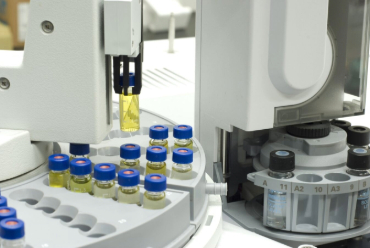
Gas chromatography is a powerful analytical technique suitable for the separation of volatile, thermally stable molecules. This article introduces you to gas chromatography instrumentation and why water quality used matters for accurate results.
Section Overview
- How does gas chromatography mass spectrometry (GC-MS) work?
- Components of a gas chromatography system
- Impact of water purity on GC analysis
- Volatile organic compound (VOC) contaminants
- Detecting VOC contaminants with purge and trap gas chromatography
- Case study: Impact of water quality on VOC analysis by GC-MS
- Ultrapure water for GC and GC-MS analysis
- Related products
How does gas chromatography mass spectrometry (GC-MS) work?
In gas chromatography, a sample is vaporized and travels through a column where its components are separated based on their chemical properties and detected. When coupled with mass spectrometry (MS), the separated compounds can be identified by their mass to charge ratio. Combining these techniques provides both high sensitivity, enabling detection at trace levels, and high selectivity.
Applications of GC-MS include detecting pollutants in the environment,1 identifying impurities in drug manufacturing,2 or measuring contaminants in food and beverages.3, 4
Components of a gas chromatography system
A typical GC system (Figure 1) is composed of several key components:
Carrier gas
The carrier gas is the mobile phase that transports the vaporized sample through the column. Typical carrier gases used in GC are helium, hydrogen, argon and nitrogen. Some labs are shifting from helium to greener alternatives (e.g., hydrogen from hydrogen generators) to reduce costs and environmental impact.
Injector
There are several types of GC injectors, such as Split/Splitless (S/SL), Programmed Temperature Vaporizer (PTV), or on-column injectors. The selection of GC injection technique depends on analyte characteristics, such as concentration and volatility.
Column
The column is the heart of the GC separation. There are two major types of GC columns: capillary columns and packed columns. Columns are coated with a stationary phase and housed in an oven that can be temperature programmed. The oven allows for optimal separation of analytes based on their volatility.
Detector
There are several detectors available. Flame ionization detector (FID) is the most popular since it is very sensitive and is considered universal. FID uses a hydrogen-air flame to burn the sample molecules, turning them into ions, and then measures the resulting change in electrical current to detect and quantify them. Other detectors include thermal conductivity detector (TCD), nitrogen phosphorus (NPD), electron capture (ECD), photoionization (PID), and flame photometric (FPD). In a GC-MS instrument, the detector is a mass spectrometer, providing both qualitative (identity) and quantitative information.
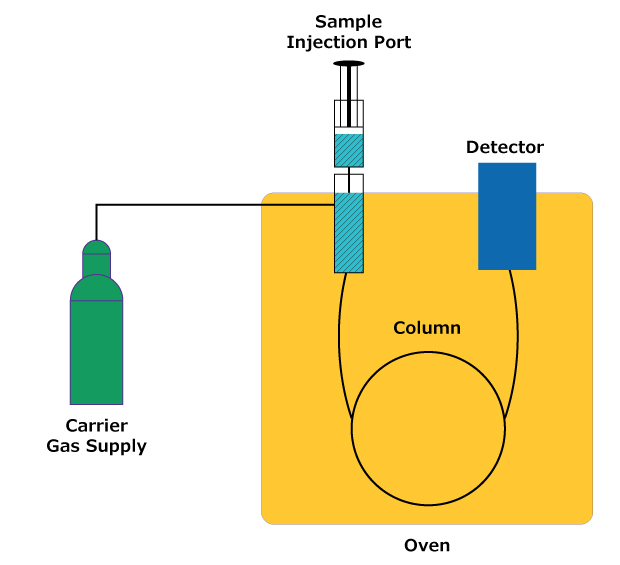
Figure 1.Schematic of a gas chromatograph instrument
Impact of water purity on GC analysis
Due to its high sensitivity, GC can detect contaminant levels in trace amounts, including those originating from the water used during the analysis. Even small amounts of impurities in water can skew results, making water purity a critical factor for accurate GC analysis.
Although GC methods usually do not consume a lot of water, the choice of water quality can still impact analyses. This is because contaminants present in water can affect the instrument and the integrity of analytical results in the following ways:
Organics
Organic molecules may interfere with the purging process and lead to lower recovery rates of the desired analytes. In addition, organics, particularly volatile organic compounds (VOC) present in the water used to prepare or analyze the samples, may interfere with GC analysis by causing a noisy or high background and extraneous peaks. This may complicate the interpretation of results and affect sensitivity and quantification. See below for more on VOC contaminants in water.
Particles
Particles may clog the sample lines or the GC column, leading to increased maintenance needs. They may also cause variability in purging efficiency, leading to inconsistent results.
Bacteria
Bacteria may release some small organics that may interfere with GC analyses. They may also degrade some VOCs and should therefore be avoided.
Ions
In GC-MS, ions may interfere with the ionization process of the mass spectrometer, leading to skewed results.
Chlorine
Some VOCs, in particular aromatic compounds, may react and be degraded by chlorine.
Volatile organic compound (VOC) contaminants
A common type of compound detected using GC are volatile organic compounds (VOCs). VOCs include a wide range of carbon-based molecules that easily evaporate at room temperature. They are usually man-made chemicals used in manufacturing many products. Many commonly used household products contain VOCs (cleaning products, aerosol sprays, paints, glues, cosmetics, home furnishings, photocopiers, etc.), which can be readily released into the air. In addition, VOCs may be released by factories, gas stations and landfills. They are also naturally emitted by several plants and trees. Some common VOCs found in air, water and soil are acetone, benzene, formaldehyde, methyl tert-butyl ether (MTBE, a fuel oxygenate), toluene, xylene, chloroform and trichloroethylene (TCE).5
VOCs are contaminants of concern because of their human toxicity and tendency for some of these compounds to persist and migrate to drinking water supply wells. This is why VOCs are monitored in many products and in the environment.
Detecting VOC contaminants with purge and trap gas chromatography
To detect VOCs in aqueous samples, a sample preparation technique called purge and trap (P&T) extracts VOCs from water. In this process, an inert gas is bubbled through the sample. The VOCs are evaporated out of the sample by the gas and brought to an adsorbent trap where they can be concentrated. Once purging is complete, any material on the trap can be desorbed using heat and swept onto the GC column. The P&T technique helps detect trace levels of VOCs while managing water vapor.
Case study: Impact of water quality on VOC analysis by GC-MS
The analysis of VOC by P&T GC-MS requires high-purity water for preparing blanks, samples and standards, as well as for rinsing glassware. To avoid background contamination, this water must be free of VOCs as well as other contaminants that may interfere with the instruments or the results.
As shown in Figure 2, tap water may contain VOCs such as chloroform, bromodichloromethane, dibromochloromethane, and bromoform and is unsuitable for VOC analysis.
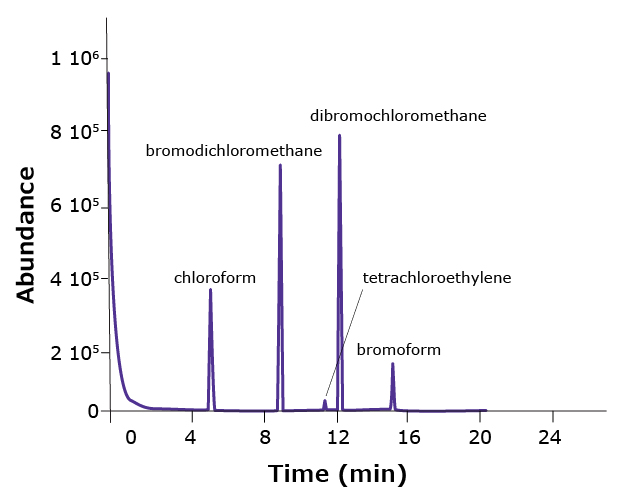
Figure 2.GC-MS chromatogram showing VOCs detected in tap water
Preparing VOC-free water using a specific activated carbon point-of-use polisher
Since the tap water of the laboratory contained several VOCs (Figure 2), we tested whether an ultrapure water purification system similar to the Milli-Q® IQ 7000 system connected to a VOC-Pak® polisher could produce VOC-free water. The VOC-Pak® polisher is meant to be placed at the point of delivery of most Milli-Q® ultrapure water systems and contains a specific type of activated carbon, designed for VOC removal. After using the water purification system with the VOC-Pak® polisher, we found that VOCs were reduced to levels below the limits of detection of the experimental method (Table 1).
Using consistent quality high-purity water is essential for achieving accurate and precise VOC measurements. The highest quality water can be obtained by employing a combination of several purification technologies. The resulting ultrapure water (also referred to as Type 1 water) is suitable for GC-MS analysis of VOCs, as it contains no compounds that could interfere with the analysis.
Using the VOC-Pak® cartridge at the point of use of a water purification system delivering ultrapure water can ensure that the VOCs listed in the table are below the analytical quantification limits listed.
Ultrapure water for GC and GC-MS analysis
Freshly purified ultrapure (Type 1) water (with a resistivity of 18.2 MΩ.cm at 25 °C and a TOC < 5 ppb) should be used for GC-MS analyses, to ensure accurate and sensitive results. A range of water purification solutions adapted to the needs of scientists working with gas chromatography, GC-MS, and related techniques are available. Using a VOC-Pak® cartridge at the point of use of the water purification system can ensure that the ultrapure water delivered is suitable for use in the measurement of VOCs by sensitive methods such P&T GC-MS.