
249467

Propyl chloroformate
98%
Sign In to View Organizational & Contract Pricing.
Select a Size
Change View
About This Item
Linear Formula:
ClCO2CH2CH2CH3
CAS Number:
Molecular Weight:
122.55
NACRES:
NA.22
PubChem Substance ID:
UNSPSC Code:
12352100
EC Number:
203-687-7
MDL number:
Assay:
98%
Form:
liquid
vapor pressure
0.87 psi ( 20 °C)
assay
98%
form
liquid
refractive index
n20/D 1.404 (lit.)
bp
105-106 °C (lit.)
solubility
benzene: miscible(lit.), chloroform: miscible(lit.), diethyl ether: miscible(lit.)
density
1.09 g/mL at 25 °C (lit.)
storage temp.
2-8°C
SMILES string
CCCOC(Cl)=O
InChI
1S/C4H7ClO2/c1-2-3-7-4(5)6/h2-3H2,1H3
InChI key
QQKDTTWZXHEGAQ-UHFFFAOYSA-N
Application
Propyl chloroformate has been used:
- as derivatization reagent in quantification of dopamine, serotonin and norepinephrine in human urine by solid phase microextraction-gas chromatography-triple quadrupole mass spectrometry
- in the preparation of dipropyl 3,6-diphenyl-1,2-dihydro-1,2,4,5-tetrazine-1,2-dicarboxylate

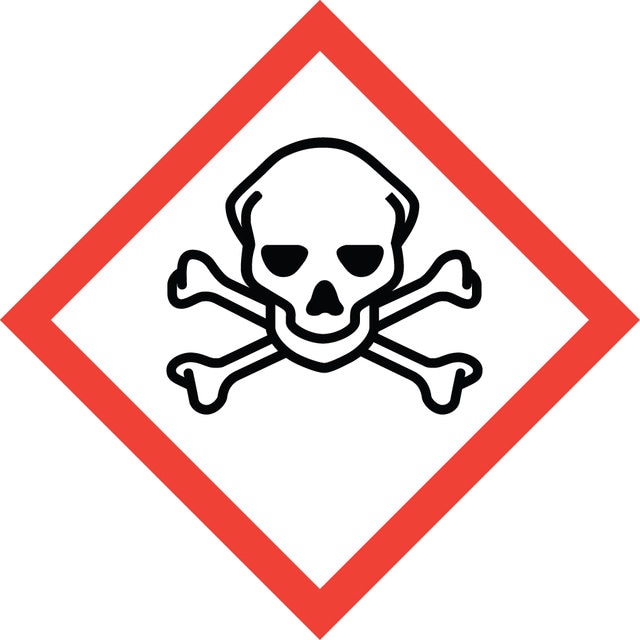

signalword
Danger
hcodes
Hazard Classifications
Acute Tox. 3 Inhalation - Acute Tox. 4 Oral - Eye Dam. 1 - Flam. Liq. 2 - Skin Corr. 1B
Storage Class
3 - Flammable liquids
wgk
WGK 1
flash_point_f
71.6 °F
flash_point_c
22 °C
ppe
Faceshields, Gloves, Goggles, type ABEK (EN14387) respirator filter
Regulatory Information
新产品
This item has
Choose from one of the most recent versions:
Already Own This Product?
Find documentation for the products that you have recently purchased in the Document Library.
Nur Cebi et al.
Food chemistry, 248, 8-13 (2018-01-14)
An effective and simultaneous liquid chromatography-tandem mass spectrometry (LC-MS/MS) method was used with the aim of quantifying monosodium glutamate (MSG) in foodstuffs, such as chips, taste cubes, sauces and soups. The results were linear (R
Guo-Wu Rao et al.
Acta crystallographica. Section C, Crystal structure communications, 59(Pt 5), o281-o282 (2003-05-14)
The title compound, C(22)H(24)N(4)O(4), was prepared from propyl chloroformate and 3,6-diphenyl-1,2-dihydro-s-tetrazine. This reaction yields the title compound rather than dipropyl 3,6-diphenyl-1,4-dihydro-s-tetrazine-1,4-dicarboxylate. The 2,3-diazabutadiene group in the central six-membered ring is not planar; the C=N double-bond length is 1.285 (2) A
Yixing Sui et al.
Bioresource technology, 275, 145-152 (2018-12-26)
The microalga Dunaliella salina has been widely studied for carotenogenesis, yet its protein production for human nutrition has rarely been reported. This study unveils the effects of growth phase and light regime on protein and essential amino acid (EAA) levels
Global Trade Item Number
| SKU | GTIN |
|---|---|
| 249467-100G | 04061825928586 |
| 249467-25G | 04061825928593 |