
305391

Octadecylamine
≥99% (SAMs Validated, GC)
Synonym(s):
1-Aminooctadecane, Stearylamine
Select a Size
Change View
About This Item
Linear Formula:
CH3(CH2)17NH2
CAS Number:
Molecular Weight:
269.51
UNSPSC Code:
12352103
NACRES:
NA.23
PubChem Substance ID:
EC Number:
204-695-3
Beilstein/REAXYS Number:
636111
MDL number:
eCl@ss:
32150313
Assay:
≥99% (SAMs Validated, GC)
vapor pressure
10 mmHg ( 72 °C)
Quality Segment
assay
≥99% (SAMs Validated, GC)
bp
232 °C/32 mmHg (lit.)
mp
50-52 °C (lit.)
SMILES string
CCCCCCCCCCCCCCCCCCN
InChI
1S/C18H39N/c1-2-3-4-5-6-7-8-9-10-11-12-13-14-15-16-17-18-19/h2-19H2,1H3
InChI key
REYJJPSVUYRZGE-UHFFFAOYSA-N
General description
Octadecylamine (ODA) is a long-chain primary alkyl amine that forms well-ordered, densely packed self-assembled monolayers (SAMs) on metal oxide, gold, and carbon-based substrates via amine head group surface coordination. The C₁₈ alkyl chain drives hydrophobic tail-group ordering, producing low-energy, chemically stable surfaces suitable for molecular interface engineering. Achieving defect-free monolayer assembly requires high chemical purity — this grade meets ≥99% assay purity by GC, minimizing competitive adsorption from trace impurities that degrade thin-film device performance.
Application
Surface Functionalization & SAM Formation Octadecylamine forms stable SAMs on silicon oxide, alumina, gold, and carbon surfaces, enabling precise control of surface wettability, charge, and functionality. It is widely used as a hydrophobic surface modifier for molecular interface engineering across electronics, diagnostics, and advanced materials applications.
Biosensors & Diagnostics ODA has been used to prepare Langmuir–Blodgett films for enzymatic field-effect transistor (ENFET)-based biosensors, including butyrylcholinesterase/stearylamine systems for organophosphate detection. Its amine functionality supports surface passivation and biomolecule immobilization on carbon microelectrodes, including carbon fiber microelectrodes for electrochemical sensing.
Carbon Nanomaterial Functionalization Octadecylamine covalently functionalizes graphene oxide and multi-walled carbon nanotubes (MWCNTs), improving dispersibility in organic matrices. Functionalized materials are applied in thin-film nanocomposite (TFN) nanofiltration membranes and as conductive fillers in polymer nanocomposites.
Electronic Device Manufacturing ODA SAMs serve as dielectric surface treatments in organic field-effect transistors (OFETs), reducing interface trap density and improving charge carrier mobility. It is also used as an adhesion promoter and surface energy modifier at inorganic–organic interfaces in electronic component fabrication.
Advanced Materials & Nanocrystal Synthesis Octadecylamine acts as a capping ligand and shape-directing agent in the synthesis of metal oxide nanocrystals (including ZnO, TiO₂, and Fe₃O₄) with controlled size and morphology. It also supports ion exchange membrane preparation and surface modification of clay minerals for polymer nanocomposite applications.
Still not finding the right product?
Explore all of our products under Octadecylamine
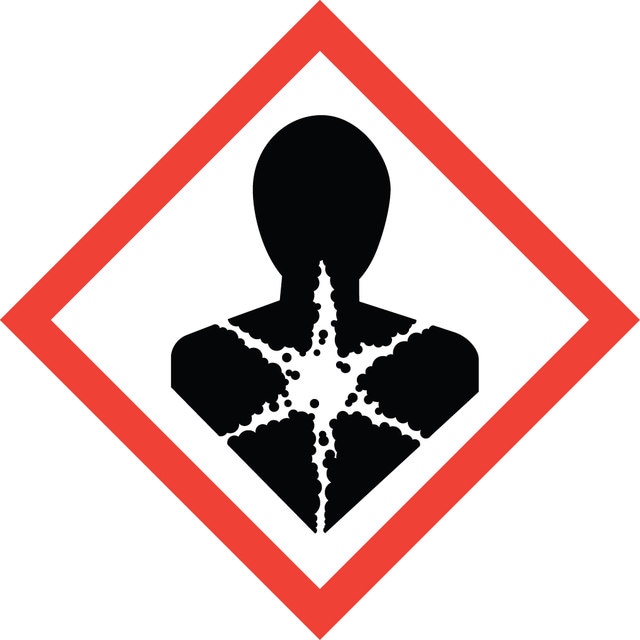


Signal Word
Danger
Hazard Codes
Precautionary Statements
Hazard Classifications
Aquatic Acute 1 - Aquatic Chronic 1 - Asp. Tox. 1 - Eye Dam. 1 - Skin Irrit. 2 - STOT RE 2
Target Organs
Liver,Gastrointestinal tract,Immune system
Storage Class
11 - Combustible Solids
WGK
WGK 3
Flash Point (°F)
298.4 °F - closed cup
Flash Point (°C)
148 °C - closed cup
PPE (personal protective equipment)
dust mask type N95 (US), Eyeshields, Gloves
Choose from one of the most recent versions:
Already Own This Product?
Find documentation for the products that you have recently purchased in the Document Library.