
Skip to Content
Merck
CN

327441

Platinum

powder, 0.5-1.2 μm, ≥99.9% trace metals basis

Sign In to View Organizational & Contract Pricing.

Select a Size

Change View

About This Item

Empirical Formula (Hill Notation):
Pt
CAS Number:
Molecular Weight:
195.08
UNSPSC Code:
12352300
PubChem Substance ID:
EC Number:
231-116-1
MDL number:
Technical Service
Need help? Our team of experienced scientists is here for you.
Let Us Assist


assay

≥99.9% trace metals basis

form

powder

resistivity

10.6 μΩ-cm, 20°C

particle size

0.5-1.2 μm

bp

3827 °C (lit.)

mp

1772 °C (lit.)

density

21.45 g/cm3 (lit.)

SMILES string

[Pt]

InChI

1S/Pt

InChI key

BASFCYQUMIYNBI-UHFFFAOYSA-N

General description

Average particle size determined by Fisher sub-sieve sizer
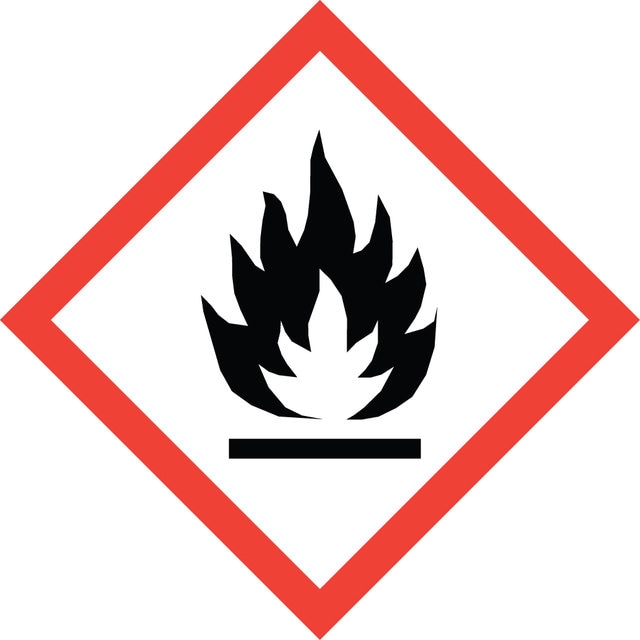

pictograms

Flame

signalword

Danger

hcodes

Hazard Classifications

Flam. Sol. 1

Storage Class

4.1B - Flammable solid hazardous materials

wgk

nwg

flash_point_f

Not applicable

flash_point_c

Not applicable

ppe

Eyeshields, Gloves, type P3 (EN 143) respirator cartridges

Regulatory Information

新产品

This item has


Choose from one of the most recent versions:

Certificates of Analysis (COA)

Lot/Batch Number

Don't see the Right Version?

If you require a particular version, you can look up a specific certificate by the Lot or Batch number.

Already Own This Product?

Find documentation for the products that you have recently purchased in the Document Library.

Visit the Document Library


Tao Xiong et al.
Journal of biomedical nanotechnology, 9(2), 274-280 (2013-05-01)
Noninvasive molecular fluorescence imaging in vivo which combines Optical imaging with genetic marker technology can real time monitor the development of tumor, through the use of human adenoid cystic carcinoma cell (ACC-M) and lung carcinoma cells SPC-A1 were thansfected by
Hiroaki Akamatsu et al.
Japanese journal of clinical oncology, 43(6), 664-668 (2013-04-16)
Interstitial lung disease associated with gefitinib is a critical adverse reaction. When geftinib was administered to EGFR-unknown patients, the interstitial lung disease incidence rate was approximately 3-4% in Japan, and usually occurs during the first 4 weeks of treatment. However
Yao-Hsuan Tseng et al.
Biochimica et biophysica acta, 1830(6), 3787-3795 (2013-04-02)
Traditional antibacterial photocatalysts are primarily induced by ultraviolet light to elicit antibacterial reactive oxygen species. New generation visible-light responsive photocatalysts were discovered, offering greater opportunity to use photocatalysts as disinfectants in our living environment. Recently, we found that visible-light responsive