
769320

Sodium azide
≥99%, ultra dry
Synonym(s):
Azide, Hydrazoic acid sodium salt
Sign In to View Organizational & Contract Pricing.
Select a Size
Change View
About This Item
Linear Formula:
NaN3
CAS Number:
Molecular Weight:
65.01
NACRES:
NA.23
PubChem Substance ID:
UNSPSC Code:
12352302
EC Number:
247-852-1
MDL number:
Assay:
≥99%, 99.0-101.0% (RT)
Form:
solid
Quality Segment
assay
≥99%, 99.0-101.0% (RT)
form
solid
quality
ultra dry
reaction suitability
core: sodium
impurities
≤0.05% insolubles in water, ≤0.2% free alkaline (as NaOH)
loss
≤0.2% loss on drying
cation traces
heavy metals (as Pb): ≤0.001%
SMILES string
[Na]N=[N+]=[N-]
InChI
1S/N3.Na/c1-3-2;/q-1;+1
InChI key
PXIPVTKHYLBLMZ-UHFFFAOYSA-N
Application
Sodium azide is well known for its application in automobile air bags. It also find use in organic synthesis involving azide functionalization.
Still not finding the right product?
Explore all of our products under Sodium azide
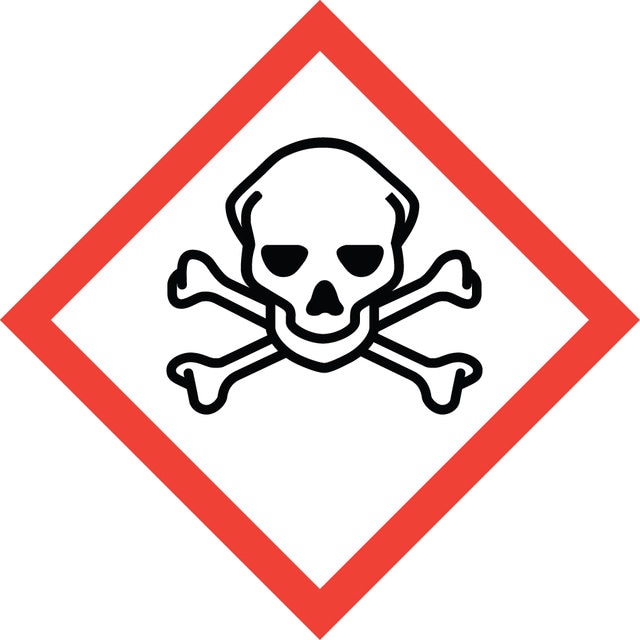


Signal Word
Danger
Hazard Codes
Precautionary Statements
Hazard Classifications
Acute Tox. 1 Dermal - Acute Tox. 2 Inhalation - Acute Tox. 2 Oral - Aquatic Acute 1 - Aquatic Chronic 1 - STOT RE 2 Oral
Target Organs
Brain
supp_hazards
Storage Class
6.1A - Combustible acute toxic Cat. 1 and 2 / very toxic hazardous materials
WGK
WGK 2
Flash Point (°F)
Not applicable
Flash Point (°C)
Not applicable
Choose from one of the most recent versions:
Already Own This Product?
Find documentation for the products that you have recently purchased in the Document Library.