
Sign In to View Organizational & Contract Pricing.
Select a Size
Change View
About This Item
NACRES:
NA.55
UNSPSC Code:
41105500
eCl@ss:
32160702
usage
sufficient for 25 labeling reactions (100 pmol of oligonucleotides per assay; 1 ug of a 30-mer oligonucleotide)
manufacturer/tradename
Roche
sustainability
Sustainability features
shipped in
dry ice
General description
The DIG Oligonucleotide 3′-End Labeling Kit, 2nd generation employs the enzyme terminal transferase. It catalyzes the addition of single digoxigenin-labeled dideoxyuridine triphosphates (ddUTP) to the 3′-OH end of oligonucleotides. Thus, helps in labeling oligonucleotides.
This product aligns with one or more of the 12 Principles of Green Chemistry The DIG System was established as a sensitive and cost-effective alternative to using radioactivity for the labeling and detection of nucleic acids. There are many available publications that prove the versatility of the DIG System, so use of radio-labeling is no longer the only option for labeling of DNA for hybridization.
Application
DIG Oligonucleotide 3′-End Labeling Kit, 2nd generation is for 3′-end labeling of oligonucleotides from 14 to 100 nucleotides in length with DIG-11-ddUTP and recombinant terminal transferase.
DIG-labeled oligonucleotides has been used in a variety of hybridization techniques:
DIG-labeled oligonucleotides has been used in a variety of hybridization techniques:
Biochem/physiol Actions
One DIG-ddUTP molecule is added to the 3′-end of oligonucleotides by recombinant Terminal Transferase. This guarantees a very specific and distinct hybridization signal, which is detected by an enzyme-linked immunoassay with anti-DIG-AP antibody conjugate, and a color or chemiluminescence reaction.
Features and Benefits
- Fast hybridization kinetics, due to the small size of oligonucleotides
- Single-stranded probes, no renaturation during hybridization
- Sequence can be designed according to the experiment
- Specially suited for in situ hybridization; due to their small size, the oligonucleotides readily diffuse into fixed tissues and cells
Packaging
1 kit containing 9 components
Preparation Note
Activator: sodium sulfate, Tris
Working concentration: Oligonucleotides: 100 pmol
Up to 100 pmol (1 μg of a 30-mer) oligonucleotide can be labeled in a single standard labeling reaction.
Working concentration: Oligonucleotides: 100 pmol
Up to 100 pmol (1 μg of a 30-mer) oligonucleotide can be labeled in a single standard labeling reaction.
Assay Time: The complete procedure from labeling the oligonucleotide to hybridization and detection of the first visible signal can be accomplished within less than 24 hours.
Sample Materials
Oligonucleotides of a length from 14 to 100 nucleotides, purified by HPLC or gel electrophoresis
Sample Materials
Oligonucleotides of a length from 14 to 100 nucleotides, purified by HPLC or gel electrophoresis
Store at -15–-25 °C. (unopened kit)
Analysis Note
Function tested in a dot blot.
Other Notes
For life science research only. Not for use in diagnostic procedures.
Hazard Codes
Hazard Classifications
Acute Tox. 4 - Acute Tox. 4 Oral - Aquatic Chronic 2 - Carc. 1B Inhalation - Repr. 1B Inhalation
Storage Class
6.1D - Non-combustible acute toxic Cat.3 / toxic hazardous materials or hazardous materials causing chronic effects

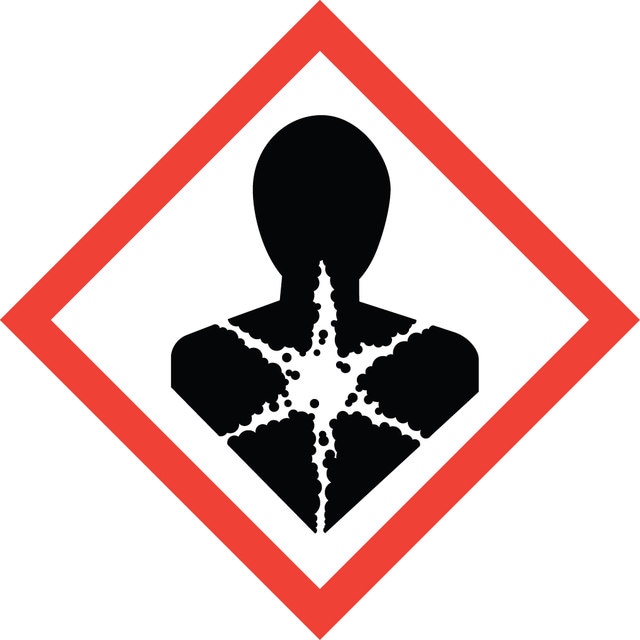
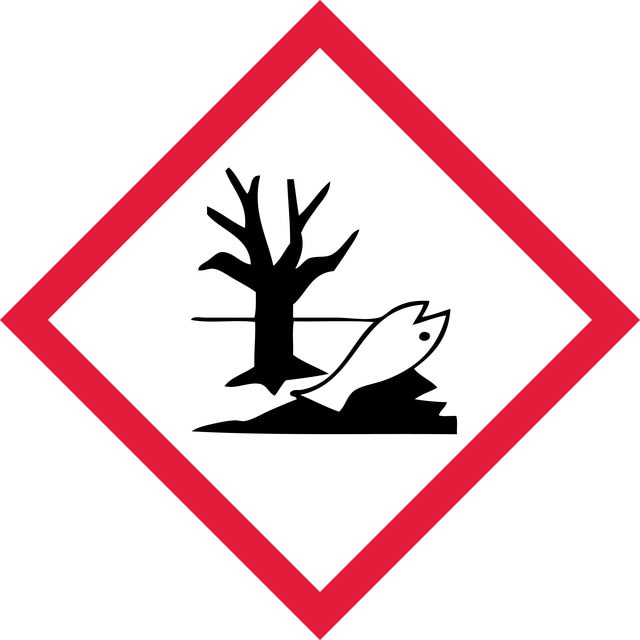
Signal Word
Danger
Precautionary Statements
WGK
WGK 3
Flash Point (°F)
does not flash
Flash Point (°C)
does not flash
Choose from one of the most recent versions:
Already Own This Product?
Find documentation for the products that you have recently purchased in the Document Library.