Skip to Content
Merck
CN

42019

Potassium dichromate

reference material for titrimetry, certified by BAM, >99.5%

Synonym(s):

Potassium bichromate

Sign In to View Organizational & Contract Pricing.

Select a Size


About This Item

Linear Formula:
K2Cr2O7
CAS Number:
Molecular Weight:
294.18
NACRES:
NA.24
PubChem Substance ID:
UNSPSC Code:
41116107
EC Number:
231-906-6
MDL number:
Technical Service
Need help? Our team of experienced scientists is here for you.
Let Us Assist
Technical Service
Need help? Our team of experienced scientists is here for you.
Let Us Assist

InChI key

KMUONIBRACKNSN-UHFFFAOYSA-N

InChI

1S/2Cr.2K.7O/q;;2*+1;;;;;;2*-1

SMILES string

[K+].[K+].[O-][Cr](=O)(=O)O[Cr]([O-])(=O)=O

grade

reference material

assay

>99.5%

technique(s)

titration: suitable

mp

398 °C (lit.)

format

neat

Quality Level

Looking for similar products? Visit Product Comparison Guide

General description

Potassium dichromate is an oxidimetric standard produced under stringent conditions and measured with the highest possible precision. Its content determination and homogeneity assessment are performed using volumetric redox titration as the primary analysis method.
Search & download your certificate here.
This compound is listed in the SVHC (Substances of very high concern) candidate list of ECHA (European Chemicals Agency)

Application

It finds its use as a reference material for the standardization of volumetric solutions in redox titrations.

Features and Benefits

  • Available in a neat format in a secure glass bottle to ensure its stability for the entire shelf life until opened.
  • Traceable to NIST SRMs
  • High-quality offering accurate titer determinations
  • Accompanied by a certificate of analysis (CoA)

Analysis Note

Exact concentration, expiry date, traceability and detailed information on certification can be found on the certificate and certification report, included in each package. Content and expiry date on label.

signalword

Danger

Hazard Classifications

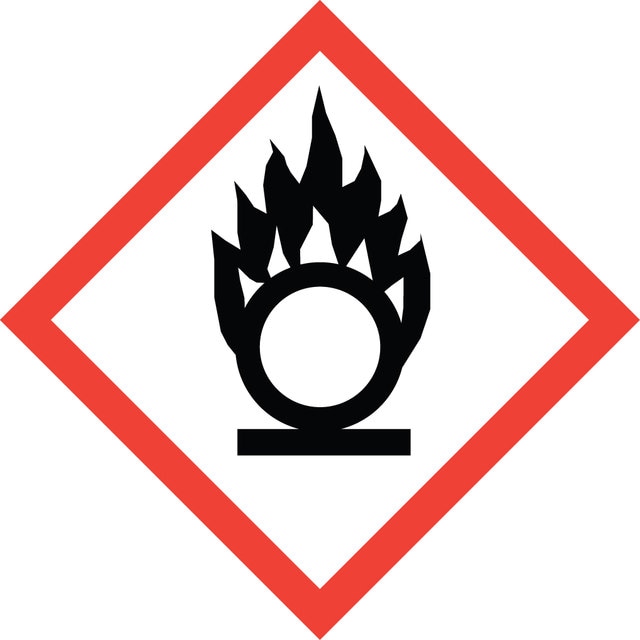
Acute Tox. 2 Inhalation - Acute Tox. 3 Oral - Acute Tox. 4 Dermal - Aquatic Acute 1 - Aquatic Chronic 1 - Carc. 1B - Eye Dam. 1 - Muta. 1B - Ox. Sol. 2 - Repr. 1B - Resp. Sens. 1 - Skin Corr. 1B - Skin Sens. 1 - STOT RE 1 Inhalation - STOT SE 3

target_organs

Cardio-vascular system, Respiratory system

Storage Class

5.1B - Oxidizing hazardous materials

wgk

WGK 3

flash_point_f

Not applicable

flash_point_c

Not applicable

ppe

Eyeshields, Faceshields, Gloves, type P3 (EN 143) respirator cartridges

Regulatory Information

易制爆化学品
危险化学品
This item has

Choose from one of the most recent versions:

Certificates of Analysis (COA)

Lot/Batch Number

Don't see the Right Version?

If you require a particular version, you can look up a specific certificate by the Lot or Batch number.

Already Own This Product?

Find documentation for the products that you have recently purchased in the Document Library.

Visit the Document Library

Changes in aquatic toxicity of potassium dichromate as a function of water quality parameters
Kikuchi M, et al.
Chemosphere, 170, 113-117 (2017)
Raman spectroscopic study of oxidation of aniline and N-methylaniline with dichromate
Mazeikiene R, et al.
Journal of Molecular Structure, 1139, 333-337 (2017)
Bour-Jr Wang et al.
Journal of the Formosan Medical Association = Taiwan yi zhi, 110(12), 775-779 (2012-01-18)
Occupational dermatitis among cement workers is a major occupational health concern. The two most important occupational hazards for cement workers are irritant and allergic cement contact dermatitis. The objective of this study was to investigate the severity of occupational cement
Shafaqat Ali et al.
Environmental toxicology and chemistry, 32(10), 2234-2239 (2013-06-19)
A hydroponic experiment was carried out to examine the effect of hydrogen sulfide (H2 S) in alleviating chromium (Cr) stress in barley. A 2-factorial design with 6 replications was selected, including 3 levels of NaHS (0 μM, 100 μM, and
Athanasia G Tekerlekopoulou et al.
Water research, 47(2), 623-636 (2012-11-28)
The kinetics of hexavalent chromium bio-reduction in draw-fill suspended and attached growth reactors was examined using sugar as substrate and indigenous microorganisms from the industrial sludge of the Hellenic Aerospace Industry. Initially, experiments in suspended growth batch reactors for Cr

Our team of scientists has experience in all areas of research including Life Science, Material Science, Chemical Synthesis, Chromatography, Analytical and many others.

Contact Technical Service