
695033

Nitric acid
ACS reagent, 70%
Sign In to View Organizational & Contract Pricing.
Select a Size
Change View
About This Item
Linear Formula:
HNO3
CAS Number:
Molecular Weight:
63.01
PubChem Substance ID:
eCl@ss:
38060304
UNSPSC Code:
12352106
MDL number:
Assay:
68.0-70.0% (ACS specification), 70%
Form:
liquid
Grade:
ACS reagent
grade
ACS reagent
vapor pressure
8 mmHg ( 20 °C)
assay
68.0-70.0% (ACS specification), 70%
form
liquid
ign. residue
≤5 ppm
color
APHA: ≤10
pH
<1.0
bp
120.5 °C (lit.)
density
1.413 g/mL at 20 °C (lit.)
anion traces
chloride (Cl-): ≤0.5 ppm, sulfate (SO42-): ≤1 ppm
cation traces
As: ≤0.01 ppm, Fe: ≤0.2 ppm, heavy metals (as Pb): ≤0.2 ppm
SMILES string
O[N+]([O-])=O
InChI
1S/HNO3/c2-1(3)4/h(H,2,3,4)
InChI key
GRYLNZFGIOXLOG-UHFFFAOYSA-N
Still not finding the right product?
Explore all of our products under Nitric acid
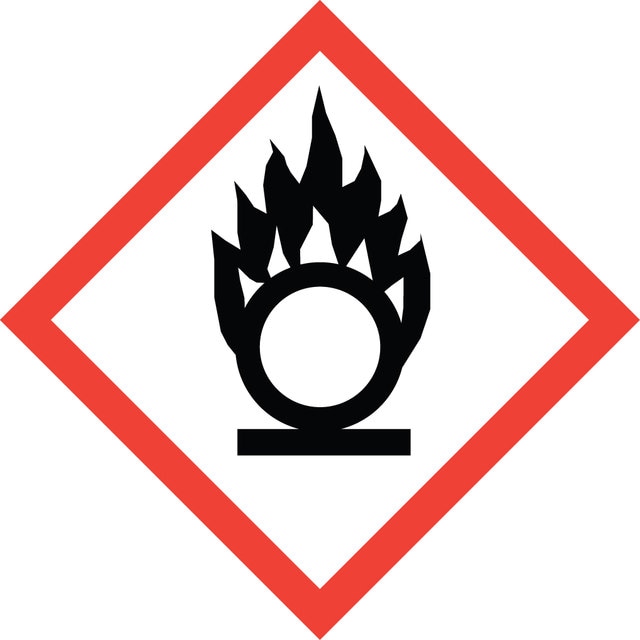


signalword
Danger
hcodes
Hazard Classifications
Acute Tox. 3 Inhalation - Eye Dam. 1 - Met. Corr. 1 - Ox. Liq. 3 - Skin Corr. 1A
supp_hazards
Storage Class
5.1B - Oxidizing hazardous materials
wgk
WGK 1
flash_point_f
Not applicable
flash_point_c
Not applicable
Choose from one of the most recent versions:
Already Own This Product?
Find documentation for the products that you have recently purchased in the Document Library.