Skip to Content
Merck
CN

T7765

Tunicamycin

from Streptomyces sp., ≥98% (HPLC), powder, N-acetylglucosamine transferase inhibitor

Select a Size

Change View

About This Item

CAS Number:
UNSPSC Code:
51111800
PubChem Substance ID:
NACRES:
NA.77
Beilstein/REAXYS Number:
6888090
MDL number:
eCl@ss:
32160703
Sign in to see your pricing
Technical Service
Need help? Our team of experienced scientists is here for you.
Let Us Assist


Product Name

Tunicamycin from Streptomyces sp.,

Quality Segment

solubility

95% ethanol: soluble 1 mg/mL, clear to faintly hazy, THF: soluble <1 mg/mL, dioxane: soluble <1 mg/mL, DMF: soluble >10 mg/mL, pyridine: >10 mg/mL, DMSO: soluble 4.9-5.1 mg/mL, clear to slightly hazy, colorless to yellow, methanol: slightly soluble 4.9-5.1 mg/mL, methanol: soluble 4.9-5.1 mg/mL, clear to slightly hazy, colorless to yellow, acetone: insoluble, aqueous base: insoluble, chloroform: insoluble, ethyl acetate: insoluble

antibiotic activity spectrum

fungi, viruses

mode of action

protein synthesis | interferes

storage temp.

2-8°C

SMILES string

CC(C)CCCCCCCC\C=C\C(=O)N[C@@H]1[C@@H](O)[C@@H](O)[C@@H](C[C@@H](O)[C@H]2O[C@H]([C@H](O)[C@@H]2O)N3C=CC(=O)NC3=O)O[C@H]1O[C@@H]4O[C@@H](CO)[C@H](O)[C@@H](O)[C@@H]4NC(C)=O

InChI

1S/C37H60N4O16/c1-18(2)12-10-8-6-4-5-7-9-11-13-23(45)39-26-30(50)27(47)21(54-36(26)57-35-25(38-19(3)43)29(49)28(48)22(17-42)55-35)16-20(44)33-31(51)32(52)34(56-33)41-15-14-24(46)40-37(41)53/h11,13-15,18,20-22,25-36,42,44,47-52H,4-10,12,16-17H2,1-3H3,(H,38,43)(H,39,45)(H,40,46,53)/b13-11+/t20-,21-,22+,25+,26-,27+,28+,29+,30-,31+,32-,33-,34-,35+,36+/m1/s1

InChI key

YJQCOFNZVFGCAF-WPTOCQRYSA-N

General description

Tunicamycin is an antibiotic and a glycosylation inhibitor. Its mode of action includes blocking human UDP-HexNAc:polyprenol-P HexNAc-1-P enzymes in the enzyme GlcNAc phosphotransferase (GPT). Glycosylation is a major post-translational modification that plays a critical role in glycoprotein folding, stability, and subcellular localization, as well as in the biological functions of the glycoprotein. Abnormal glycosylation has been identified as a signature of cancer and has been shown to play a significant role in tumor progression, metastasis, and chemoresistance. Research shows tunicamycin exhibits antitumor action. Furthermore, tunicamycin inhibition of N-glycosylation ultimately results in the build-up of unstructured proteins in the endoplasmic reticulum (ER) lumen, potentially leading to ER stress. Tunicamycin also exhibits antibacterial and antifungal actions. It blocks the formation of protein N-glycosidic linkages by inhibiting the transfer of N-acetylglucosamine 1-phosphate to dolichol monophosphate. Tunicamycin also Inhibits bacterial and eukaryote N-acetylglucosamine transferases and prevents the formation of N-acetylglucosamine lipid intermediates.
Chemical structure: nucleoside
Contains homologues A,B,C, and D. Composition may vary from lot to lot. Actual content given on label.

Application

Tunicamycin has been used to study the effect of N-linked glycosylation of human proton-coupled folate transporter (HsPCFT) in HeLa cells. Tunicamycin has also been used to study the functional effects of coxsackievirus and adenovirus receptor (CAR) glycosylation in COS-7 cells. Tunicamycin from Streptomyces sp. has been used to inhibit N-glycosylation in cell culture experiments.

Biochem/physiol Actions

Blocks the formation of protein N-glycosidic linkages.

Preparation Note

Tunicamycin dissolves in DMSO at 4.9-5.1 mg/ml and yields a clear to very slightly hazy, colorless to yellow solution. Furthermore, tunicamycin is soluble in DMF (>10 mg/ml), pyridine (>10 mg/ml), water (<5 mg/ml, pH 9.0), dioxane (<1 mg/ml) and THF. However, it is insoluble in other organic solvents such as acetone, chloroform, and ethyl acetate, and in aqueous solutions with pH <6. Aqueous solutions can be prepared from stock solutions by diluting with water at pH 8-10 or with buffers with pH >7, preferably >8. Tunicamycin will not dissolve in phosphate buffer, pH 8, at 1 mg/ml, even with heating, but solubility can be achieved by raising the pH to 9 and back titrating to pH 7-8.


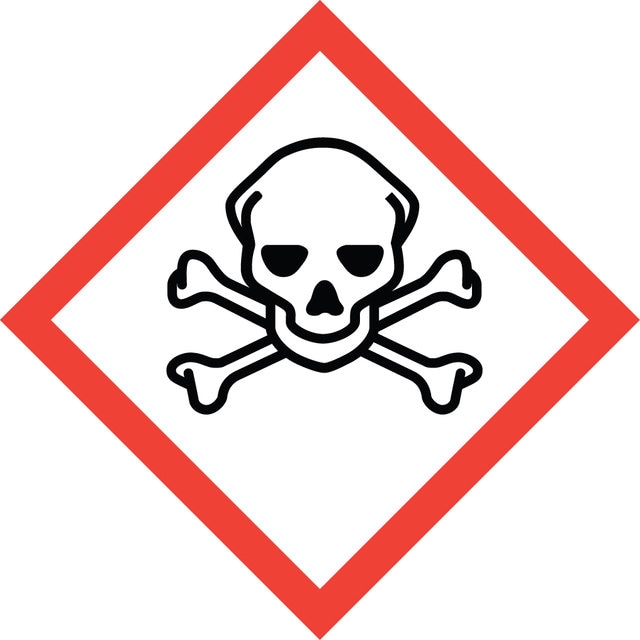
Pictograms

Skull and crossbones

Signal Word

Danger

Hazard Codes

Hazard Classifications

Acute Tox. 1 Oral

Storage Class

6.1A - Combustible acute toxic Cat. 1 and 2 / very toxic hazardous materials

PPE (personal protective equipment)

Eyeshields, Faceshields, Gloves, type P3 (EN 143) respirator cartridges

Flash Point (°F)

No data available

Flash Point (°C)

No data available


Choose from one of the most recent versions:

Certificates of Analysis (COA)

Lot/Batch Number

Don't see the Right Version?

If you require a particular version, you can look up a specific certificate by the Lot or Batch number.

Already Own This Product?

Find documentation for the products that you have recently purchased in the Document Library.

Visit the Document Library