
Complete Solutions for Wastewater Testing
Introduction
Approximately 22% of global water is used by industry, of which around 80% is discharged without proper treatment. This contributes significantly to environmental pollution, harming marine life and posing health risks to local communities. But tides are shifting. Regulatory and societal pressure have led to an increase in industrial wastewater treatment. Regional and international laws now require regular testing to ensure that common pollutants are within set limits.
While wastewater treatment and testing are complex, we offer a complete solution to streamline and simplify chemical analysis. Through intelligent instruments, intuitive test kits, and high-quality reference materials, we’ll help you achieve reliable, reproducible results in compliance with international standards, including WHO, ISO, US NPDES, and EU WFD.
Section Overview
Wastewater Treatment Stages


Secondary Treatment
Secondary wastewater treatment uses biological processes to degrade organic matter. Water is mixed with microorganisms in aeration tanks to break down organic pollutants. Next, chemical flocculation is used to clump dead bacteria and remaining solids for easy removal. This phase also reduces environmentally harmful nutrients like nitrogen and phosphorus.

Tertiary Treatment
Tertiary treatment is an advanced purification process for removing residual contaminants, including nutrients and pathogens. It may involve mechanical filtration, chemical treatments (such as coagulation and flocculation), and additional biological processes. Subsequently, the water is disinfected using chlorine, sodium hypochlorite, ozone, or ultraviolet light to kill any remaining pathogens.

Quaternary Treatment
Quaternary treatment is an emerging phase that focuses on removing complex, difficult-to-treat pollutants, such as pharmaceuticals and endocrine disruptors. Techniques include advanced oxidation processes, activated carbon filtration, and other specialized methods to clear water of trace pollutants before it is discharged.
Wastewater Testing Solutions
After each water treatment stage, key parameters are tested to ensure that the process is effective. This is typically performed through photometry using a spectrophotometer, test kits, and reference standards. Other methods, such as colorimetry or reflectometry, are sometimes used to quickly check parameters prior to photometry. No matter which treatment stage you’re in, the Spectroquant® system includes all the components you need.
Spectroquant® Prove plus spectrophotometers are specifically developed for chemical analysis of drinking water, wastewater, and process water. The smart devices provide reliable results with exceptional sensitivity.
Designed for use with Spectroquant® instruments or photometers from other manufacturers, our ready-to-use Spectroquant® Test Kits deliver swift, secure, and accurate results in routine or special analyses.
Diluted and ready-to-use, Spectroquant® single- and multi-parameter standards offer exact concentrations, expanded measurement uncertainty, and direct traceability to NIST primary reference materials to ensure that your results are correct and comparable worldwide.
If you need to make your own diluted solutions according to lab-specific concentrations, rely on the superb quality of our Certipur® and TraceCERT® certified reference material standard solutions.
Below is a comprehensive list of tests and standards by key parameter as well as instruments and rapid testing tools. Browse the range to find the optimal solution for your wastewater testing requirements. Our customer service is available for further guidance and support if needed.
Nitrogen Compounds
Different forms of nitrogen can cause eutrophication in waterways where wastewater is discharged. In this process, nitrogen acts as a nutrient, stimulating the growth of algae and other plants, which can lead to oxygen depletion and, consequently, harm aquatic life. By testing ammonium, nitrate, nitrite, and total nitrogen in wastewater, treatment facilities can ensure that they are sufficiently removed to prevent eutrophication.
Ordering Information
Ammonium Test Kits & Standard Solutions
Nitrate Test Kits & Standard Solutions
Nitrite Test Kits & Standard Solutions
Nitrogen Test Kits & Standard Solutions
CombiCheck Standard Solutions
BOD/COD/TOC
Measuring organic matter in wastewater is crucial as high levels can deplete oxygen in receiving water bodies, harming aquatic life and disrupting ecosystems. BOD (biochemical oxygen demand) tests the amount of oxygen consumed by aerobic microorganisms during the decomposition of organic matter, while COD (chemical oxygen demand) assesses the amount of oxygen required to chemically oxidize organic matter. In addition, TOC (total organic carbon) quantifies the total amount of organic carbon present in a water sample.
Ordering Information
BOD Test Kits & Standard Solutions
COD Test Kits & Standard Solutions
TOC Test Kits & Standard Solutions
CombiCheck Standard Solutions
Phosphorous Compounds
Phosphorus compounds in wastewater are a significant environmental concern due to their potential to cause eutrophication in receiving waters, which can lead to harmful algal blooms and disrupt aquatic life. Phosphate and total phosphorus tests help ensure maximum limits are not exceeded in compliance with regulatory guidelines.
Ordering Information
Phosphate Test Kits & Standard Solutions
Phosphorus Test Kits & Standard Solutions
CombiCheck Standard Solutions
Sulfurous Compounds
Sulfurous compounds in wastewater, such as sulfate, sulfide, and sulfite, are a serious concern due to their toxicity, corrosiveness, and odor. These compounds can be generated from the breakdown of organic matter containing sulfur in wastewater, particularly in anaerobic conditions.
Ordering Information
Sulfate Test Kits & Standard Solutions
Sulfide & Sulfite Test Kits
Disinfectants and Cleaning Agents
The disinfectants, chlorine and hydrogen peroxide, are used in wastewater treatment to eliminate microorganisms and sulfur compounds, respectively. Their levels must be carefully tested to ensure sufficient disinfection is achieved while avoiding excess concentrations, which could result in harmful byproducts. In contrast, surfactants, like foaming agents, emulsifiers, and detergents, enter waterways as part of household or industrial waste. Testing is necessary here too, as elevated levels can pose a hazard for plants, animals, and humans.
Ordering Information
Test Kits & Reagents
Metals
Wastewater, particularly from industrial sources, often contains heavy metals that pose significant risks to ecosystems and public health. These metals, such as cadmium, copper, chromium, lead, mercury, and zinc, can contaminate water and soil if not carefully monitored and removed.
Ordering Information
Aluminium, Arsenic, & Boron Test Kits & Standard Solutions
Cadmium & Chromium Test Kits & Standard Solutions
Cobalt, Copper, & Iron Test Kits & Standard Solutions
Lead, Magnesium, & Manganese Test Kits & Standard Solutions
Mercury, Molybdenum, & Nickel Test Kits & Standard Solutions
Tin & Zinc Test Kits & Standard Solutions
(Pseudo)halogenides
Wastewater can contain various halogenides, including chloride, cyanide, and fluoride, which can be harmful and require treatment before discharge. Chloride is naturally occurring and generally not hazardous, but high concentrations can affect water taste and potentially harm aquatic life. In contrast, cyanide and fluoride predominantly result from industrial processes and are more concerning due to their toxicity and potential health impacts.
Ordering Information
Chloride Test Kits & Standard Solution
Cyanide & Fluoride Test Kits
CombiCheck
Pharmaceuticals
Wastewater contains increasing concentrations of pharmaceuticals, such as antibiotics, hormones, and pain killers, from human excretion of unmetabolized drugs and improper disposal of unused medications. Water must be stringently tested and cleared of pharmaceuticals to avoid risks to aquatic life and local ecosystems.
Ordering Information
Amisulpride, Benzotriazole, & Candesartan Cilexetil Reference Standards
Carbamazepine, Citalopram hydrobromide, & Clarithromycin Reference Standards
Diclofenac, Hydrochlorothiazide, & Irbesartan Reference Standards
Metoprolol & Vanlafaxine Reference Standards
PFAS
Originating from industrial discharge, household products, and human waste, PFAS (per- and polyfluoroalkyl substances) include perfluorooctanoic acid (PFOA), perfluorooctanesulfonic acid (PFOS), and GenX chemicals. These substances are known as “forever chemicals” as they persist through conventional treatment processes. Testing is crucial for understanding PFAS contamination sources, assessing risks to human health and the environment, and ensuring compliance with regulations.
Ordering Information
PFAS Certified Reference Materials (CRMs)
Other Organics
Wastewater can contain various organic compounds, including adsorbable organically bound halogens (AOX), formaldehyde, phenol, and volatile organic compounds (VOCs), typically originating from industrial processes. If not properly managed, these substances can pose potential risks to the environment, ecosystems, and human health.
Ordering Information
Other Organics Test Kits
Other Organics Test Solutions
Other Parameters
Effective wastewater treatment involves monitoring other key parameters to ensure water quality and compliance with regulations. Acid capacity (or alkalinity) is a measure of the water's ability to neutralize acids, while conductivity indicates the concentration of dissolved ions. Total suspended solids (TSS) refers to the amount of solid particles that are not dissolved in the water.
Ordering Information
Acid Capacity Standard
Conductivity Standards
Potassium chloride Solutions
Total Suspended Solid Standards
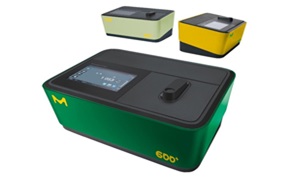
Spectrophotometers
Spectroquant® Prove plus spectrophotometers are high-quality smart devices for fast, precise water analysis with exceptional sensitivity. They are preprogrammed for a wide range of test kits, making water analysis easy and intuitive.
- Spectroquant® Prove plus 100 spectrophotometer for routine testing
- Spectroquant® Prove plus 300 spectrophotometer for sensitive measurements
- Spectroquant® Prove plus 600 spectrophotometer for complex analyses
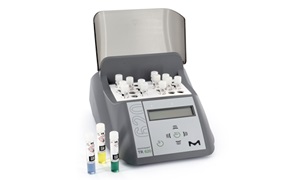
Thermoreactors
Spectroquant® thermoreactors ensure precisely controlled thermal digestion for reliable sample preparation. Our high-quality devices are ideal for determination of key wastewater parameters using Spectroquant® Test Kits.
- Spectroquant® TR 320 thermoreactor with 12 holes, 7 preinstalled programs
- Spectroquant® TR 420 thermoreactor with 24 holes, 7 preinstalled programs, 8 freely selectable programs
- Spectroquant® TR 620 thermoreactor with 2x12 holes in 2 heating zones, 7 preinstalled programs, 8 freely selectable
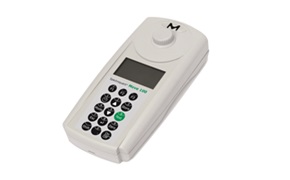
Colorimeters
Spectroquant® Move colorimeters are compact, dust-tight, and waterproof for reliable testing on the go. When coupled with the Spectroquant® Data Transfer accessory, they allow quick, easy data transmission and printing.
- Spectroquant® Move 100 colorimeter for drinking and wastewater analysis
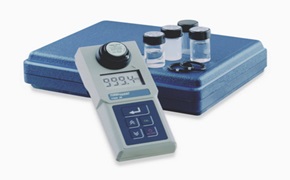
Turbidimetric Tools
Turbiquant® turbidimeters are ideal for reliable, on-the-spot measurement of total suspended solids in wastewater. They can be easily and accurately calibrated using the Turbiquant® Calibration Standard Set.
- Turbiquant® 1100 IR turbidimeter for NTU/FNU measurements using IR at 860 nm, required in Europe by ISO 7027 of DIN EN 27027
- Turbiquant® 1100 T turbidimeter for NTU/FNU measurements using a Tungsten lamp, required by USEPA 180.1, APHA, AWWA, and WPCF
- Calibration Standard Set for calibrating Turbiquant® 1100 IR and 1100 T
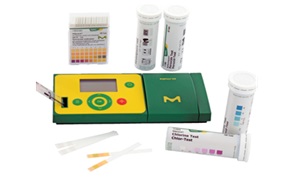
Rapid Testing Tools
MQuant® test strips provide rapid, semi-quantitative results without extensive sample preparation, making them ideal for economical pre-testing before quantitative analyses. MQuant® pH indicator strips allow rapid measurement in various media, including turbid solutions. The MQuant® StripScan mobile app reads the results of compatible MQuant® test strips in just seconds.
For portable water testing, MQuant® visual test kits offer quick assessments across a broad range of parameter concentrations using direct readout systems. The Reflectoquant® system offers enhanced capabilities by combining test strips with a reflectometer, enabling rapid and quantitative analyses of food, water, and environmental samples.
- MQuant® test strips for semi-quantitative analysis of 30 different parameters
- MQuant® StripScan app for digital readout of test strips
- Reflectoquant® test strips and RQflex® 20 reader for quantitative analysis
- MQuant® color-disk comparator test kits for medium to high concentrations
- MQuant® colorimetric and titrimetric test kits for medium concentrations
- MQuant® color-card comparator system for very low to medium concentrations
- MQuant® compact laboratory