
86645

四乙基硝酸铵
≥98.0% (NT), crystals
登录并加购,请在购物车里查看协议价、货期和发货地。
选择规格
变更视图
关于此项目
线性分子式:
(C2H5)4N(NO3)
化学文摘社编号:
分子量:
192.26
NACRES:
NA.22
PubChem Substance ID:
UNSPSC Code:
12352116
EC Number:
217-725-5
MDL number:
Beilstein/REAXYS Number:
3918466
产品名称
四乙基硝酸铵, ≥98.0% (NT)
Quality Segment
assay
≥98.0% (NT)
form
crystals
reaction suitability
core: ammonium
impurities
≤1% water
mp
~280 °C (dec.)
SMILES string
[O-][N+]([O-])=O.CC[N+](CC)(CC)CC
InChI
1S/C8H20N.NO3/c1-5-9(6-2,7-3)8-4;2-1(3)4/h5-8H2,1-4H3;/q+1;-1
InChI key
JTJKNAJRGLQKDZ-UHFFFAOYSA-N
Application
Tetraethylammonium nitrate can be used:
- To prepare nitronium triflate by reacting with triflic anhydride for subsequent use as a nitrating agent for benzene.
- To study the dependency of luminescence intensity of Eu3+ complexes on the nitrate anion concentration.
- To prepare the lanthanum(III) complex named (NEt4)[La(ntfa)4] by reacting with La(NO3)3·6H2O, NaOH and 4,4,4-trifluoro-1-(2-naphthyl)-1,3-butanedion.
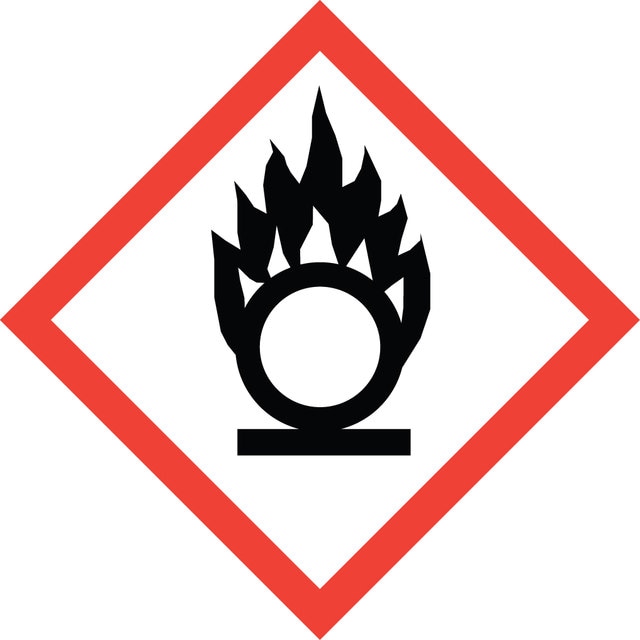

signalword
Danger
hcodes
Hazard Classifications
Eye Irrit. 2 - Ox. Sol. 2 - Skin Irrit. 2 - STOT SE 3
target_organs
Respiratory system
存储类别
5.1B - Oxidizing hazardous materials
wgk
WGK 3
flash_point_f
Not applicable
flash_point_c
Not applicable
ppe
Eyeshields, Gloves, type P3 (EN 143) respirator cartridges