Bio-based vs. conventional methanol for analytical HPLC workflows: A comparative performance study
Abstract
The pharmaceutical industry is increasingly seeking to reduce the environmental impact of analytical laboratories while maintaining data quality and regulatory compliance. Methanol is one of the most widely used mobile phase solvents in HPLC methods for pharmaceutical research, development, and quality control (QC), making it an important opportunity to reduce the environmental footprint of routine analytical workflows.
This application note describes the properties, performance, and regulatory suitability of LiChrosolv® BioRenewable methanol, a bio-based alternative to conventional HPLC-grade methanol. Manufactured from renewable feedstocks, LiChrosolv® BioRenewable methanol delivers approximately 21.4% lower CO₂-equivalent emissions than conventional (fossil-based) methanol while meeting the purity specifications required for pharmaceutical HPLC and LC-MS applications.
LiChrosolv® BioRenewable methanol conforms to Ph. Eur. and ACS Reagent specifications and meets ICH Q3C requirements for methanol. Its chromatographic performance is comparable to that of conventional HPLC-grade methanol, supporting implementation in existing pharmaceutical HPLC and LC-MS methods with minimal disruption to established analytical workflows.
Section overview
- Introduction
- Scope of study
- Sustainability and carbon footprint reduction
- Comparative study on pharmaceutical products: lamivudine, diclofenac and clozapine
- Comparison of USP method performance for three APIs using conventional methanol and LiChrosolv® BioRenewable methanol
- Product portfolio and specifications
- Regulatory compliance and pharmacopoeial alignment
- Related products
Key finding
LiChrosolv® BioRenewable methanol demonstrated chromatographic performance comparable to conventional (fossil-based) HPLC-grade methanol while reducing CO₂-equivalent emissions by approximately 21.4%. Equivalent performance was demonstrated across three USP pharmacopoeial API methods, supporting implementation in existing HPLC workflows with minimal changes.
Introduction
Methanol is one of the most widely used solvents in pharmaceutical analytical laboratories, serving as a primary or co-solvent in reversed-phase HPLC mobile phases for quality control, stability testing, dissolution testing, pharmacopoeial assays, impurity profiling, and analytical method development. Consequently, HPLC-grade methanol is consumed in large volumes across pharmaceutical research, development, and manufacturing laboratories.
Conventional (fossil-based) methanol is produced from synthesis gas derived primarily from natural gas through steam reforming and related processes, a production route associated with substantial greenhouse gas emissions. As pharmaceutical companies increasingly seek to reduce Scope 3 greenhouse gas emissions across their supply chains, the environmental impact of laboratory reagents and solvents has become an important consideration. Sustainability initiatives such as the Science Based Targets initiative (SBTi), together with frameworks including ISO 14067 for product carbon footprint quantification and ISO 20400 for sustainable procurement, support organizations in integrating environmental considerations into sourcing decisions.
Bio-based HPLC solvent portfolio launch (April 2026)
In April 2026, we launched the first bio-based HPLC solvent portfolio developed specifically for analytical laboratory applications, including LiChrosolv® BioRenewable methanol in HPLC and LC-MS grades. Manufactured from renewable feedstocks using a proprietary, patent-pending production process, these solvents deliver on average 21.4% lower CO₂-equivalent emissions than conventionally produced fossil-based methanol. The products are designed to meet the purity and performance requirements of analytical HPLC and LC-MS applications. Claims regarding reduced carbon impact are calculated using a cradle-to-gate carbon footprint analysis, evaluating raw material extraction and production processes for LiChrosolv® BioRenewable methanol compared to traditional petroleum-based manufacturing pathways. Calculated reductions do not include downstream distribution, customer storage, or waste incineration/disposal processes.
Scope of study
This study compares the analytical performance of mobile phases prepared with conventional (fossil-based) methanol and bio-based methanol. Using three USP pharmacopoeial API methods, chromatographic performance was evaluated by comparing key system suitability parameters, including retention time, resolution, peak symmetry, and assay results. The study demonstrates that LiChrosolv® BioRenewable methanol provides chromatographic performance comparable to conventional (fossil-based) HPLC-grade methanol, supporting its use as a drop-in alternative for these analytical methods.
Drug substances evaluated
The following pharmaceutical substances were evaluated on both conventional (fossil-based) and bio-based methanol as per United States Pharmacopoeia (USP) methods.
Sustainability and carbon footprint reduction
Carbon footprint comparison
Based on a life cycle assessment (LCA) using ecoinvent life cycle inventory data and supplier-specific emissions data, the carbon footprint of LiChrosolv® BioRenewable methanol was compared with that of conventional fossil-based HPLC methanol. The results are summarized in Table 2.
Case Study on Potential CO₂-equivalent emissions
Based on the average 21.4% lower product carbon footprint of LiChrosolv® BioRenewable methanol compared with conventional fossil-based methanol, a pharmaceutical QC laboratory consuming approximately 5,000 L of HPLC-grade methanol annually could reduce the product-related CO₂-equivalent emissions associated with methanol procurement by an estimated 580–700 kg CO₂e per year. For a multi-site CDMO or pharmaceutical manufacturer consuming more than 50,000 L annually, the corresponding estimated reduction could exceed 5,800–7,000 kg CO₂e per year.
Note:
These examples are provided for illustrative purposes only and are based on the reported carbon footprint. Total actual reductions will depend on methanol consumption, supply chain configuration, transportation, waste management practices, and the applicable life cycle assessment methodology.
Product portfolio and key specifications
LiChrosolv® BioRenewable methanol is available in two analytical grades designed to cover the full range of pharmaceutical analytical applications.
Comparative study on pharmaceutical products: lamivudine, diclofenac and clozapine
Lamivudine, diclofenac, and clozapine were selected as representative pharmaceutical active pharmaceutical ingredients (APIs) to evaluate the chromatographic performance of LiChrosolv® BioRenewable methanol relative to conventional fossil-based HPLC-grade methanol. Comparative results for each method are presented below.
Lamivudine HPLC analysis (USP pharmacopoeia)
All analyses were performed under identical instrument conditions; the only variable was the methanol source in the mobile phase. Parameters assessed include repeatability, system suitability, calibration linearity, LOD/LOQ, and recovery.
Comparative chromatographic performance
Table 4 compares the mean retention time, peak area, and USP tailing factor obtained from six replicate injections using conventional and bio-based methanol. The close agreement between the mean values indicates that substituting conventional methanol with LiChrosolv® BioRenewable methanol did not materially affect chromatographic performance under the conditions evaluated.
System suitability test (SST)
System suitability testing was performed using six replicate injections of the USP Lamivudine Resolution Mixture B RS solution under identical chromatographic conditions, with the methanol source in the mobile phase as the only experimental variable. The chromatographic responses of the lamivudine diastereomer and lamivudine peaks were evaluated by comparing peak area precision (% RSD) and chromatographic resolution to assess compliance with the USP system suitability requirements.
As shown in Table 5, both conventional and bio-based methanol met the applicable USP system suitability requirements for chromatographic resolution and injection precision. LiChrosolv® BioRenewable methanol exhibited lower % RSD values for both the lamivudine diastereomer peak area (0.6% vs. 1.1% for conventional methanol) and the lamivudine peak area (0.1% vs. 0.6%), indicating lower injection-to-injection variability under the conditions evaluated. All % RSD values were well within the USP acceptance criterion (≤ 2.0%), while comparable chromatographic resolution (1.87 and 1.88) confirmed that replacing conventional methanol with LiChrosolv® BioRenewable methanol did not adversely affect system suitability or chromatographic performance.
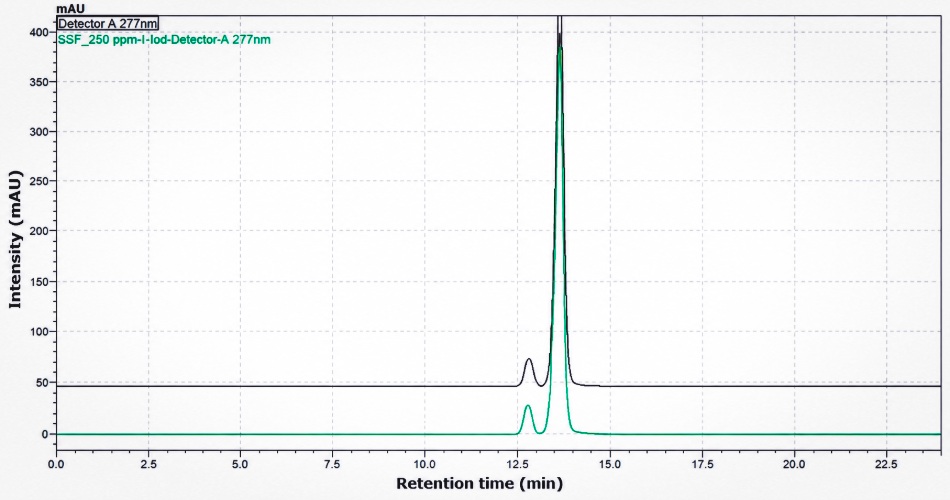
Figure 1.Overlay chromatograms of the USP Lamivudine Resolution Mixture B RS system suitability solution obtained using mobile phases prepared with conventional fossil-based methanol (black) and LiChrosolv® BioRenewable methanol (green).
Linearity, LOD, and LOQ
As shown in Table 6, both conventional and bio-based methanol demonstrated excellent calibration linearity, as indicated by identical coefficients of determination (R² = 0.9999) across the evaluated concentration range. LiChrosolv® BioRenewable methanol exhibited lower experimentally determined LOD and LOQ values than conventional methanol, indicating comparable or improved analytical sensitivity under the conditions evaluated.
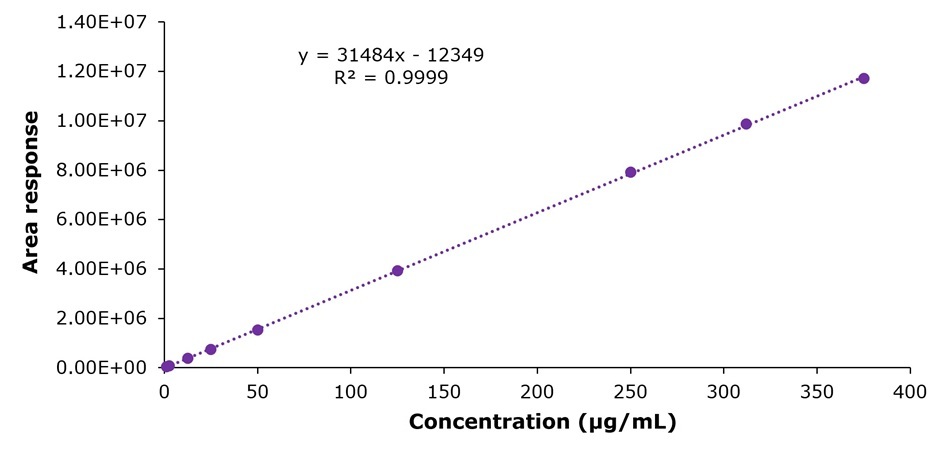
Figure 2.Calibration curve for lamivudine over the concentration range of 1.3–375 µg/mL using a mobile phase prepared with LiChrosolv® BioRenewable methanol.
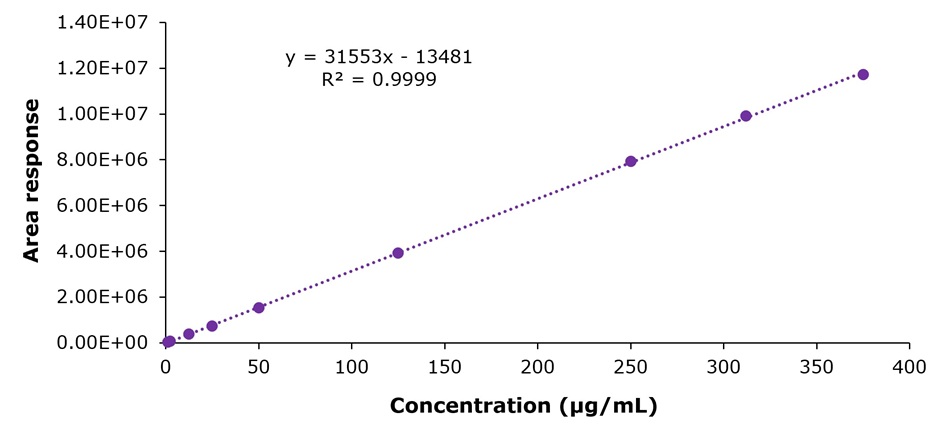
Figure 3.Calibration curve for lamivudine over the concentration range of 1.3–375 µg/mL using a mobile phase prepared with conventional methanol.
Recovery study
Recovery values were comparable for conventional and bio-based methanol across all evaluated spike levels, as summarized in Table 7. Both solvent systems met the applicable recovery acceptance criteria, with recovery values ranging from 98–102% at the mid- and high-spike levels, demonstrating that the use of LiChrosolv® BioRenewable methanol maintained method accuracy. The elevated recovery observed at the LOQ spike level under both solvent conditions is consistent with the expected analytical variability near the limit of quantitation and does not indicate a solvent-dependent effect.
Diclofenac sodium HPLC analysis (USP pharmacopoeia)
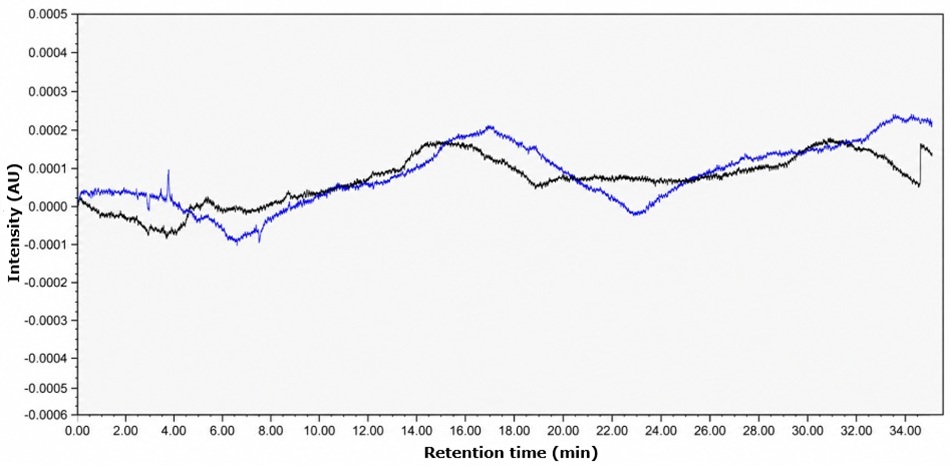
Figure 4.Overlay chromatograms obtained for conventional methanol (black) and LiChrosolv® BioRenewable methanol (blue) used as the mobile phase in the USP HPLC analysis of diclofenac sodium.
Repeatability of the diclofenac sodium reference standard
Six replicate injections of the diclofenac sodium reference standard prepared with conventional methanol were analyzed to assess method repeatability. The corresponding mean chromatographic values obtained using LiChrosolv® BioRenewable methanol are presented for comparison.
The conventional methanol system demonstrated excellent repeatability, with % RSD values of 0.2% for retention time, 0.3% for peak area, and 0.5% for USP tailing factor, all of which are well within typical USP acceptance criteria. The mean retention time (12.284 vs. 12.257 min), peak area (11,991,227 vs. 11,922,406), and USP tailing factor (1.013 vs. 1.008) obtained with LiChrosolv® BioRenewable methanol were comparable to those obtained with conventional methanol. The USP tailing factor remained well below the acceptance limit (≤2.0) under both solvent conditions, demonstrating comparable peak symmetry. These results indicate that LiChrosolv® BioRenewable methanol provides chromatographic performance comparable to conventional methanol for the USP analysis of diclofenac sodium.
System suitability test (SST)
The system suitability test (SST) for the USP method was performed using a three-component mixture comprising diethyl phthalate, diclofenac related substance A, and diclofenac sodium. Six replicate injections were analyzed for both conventional methanol and LiChrosolv® BioRenewable methanol to evaluate peak area repeatability and chromatographic resolution.
All six replicate injections demonstrated excellent repeatability, with %RSD values below 1.0% for diethyl phthalate, diclofenac related substance A, and diclofenac sodium under both solvent conditions, meeting the USP acceptance criterion (≤2.0%). Comparable mean peak areas were obtained for all three components using conventional methanol and LiChrosolv® BioRenewable methanol. Chromatographic resolution also remained comparable (5.80 vs. 5.65 for diethyl phthalate-diclofenac related substance A and 11.63 vs. 11.37 for diclofenac related substance A-diclofenac sodium), demonstrating equivalent system suitability performance with the bio-based solvent. The overlay chromatograms (Figure 5) further demonstrate comparable retention behavior, peak shapes, and chromatographic resolution, confirming equivalent system suitability performance with LiChrosolv® BioRenewable methanol.
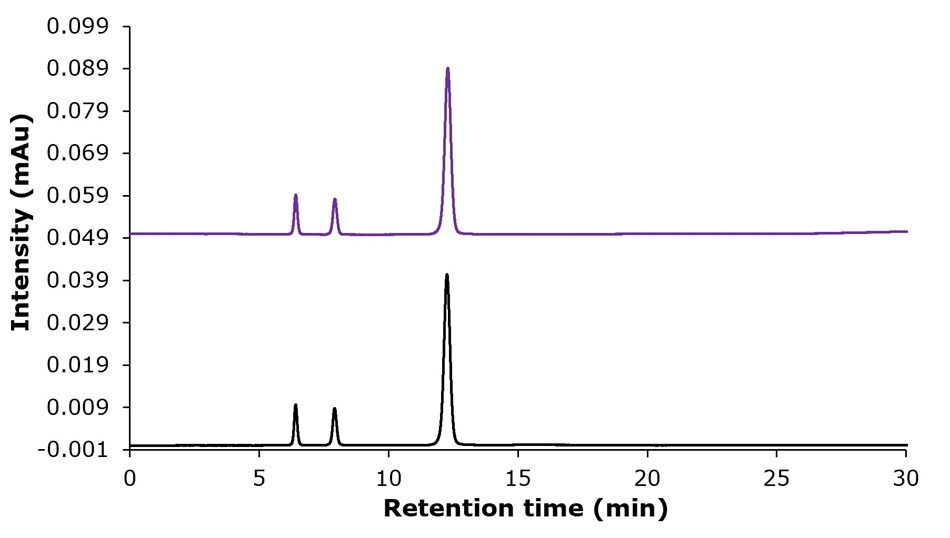
Figure 5.Overlay chromatograms of the system suitability solution containing diethyl phthalate, diclofenac related substance A, and diclofenac sodium obtained using LiChrosolv® BioRenewable methanol (violet) and conventional methanol (black) under USP chromatographic conditions.
Calibration linearity, LOD and LOQ
Calibration linearity was evaluated using a mixed standard solution containing diclofenac sodium, diclofenac related substance A, and diethyl phthalate over the concentration range of 0.15–2.25 µg/mL. Calibration curves were obtained for each analyte using conventional methanol and LiChrosolv® BioRenewable methanol to assess linearity. The correlation coefficient (R²) was determined for each component, while the limit of detection (LOD) and limit of quantitation (LOQ) were evaluated for diclofenac sodium. The results are summarized in Table 10, and the corresponding calibration curves are presented in Figures 6 and 7.
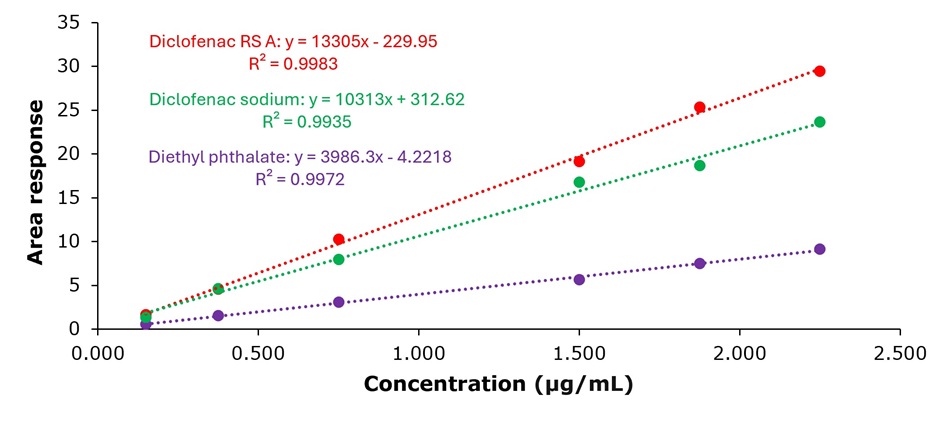
Figure 6.Calibration curves for diclofenac sodium, diclofenac related substance A, and diethyl phthalate using LiChrosolv® BioRenewable methanol.
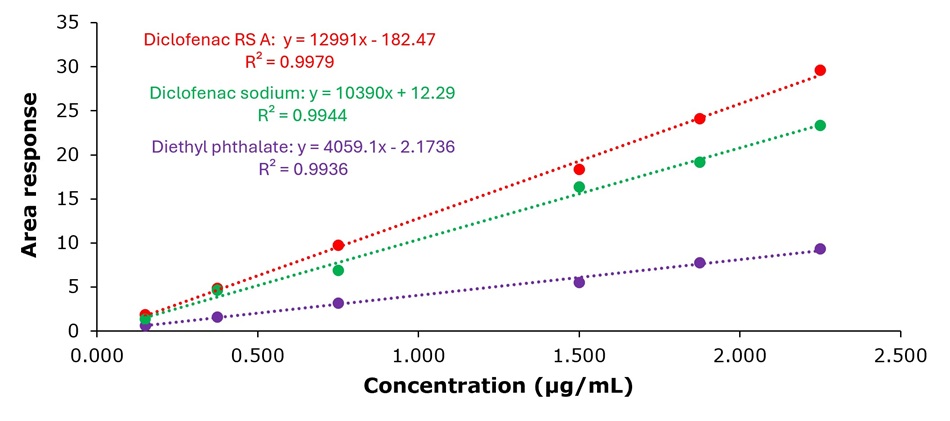
Figure 7.Calibration curves for diclofenac sodium, diclofenac related substance A, and diethyl phthalate using conventional methanol.
Calibration curves for diclofenac sodium, diclofenac related substance A, and diethyl phthalate demonstrated excellent linearity over the concentration range of 0.15-2.25 µg/mL using both conventional methanol and LiChrosolv® BioRenewable methanol. Correlation coefficients ranged from 0.9935 to 0.9983, indicating a strong linear relationship between analyte concentration and detector response.
Recovery study
Method accuracy was evaluated through recovery studies performed according to the USP monograph using conventional methanol and LiChrosolv® BioRenewable methanol. Recovery was evaluated at the LOQ and multiple spike levels, and the resulting chromatographic performance was compared between the two solvent systems. The results are presented in Table 11.
Recovery values were comparable between conventional methanol and LiChrosolv® BioRenewable methanol across all evaluated spike levels. Recoveries ranged from 96–103% for conventional methanol and 100.0–107.45% for the bio-based solvent, demonstrating acceptable method accuracy. These results indicate that substituting conventional methanol with LiChrosolv® BioRenewable methanol does not adversely affect the recovery of diclofenac sodium under the USP method.
Clozapine HPLC analysis (USP pharmacopoeia)
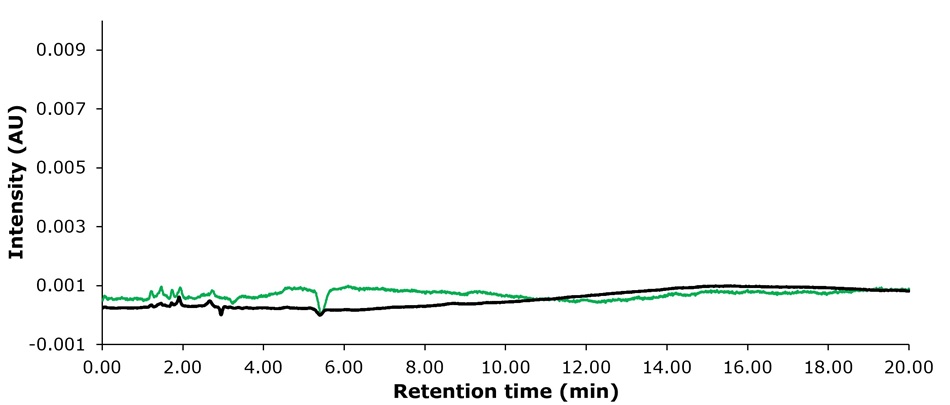
Figure 8.Overlay chromatograms obtained for conventional methanol (black) and LiChrosolv® BioRenewable methanol (green) used as the mobile phase in the USP HPLC analysis of clozapine.
Repeatability and system suitability
Repeatability and system suitability were evaluated using six replicate injections of the clozapine reference standard prepared with conventional methanol and LiChrosolv® BioRenewable methanol. The resulting chromatographic performance parameters are summarized in Table 12.
Both solvent systems met the USP acceptance criterion for % RSD, demonstrating excellent repeatability. The bio-based solvent exhibited a slightly lower peak area % RSD (0.16%) than conventional methanol (0.26%), indicating comparable injection precision. Mean retention times were similar (6.067 and 6.087 min), with low retention time %RSD values observed for both solvent systems. In addition, both solvents produced an identical USP tailing factor of 1.1, indicating comparable peak symmetry. Collectively, these results demonstrate that LiChrosolv® BioRenewable methanol provides chromatographic performance comparable to conventional methanol for the USP analysis of clozapine.
USP system suitability: Impurity resolution profile
The system suitability solution was analyzed using conventional methanol and LiChrosolv® BioRenewable methanol to evaluate the chromatographic resolution between clozapine and its degradation impurities according to the USP monograph. The chromatograms are shown in Figure 9, and the corresponding resolution data are summarized in Tables 13 and 14.
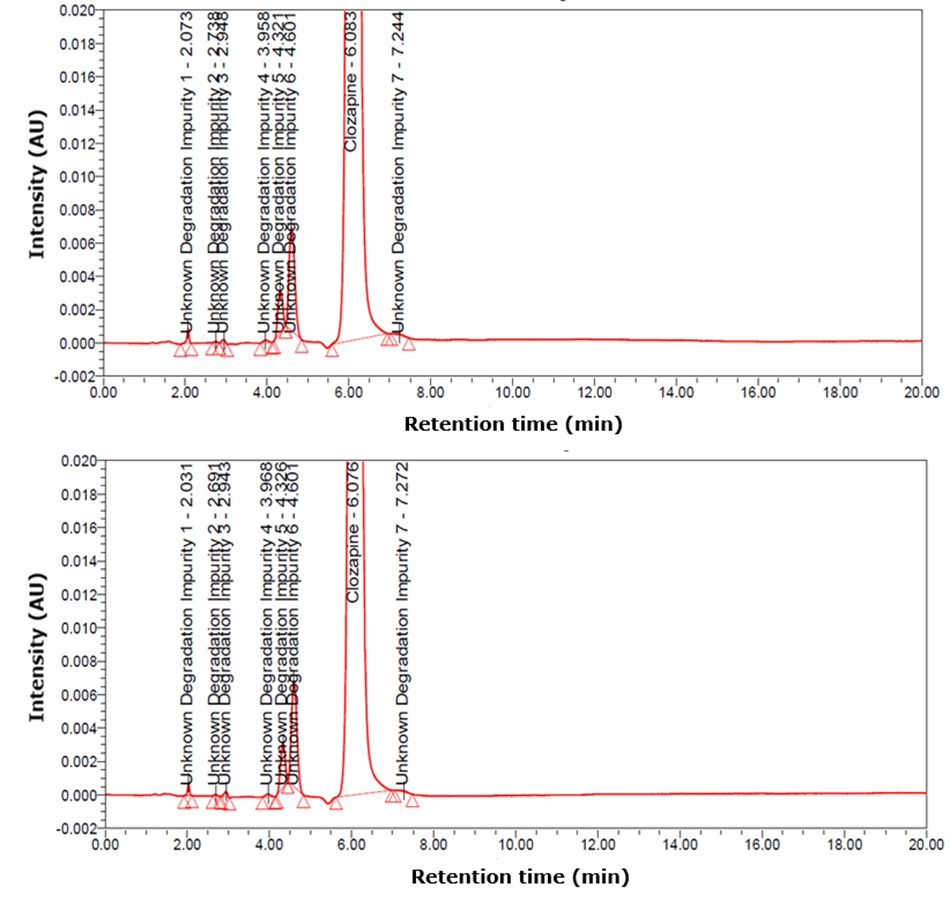
Figure 9.Chromatograms of the clozapine system suitability solution obtained using LiChrosolv® BioRenewable methanol (top) and conventional methanol (bottom).
Comparable chromatographic resolution was obtained using conventional methanol and LiChrosolv® BioRenewable methanol for the clozapine system suitability solution. Retention times of clozapine and the degradation impurities were similar under both solvent conditions, and the chromatographic profiles showed consistent separation of all detected peaks (Figure 9). The resolution between clozapine and adjacent peaks exceeded the USP acceptance criterion of NLT 1.5 for both solvent systems, demonstrating that substitution with LiChrosolv® BioRenewable methanol does not adversely affect impurity separation under the evaluated chromatographic conditions.
Calibration linearity, LOD, and LOQ
Calibration linearity and method sensitivity were evaluated using conventional methanol and LiChrosolv® BioRenewable methanol over the concentration range specified in the USP monograph. The correlation coefficient (R²), limit of detection (LOD), and limit of quantitation (LOQ) were determined to compare the analytical performance of the two solvent systems. The results are summarized in Table 15.
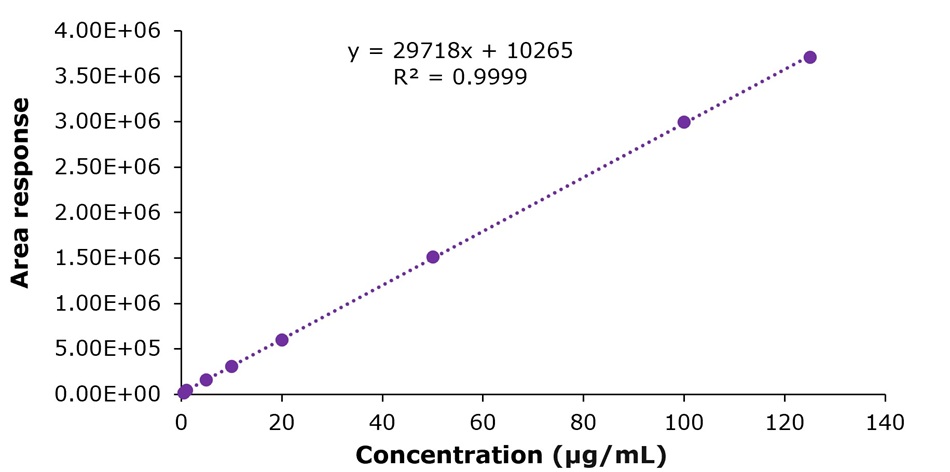
Figure 10.Calibration curves for clozapine over the concentration range of 0.5–125 µg/mL using conventional methanol.
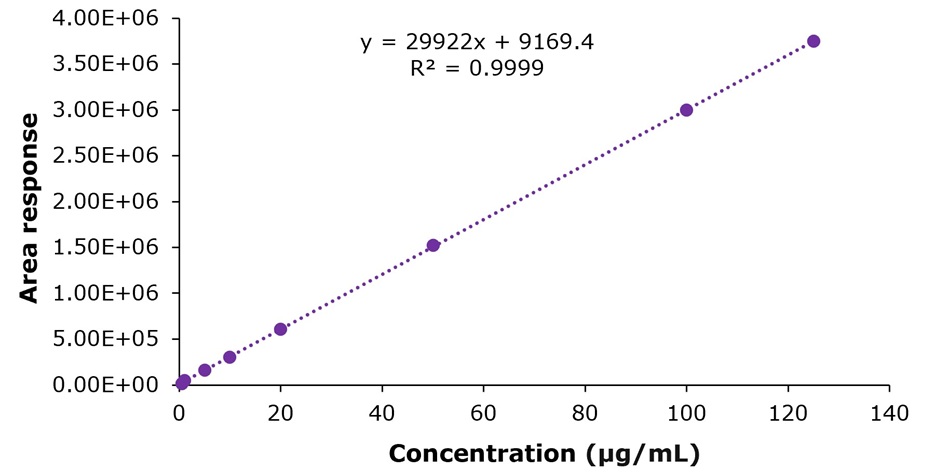
Figure 11.Calibration curves for clozapine over the concentration range of 0.5–125 µg/mL using LiChrosolv® BioRenewable methanol.
Excellent calibration linearity was obtained with both conventional methanol and LiChrosolv® BioRenewable methanol, with correlation coefficients of 0.9999 and 0.9999, respectively. The calibration range was identical for both solvent systems (0.5-125 µg/mL). Lower LOD and LOQ values were obtained with the bio-based solvent, indicating comparable linearity with slightly improved method sensitivity under the evaluated conditions.
Recovery study
Recovery values were comparable between conventional methanol and LiChrosolv® BioRenewable methanol across all evaluated spike levels. All recovery values were within the commonly accepted validation limits for assay accuracy, demonstrating comparable method accuracy for both solvent systems. These results indicate that substituting conventional methanol with LiChrosolv® BioRenewable methanol does not adversely affect clozapine recovery under the USP method.
Comparison of USP method performance for three APIs using conventional methanol and LiChrosolv® BioRenewable methanol
The chromatographic performance of conventional methanol and LiChrosolv® BioRenewable methanol was compared across the USP methods for diclofenac, lamivudine, and clozapine. Key analytical performance parameters, including repeatability, system suitability, calibration performance, method sensitivity, and recovery, are summarized in Table 17.
Conclusion
This in-house comparative study evaluated LiChrosolv® BioRenewable methanol using USP HPLC methods for diclofenac sodium, lamivudine, and clozapine. Across all three methods, the bio-based solvent demonstrated chromatographic performance comparable to conventional methanol, meeting the evaluated system suitability and method performance requirements while maintaining method accuracy and sensitivity.
- Comparable retention time and peak area reproducibility were observed under both solvent conditions for diclofenac sodium, lamivudine, and clozapine.
- All evaluated system suitability parameters met the applicable USP acceptance criteria. Lower %RSD values were observed for the lamivudine system suitability test using LiChrosolv® BioRenewable methanol.
- USP tailing factors were maintained within the specified acceptance limits for all three APIs under both solvent conditions.
- Comparable or lower LOD and LOQ values were obtained with LiChrosolv® BioRenewable methanol, indicating that method sensitivity was maintained.
- Comparable recovery values were obtained across all evaluated spike levels, demonstrating that method accuracy was maintained with LiChrosolv® BioRenewable methanol.
- LiChrosolv® BioRenewable methanol meets Ph. Eur. and ACS Reagent standards, satisfies ICH Q3C Class 2 and USP <467> requirements, and requires no method revalidation for like-for-like substitution.
- With approximately 21.4% lower CO₂ equivalent emissions than fossil-derived methanol, the use of LiChrosolv® BioRenewable methanol may contribute to reduced Scope 3 solvent-related emissions while maintaining comparable analytical performance under the evaluated USP methods.
The data presented in this study demonstrate that LiChrosolv® BioRenewable methanol provides chromatographic performance comparable to conventional methanol across the evaluated USP HPLC methods. Together with its reduced environmental footprint, these findings support its use as an alternative solvent for routine HPLC analytical workflows in pharmaceutical quality control.
Product portfolio and specifications
BioRenewable available grades
LiChrosolv® BioRenewable methanol is available in two analytical grades designed to cover the full range of pharmaceutical analytical applications.
Regulatory compliance and pharmacopoeial alignment
- European Pharmacopoeia (Ph. Eur.): Conforms to the Ph. Eur. monograph for methanol (01/2012:1534). Both variants carry the "Reag. Ph. Eur." designation on the certificate of analysis (CoA).
- ACS Reagent Grade: Meets ACS Reagent specifications for methanol established by the American Chemical Society Committee on Analytical Reagents.
- ICH Q3C Residual Solvents: Methanol is classified as a Class 2 residual solvent under ICH Q3C (PDE: 30 mg/day; concentration limit: 3,000 ppm). The use of bio-based methanol does not alter these limits.
- USP <467> Residual Solvents: Methanol is classified as a Class 2 solvent under USP <467>. As the bio-based and fossil-derived solvents are chemically identical, the applicable USP <467> limits remain unchanged.
- FDA 21 CFR / ICH Q7 (GMP): The defined impurity profile and purity (≥99.97% GC) of the hypergrade are consistent with requirements for solvents used in GMP analytical testing environments.
- Method Revalidation: Because bio-based methanol is chemically identical to fossil-derived methanol (CAS 67-56-1), comparable chromatographic performance is expected when used as a like-for-like replacement. The need for method revalidation or change-control activities should be determined in accordance with site-specific quality systems and applicable regulatory requirements.
Regulatory note for pharmaceutical QC laboratories
Bio-based methanol is chemically identical to conventional methanol (CAS 67-56-1). The transition from fossil-derived to bio-based methanol represents a change in the manufacturing source of the raw material rather than a change in the chemical substance itself. Based on its chemical equivalence and the comparable analytical performance demonstrated in this study, such a substitution would generally not be expected to require changes to the validated analytical method. However, the need for method revalidation, regulatory notification, or internal change-control documentation should be determined in accordance with applicable regulatory requirements and the laboratory's quality management system (QMS). Laboratories are also advised to retain certificates of analysis (CoAs) for each solvent batch as part of their raw material documentation.