
Recombinant Antibody Technology
Section Overview
- Recombinant Antibody Technology and Production
- ZooMAb® Recombinant Monoclonal Antibody Unique Features
- Use of ZooMAb® Recombinant Monoclonal Antibodies for Organoid-Related Research
- ZooMAb® Custom Antibody Services
- Polyclonal and Monoclonal Antibody Technology and Production
- Advantages and Disadvantages for Polyclonal, Monoclonal, and Recombinant Antibodies
Antibodies have become one of the most important tools in life science research, allowing the detection, quantitation, and determination of changes in proteins and other molecules with respect to time and other perturbations. Our ZooMAb® recombinant antibodies represent a new generation of monoclonal antibodies that are specifically engineered using our proprietary technologies that provide state-of-the-art consistency and application performance. ZooMAb® antibodies are designed with the most user-friendly formulation, handling, and storage features available today and have been validated in multiple immunoassay applications.
Learn how ZooMAb® antibodies are engineered for consistency using our proprietary recombinant expression system.
Recombinant Antibody Technology and Production
Recombinant antibodies are monoclonal antibodies that are generated by cloning antibody genes into expression vectors and do not involve the use of hybridomas. These antibodies can be cloned from any species using suitable oligonucleotide primers. With this technology, the problems of cell line drift, antibody expression variations, and antibody sequence mutations associated with classical hybridoma production and storage can be avoided. Thus, recombinant antibody technology reduces the use of animals in research and offers exceptional batch-to-batch consistency.
Recombinant antibody production from most species consists of a heavy and a light chain and it is important to note that to accomplish maximum IgG production in mammalian cells, one must achieve a balanced expression of both heavy and light chains. However, expression of these two chains on separate vectors is not an efficient way to generate monoclonal antibody producing cell lines. Use of a single vector carrying two separate expression cassettes provides higher efficiency and both genes are integrated at the same position and expressed independently. For recombinant antibody production, stable cell lines such as the Chinese hamster ovary (CHO) cells, human embryonic kidney 293 (HEK293), or NS0 murine myeloma cells are more commonly employed. CHO cells are most commonly used as a stable expression system and HEK293 cells are highly useful for transient gene expression where protein is harvested within a few days following DNA delivery. These eukaryotic systems offer additional advantages of protein folding, post-translational modifications, and a secretion apparatus that enhances the secretory production of antibodies.
Recombinant antibodies can also be produced in additional formats, such as Fab fragments, single-chain variable region fragments, and diabodies. Additionally, they can also be expressed in a wide variety of hosts, including bacteria, insect cells, yeast, and mammalian cells. Unlike monoclonal antibodies produced by hybridoma technology, recombinant antibodies maintain a high degree of specificity and low immunogenicity over longer periods of time. Recombinant antibodies serve as highly specific detection probes in research they are fast finding their niche in the detection of different pathogens and toxins and have great potential in therapeutic applications.
ZooMAb® Antibodies: The Next Generation of Recombinant Rabbit MAbs
Initially, we have offered more Rabbit recombinant monoclonal antibodies using the ZooMAb® antibody platform, however, we have also introduced several Mouse recombinant monoclonals and have plans to launch antibodies from additional species over time. Compared to commonly used murine species, rabbits have a natural tendency to produce a higher immune response to “difficult” immunogens that include small molecules, peptides, and post-translationally modified proteins. Rabbit antibodies also recognize a greater diversity of epitopes per antigen compared to murine species. Rabbit monoclonal antibodies can detect antigens at the picomolar range with high specificity and provide higher signal intensity in a wide range of applications.
ZooMAb® Recombinant Monoclonal Antibody Unique Features
Each ZooMAb® antibody is manufactured using our proprietary recombinant expression system, purified to homogeneity, and precisely dispensed to produce robust and highly reproducible lot-to-lot consistency. Only top-performing clones are released for use by researchers. Each antibody is validated for high specificity and affinity across multiple applications, including its most commonly used application. ZooMAb® antibodies are reliably available and ready to ship when you need them.
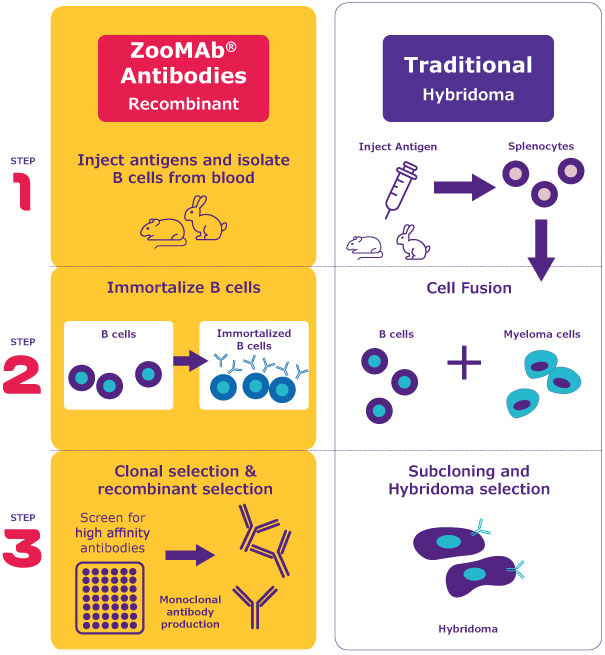
Figure 1.ZooMAb® Antibodies Recombinant vs. Traditional Hybridoma.
Superior Performance of ZooMAb® Recombinant Antibodies Against Traditional Hybridoma Based Monoclonal Antibodies
We have tested the performance of ZooMAb® recombinant monoclonal antibodies against hybridoma based mouse and rabbit monoclonal antibodies to demonstrate their superior performance. When tested in Western Blotting application in lysates from different cells and tissues, ZooMAb® antibodies delivered superior performance. When tested for their binding affinity, their binding affinity was at least a thousand-fold higher compared to control peptide and/or protein and in several cases their Kd values were in the range 10-10 to 10-12.
Superior performance of Anti-N-Cadherin Antibody, clone 3H17 ZooMAb® Rabbit Monoclonal against hybridoma based mouse and rabbit monoclonal antibodies.
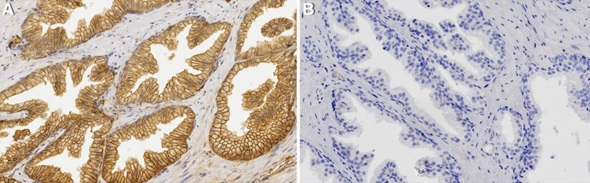
Figure 2. Immunohistochemistry for human prostate sections.A) Formalin Fixed Paraffin Embedded (FFPE) human prostate and B) negative control (no primary) tissue sections were prepared using heat-induced epitope retrieval (HIER). Immunostaining was performed using a 1:100 dilution of Prod. No. ZRB2507, anti-CTNND1/p120CTN, clone 2C22 ZooMAb® rabbit monoclonal antibody. Reactivity was detected using a goat anti-rabbit IgG and HRP-DAB antibody. Cytoplasmic/membranous staining was observed in glandular cells of human prostate tissue sections.
Use of ZooMAb® Recombinant Monoclonal Antibodies for Organoid-Related Research
Organoids contain multiple cell types that interact with each other, and are highly desired for research in organ development, disease modeling, and drug testing. Organoid models can be engineered to replicate specific disease conditions that help researchers study the progression of disease and design therapeutic modalities. Our ZooMAb® recombinant monoclonal antibodies offered in biocide-free and animal product-free format are highly suited for use with organoids.
These antibodies can be used to identify specific cell types during organoid development, study time-dependent expression of specific proteins, and analyze the interaction of multiple cell types during development. These applications can contribute significantly to our understanding of mechanisms involved in tissue development and disease progression. Below are a few examples of ZooMAb® recombinant antibody use in immunohistochemistry application with organoids.
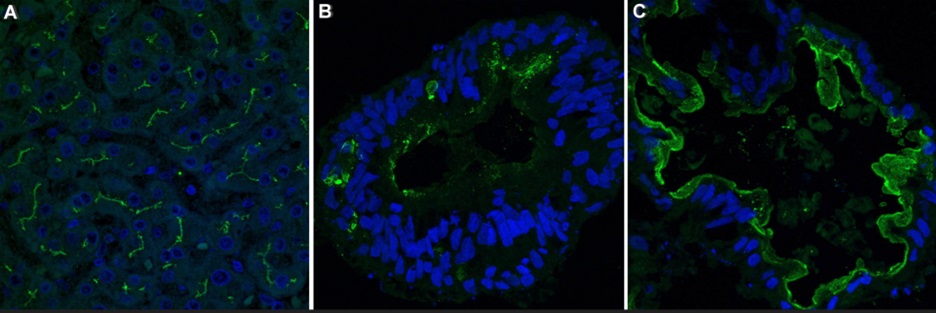
Figure 3.Immunofluorescence analysis of organoids using Prod. No. ZRB2029, Anti-MRP2, clone 1B2 ZooMAb® rabbit monoclonal antibody (ATP-binding cassette sub-family C member 2). A) Formalin Fixed Paraffin Embedded (FFPE) human liver tissue section was prepared using heat-induced epitope retrieval (HIER), B) 4% PFA-fixed, frozen iPSC-derived liver organoid progenitors (Prod. No. SCC572, 3dGRO® human iPSC derived liver organoid progenitors), and C) mature liver organoids were treated with permeabilization buffer containing 1% goat serum and 0.3% Triton™ X-100. Immunostaining was performed using a 1:100 dilution of Prod. No. ZRB2029, Anti-MRP2, clone 1B2 ZooMAb® rabbit monoclonal antibody. Reactivity was detected using a goat anti-rabbit IgG-Alexa Fluor™ 488 antibody (Green). Nucleus was stained with DAPI (Blue). Membranous staining was observed in hepatocytes of human liver tissue section (A). Membranous staining was observed in iPSC-derived liver organoid progenitors (B) and in mature liver organoids (C).
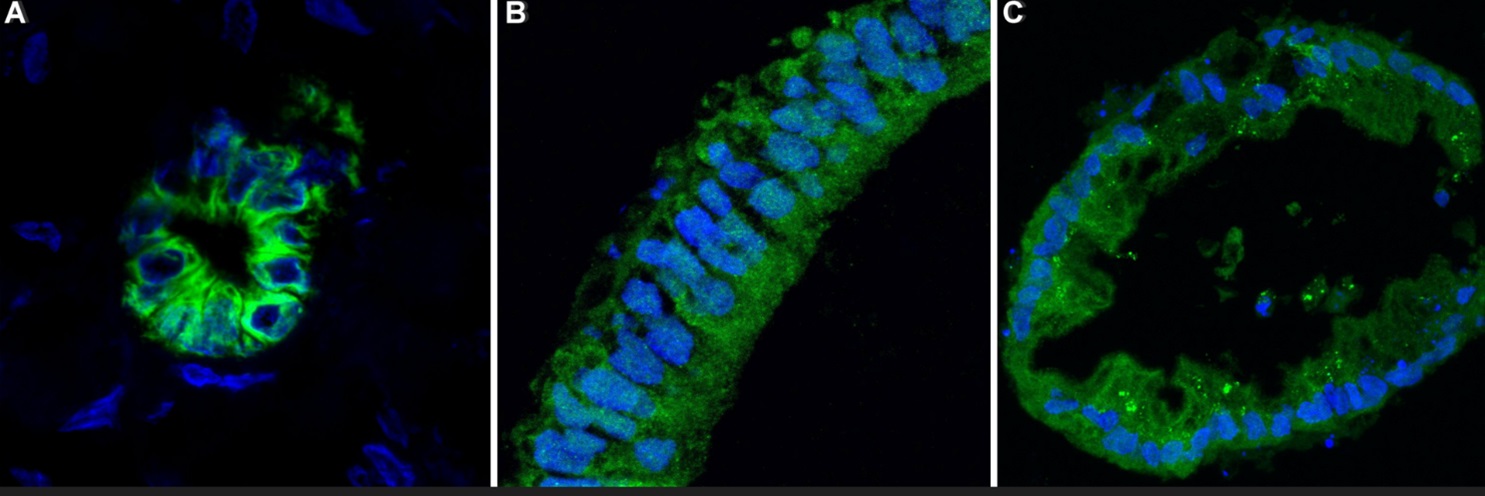
Figure 4.Immunofluorescence Analysis using Anti-Keratin 7, Clone 3O4 ZooMAb® Rabbit Monoclonal Antibody. A) Formalin Fixed Paraffin Embedded (FFPE) human liver tissue section was prepared using heat-induced epitope retrieval (HIER), B) 4% PFA-fixed, frozen iPSC-derived liver organoid progenitors (Prod. No. SCC572, 3dGRO® Human iPSC derived liver organoid progenitors), and C) mature liver organoids were treated with permeabilization buffer containing 1% goat serum and 0.3% Triton™ X-100. Immunostaining was performed using a 1:100 dilution of Prod. No. ZRB1769, anti-keratin 7, clone 3O4 ZooMAb® rabbit monoclonal antibody. Reactivity was detected using a goat anti-rabbit IgG-Alexa Fluor™ 488 (Green). Nucleus was stained with DAPI (Blue). Cytoplasmic staining was observed in ductal cells of human liver tissue section (A). Cytoplasmic/punctate cytoplasmic staining was observed in iPSC-derived liver organoid progenitors (B) and in mature liver organoids (C).
ZooMAb® Custom Antibody Services
ZooMAb® contract antibody development services provide a tailored solution for designing custom antibodies specific to your unique targets, ensuring we meet your research and production needs. Our service includes immunogen design and preparation, antibody development and screening, application-specific testing, antibody modifications, and large-scale antibody manufacturing.
Our ZooMAb® recombinant monoclonal antibodies are engineered for sustainability, reproducibility, and consistency, and they have been validated across multiple immunoassays. Trust our experienced R&D team to assist you in developing high-quality custom antibodies, giving you reliability and peace of mind throughout the process. Please, fill out the custom ZooMAb® request form.
Polyclonal & Monoclonal Antibody Technology and Production
Polyclonal or monoclonal antibody technology offers different advantages that are desirable for specific applications. Polyclonal antibodies are produced as a result of the activation of numerous different in antibody producing B cells in an animal. Hence, they are considered a mixture of antibodies that can react with multiple epitopes on the surface of the antigen. Polyclonal antibodies are generally more tolerant of minor changes in the antigen, such as heterogeneity of glycosylation, polymorphism, or slight denaturation.
With monoclonal antibody production, one B cell produces only one specific sequence of antibody to a given antigen. Hence, a monoclonal antibody is considered a collection of identical antibodies secreted by a single B cell clone with specificity for only one antigenic epitope. In traditional methods, monoclonal antibodies are produced by fusion of B cells with an immortal cell to produce a hybridoma that produces many copies of the exact same antibody. Their specific monovalent nature makes monoclonal antibodies very useful in highly targeted immunoassays and diagnostic applications. However, when compared to polyclonals they are more vulnerable to the loss of epitope through chemical treatment of the antigen.
It is Easy to Stay in Touch with Us to Find Your Target
Use the convenient QR code printed on each ZooMAb® product label to take you to our website. This home page is where you can find up to date information on all the newest additions to our ZooMAb® portfolio and can contact us to share your experience with our products.
For Research Use Only. Not for use in diagnostic procedures.
Unless otherwise stated in the Product(s) specifications, any Antibody product is sold for internal research use only and may not be used for any other purpose, which includes but is not limited to, any commercial, diagnostic, or therapeutic use. Our validation processes pertain only to research uses and do not confirm or assure that our antibodies can be used for any unauthorized uses as set forth herein.