High Purity Inorganics for Advanced Applications

High-purity inorganics are essential for advanced applications where even parts-per-million levels of contamination can significantly impact electrical, optical, or catalytic performance. Our portfolio of high-purity inorganic salts, metals, alloys, oxides, sol-gel precursors, ceramics, chemical Vapor deposition (CVD), atomic layer deposition (ALD) precursors, and chalcogenides is specified and manufactured to minimize trace impurities and ensure consistent performance.
Our high-purity inorganic materials offer:
- Trace metal purity levels from 99.9% to 99.9995%
- Rigorous analytical testing, including best-in-class 32-element trace metals panels and 16-element rare earth panels
- Controlled morphology, particle size, and surface area specifications where performance is critical
- Reliable batch-to-batch consistency
Products
Our Expertise in High-Purity Inorganics Testing and Production
By combining in-house production capabilities, including metal distillation, salt purification, and particle beading for precise surface area control, with inert-atmosphere packaging, we deliver the purity and reliability required for semiconductors, optical, advanced ceramics, and high-performance catalyst applications.
Trace Metal Purity: Importance of Element Panels in High-Purity Inorganics

Trace metal impurities are the low-level foreign metal elements present in inorganic material, including metals, oxides, salts, chalcogenides. Even parts-per-million (ppm) concentrations of certain elements can significantly affect electrical conductivity, optical absorption, catalytic activity, sintering behavior, or corrosion resistance. Therefore, identifying which elements are present, and at what concentration is essential for high-reliability applications.
Defining and Reporting Total Metal Impurities (TMI)
Total Metal Impurities (TMI) are calculated as the sum of individual element concentrations measured within a defined analytical testing panel. When a product is specified as “≥99.9%” pure, this corresponds to total impurities ≤0.1% (≤1,000 ppm).
It is important to understand the scope of the selected analytical panel. Some market offerings may test only 5 or 8 elements yet still report a purity claim based solely on the detected impurities, which may not reflect the full impurity profile.
We test high-purity inorganics using a consistent, broader-than-typical analytical approach. Every product specified on a trace metals basis undergoes a 32-element trace metals screen, while products specified on a rare earth metals basis are tested using a dedicated 16-element rare earth panel. This comprehensive testing reduces the risk of undetected contaminants that narrower screens may miss and enables more accurate evaluation of total metal burden across the elements relevant to your application. Typically on our certificate of analysis (COA), we only report elemental impurities that are detected; impurities that fall below the detectable range are not usually listed.
Ensuring Quality Control and Data Confidence in Trace Metal Reporting
Robust quality control (QC) is essential for ensuring confidence in reported trace metal values. We support all results with standard quality control procedures, including method blanks, spike and recovery checks, and duplicate or replicate analyses.
Certificates of Analysis (COA) typically report all detected impurities above the limits of detection (LOD) or quantification (LOQ), along with batch identification to ensure full traceability of results.
Particle Size in High-Purity Inorganics
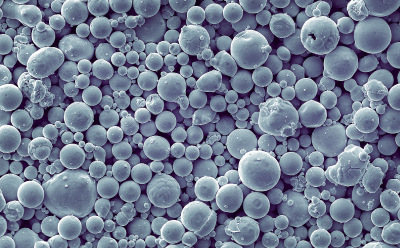
Particle size is a key material attribute because it influences surface area, reactivity, packing behavior, and flow properties. The particle size of our products is typically measured using mesh and percentage D-values.
Mesh Size Specifications in Powder Products
Some powder products specify particle size by mesh designation, such as “-325 mesh”. In our quality control labs, we sieve these powders to confirm compliance at least 90% of the material must pass through the specified mesh.
Mesh size denotes the number of openings per linear inch in a woven wire screen. For example, -325 mesh means particles pass through a sieve with 325 openings per inch (≈44 µm). The minus sign (−) indicates that the particles pass through the mesh size.
A higher mesh number corresponds to smaller (finer) nominal openings and, therefore, generally finer particles. For practical conversion, explore the particle size conversion table from Sigma-Aldrich.
Understanding Particle Size Distributions
Particle size and its distribution critically influence material reactivity, surface area, packing density, flowability, and sintering behavior. For applications where these parameters are essential, percentile-based metrics provide greater precision than single mesh specifications.
Common particle size distribution descriptors include:
- D10: The particle diameter at which 10% of the material (by volume) is smaller.
- D50: The particle diameter at which 50% of the material (by volume) is smaller.
- D90: The particle diameter at which 90% of the material (by volume) is smaller.
For products, like Gold powder <10 μm, ≥99.9% trace metals basis, a specification such as “< 10 µm” typically indicates that 90% of the particles are below 10 µm (D90 < 10 µm).
Applications of High Purity-Inorganics
Batteries
- Iron(III) phosphate dihydrate is used as a precursor in the production of lithium iron phosphate (LiFePO4), a key material for lithium-ion batteries.
- Lithium sulfide (99.995% trace metals basis) is used as a precursor for sulfide-based solid electrolytes like Li3PS4 and Li6PS5Cl
Semiconductor
- Tetrakis(dimethylamido)hafnium(IV) (≥99.99% trace metals basis) or TDMAH serves primarily as a precursor in Atomic Layer Deposition (ALD) and Chemical Vapor Deposition (CVD) to form hafnium oxide (HfO₂) thin films, which act as high-k dielectrics in advanced transistors.
- Silver shot (≥99.99% trace metals basis) is evaporated to deposit highly conductive thin films onto semiconductor wafers for microelectronics, including interconnects.
Optics
- Hafnium oxide and magnesium fluoride are used for making optical coatings with high refractive index for AR coating, mirrors, beam splitters, and laser components.
- Bismuth telluride (99.99%) is used to make photodetectors, adsorbing layers in photonics applications, and active layers in sensors.
- Zirconium(IV) fluoride (99.9% trace metals basis) is a critical component in fluoride glasses for advanced optical applications due to its wide infrared transparency and low refractive index.
Chemical Synthesis
- Ruthenium(III) chloride hydrate (≥99.9% trace metals basis) serves as a versatile precursor for ruthenium catalysts in oxidation and hydrogenation processes.
- Rhodium(III) sulfate (99.9% trace metals basis) serves as an anhydrous electrocatalyst for methanol oxidation, enabling efficient C–C and C–H bond cleavage.