
Photometric determination of zinc in soil using pyridylazoresorcinol (PAR) subsequent to acid extraction
Introduction
Zinc is an essential trace element required for plant growth and is involved in numerous biological processes, including enzyme activity and photosynthesis. However, both deficiency and excess of zinc can affect plant performance, and elevated concentrations can disrupt physiological processes and element homeostasis.1 In soil, zinc typically occurs in the range of 10 to 300 mg/kg, with an average concentration of approximately 50 mg/kg. Zinc availability is influenced by soil properties, and deficiency is commonly observed in sandy, calcareous, saline, and organic matter-rich soils.1 Zinc contamination in soil is associated with agricultural and industrial inputs, including fertilizer application, industrial effluents, and mining activities. Determination of zinc in soil is therefore required to assess its concentration under varying conditions.
Applicable sample
Soil samples
Reagents, instruments, and materials
Test/Reagent kit(s)
For the measurement one of the following Spectroquant® test kits is necessary:
Instrument(s) and devices
For the measurement one of the following Spectroquant® photometers is necessary:
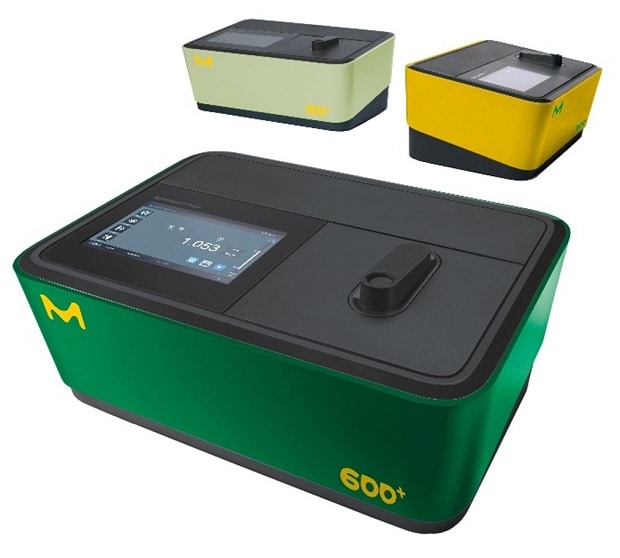
- Spectroquant® VIS Spectrophotometer Prove 100 plus (1.73026)
- Spectroquant® UV/VIS Spectrophotometer Prove 300 plus (1.73027)
- Spectroquant® UV/VIS Spectrophotometer Prove 600 plus (1.73028)
- Spectroquant® Colorimeter Move 100 (1.73632)
Note: Also, legacy Spectroquant® instruments are suitable.
Software for data transfer
Optional Spectroquant® Prove Connect to LIMS software package (Y.11086) to transfer your data into an existing LIMS system.
Other reagents and accessories
- Hydrochloric acid 25 % for analysis (1.00316)
- Hydrochloric acid 1 mol/l for analysis (1.09970)
- Sodium hydroxide solution 10 % for analysis (1.05588)
- MQuant® Universal Indicator strips pH 0 – 14 (1.09535)
- MQuant® Indicator strips pH 0 – 6 (1.09531)
- Water for analysis (1.16754)
- Analytical balance
- Standard laboratory glassware (e.g., glass beakers) and pipettes
- Shaker or stirring plate
- Sieve
- Spatula
- pH-meter
- Charcoal activated for soil test
- Folded filter
Analytical procedure
For more information on the measurement see the packaging insert for the test
Sample preparation
- In a glass beaker place 10 g of air-dried and sieved (mesh 2 mm) sample with 100 mL hydrochloric acid 1 mol/L and a spatula-tip full of charcoal activated for soil tests and mix well for 1 hour. The pH - value should be 1 – 2 (check with pH-indicator strips). If necessary, adjust with hydrochloric acid 25%.
- Afterwards adjust the pH-value of the suspension to 3.0 with sodium hydroxide solution 10 %, using the pH-meter.
- Then remove the undissolved matter by filtration through a folded filter and wash the filter residues 3 times with water for analysis.
- Collect the filtrate and the washings in a 200-mL standard volumetric flask, finally fill up to volume with water for analysis and mix well.
Using cat. no. 1.00861: procedure and Measurement
For more information on the measurement, see the packaging insert for the test.
Procedure
- Pipette 10 mL Pretreated sample into a suitable glass vessel.
- Add 1 level grey microspoon (In the cap of the Zn-1K bottle) Reagent Zn-1K and shake until the reagent is dissolved completely: Sample-reagent mixture
- Caution! The reaction cell contains potassium cyanide!
- Pipette 0.50 mL Reagent Zn-2K into a reaction cell, close the cell tightly, and mix.
- Add 2.0 mL of the Sample-reagent mixture with a pipette, close the cell tightly, and mix.
- Add 5 drops Reagent Zn-3K, close the cell tightly, and mix. Hold the bottle vertically when adding the reagent.
- Leave to stand for 15 min (reaction time), then measure the sample in the photometer.
Measurement
- For photometric measurement the cells must be clean. Wipe, if necessary, with a clean dry cloth.
- Measurement of turbid solutions yields false-high readings.
- The pH of the measurement solution must be within the range 9.0 - 9.2.
- The color of the measurement solution remains stable for at least x60 min after the end of the reaction time stated above.
Hints for measurement
- It is recommended to zero the method each new working day. To do this, open the method, either by manually selecting the method or by inserting a barcoded cell. Tap the <Settings> button and select the <ZERO ADJUSTMENT> menu item. After prompting, insert the 16 mm zero cell through the corresponding opening. The zero adjustment is performed automatically. Confirm the performance of the zero-adjustment procedure by clicking on <OK>.
- After the zero has been performed, insert the barcoded Spectroquant® round cell through the corresponding opening, ensuring that the white position mark on the cell is aligned with the positioning mark on the spectrophotometer. The measurement starts automatically.
- Read off the result in mg/L from the display.
Hint: The above written measurement description is only valid for the Spectroquant® Prove (plus) series photometer. If a different instrument is used, please consult the corresponding instrument manual for more details on how to perform the measurement.
Using cat. no. 1.148566: procedure and measurement
For more information on the measurement, see the packaging insert for the test.
Procedure
- Place 5 drops Reagent Zn-1K into a reaction cell, close the cell tightly, and mix. Hold the bottle vertically when adding the reagent.
- Add 0.50 mL Pretreated sample with a pipette, close the cell tightly, and mix.
- Add 5 drops Reagent Zn-2K, close the cell tightly, and mix. Hold the bottle vertically when adding the reagent. The pH must be within the range of 9.0-10.5. Check with MQuant® pH-indicator strips. Adjust the pH, if necessary, with reagent Zn-1K.
- Leave to stand for 15 min (reaction time), then measure the sample in the photometer.
Note: If the bottle is not held vertically when adding the reagents, the correct drop size and correspondingly the correct amount of reagent and thus the correct pH value will not be achieved.
Measurement
- For photometric measurement the cells must be clean. Wipe, if necessary, with a clean dry cloth.
- Measurement of turbid solutions yields false-high readings.
- The pH of the measurement solution must be within the range 9.0 - 10.5. If the value is too high, false-low readings are yielded
- The color of the measurement solution remains stable for 30 min after the end of the reaction time stated above. (After 60 min the measurement value would have diminished by 5%.)
Hints for measurement
- It is recommended to zero the method each new working day. To do this, open the method, either by manually selecting the method or by inserting a barcoded cell. Tap the <Settings> button and select the <ZERO ADJUSTMENT> menu item. After prompting, insert the 16 mm zero cell through the corresponding opening. The zero adjustment is performed automatically. Confirm the performance of the zero-adjustment procedure by clicking on <OK>.
- After the zero has been performed, insert the barcoded Spectroquant® round cell through the corresponding opening, ensuring that the white position mark on the cell is aligned with the positioning mark on the spectrophotometer. The measurement starts automatically.
- Read off the result in mg/L from the display.
Hint: The above written measurement description is only valid for the Spectroquant® Prove (plus) series photometer. If a different instrument is used, please consult the corresponding instrument manual for more details on how to perform the measurement.
Analytical quality assurance
Analytical quality assurance (AQA) is recommended before each measurement series.
To check the photometric measurement system (test reagents, measurement device, handling) and the mode of working, a diluted zinc standard solution containing 2.00 mg/L Zn or Spectroquant® CombiCheck 100 can be used. Besides a standard solution with 0.750 mg/L Zn2+, this article also contains an additional solution for determining sample-dependent interferences (matrix effects).
Sample-dependent interferences (matrix effects) can be determined by means of standard addition or dilution.
To view additional notes, visit SigmaAldrich.com/qa-test-kits.
Calculation
Zinc content in mg/kg Zn = analysis value in mg/L Zn x 20