
PODS® Sustained Protein Delivery for Cell-Based Research
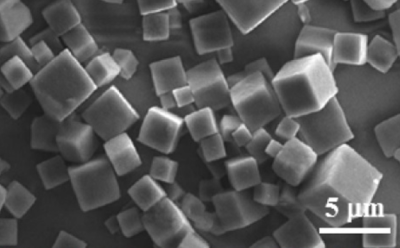
Figure 1.SEM of PODS® crystals at 5 µm.
Introduction
In the fields of cell biology and regenerative medicine, the controlled delivery of growth factors and cytokines is crucial for maintaining cell viability, directing differentiation, and promoting tissue regeneration. However, the inherent instability of these proteins has long been a significant challenge, limiting their effectiveness in both research and clinical applications. Enter PODS® (POlyhedrin Delivery System) protein microcrystals, an innovative technology that addresses this challenge by providing a sustained release mechanism for bioactive proteins.
What are PODS® Crystals? Protein Delivery Through Polyhedrin Encapsulation
PODS® protein crystals are microscopic, cubic structures that encapsulate and slowly release bioactive cargo proteins. At the heart of this technology is the polyhedrin protein, which forms a crystalline lattice around the cargo protein of interest. These crystals typically range from 0.5 to 7 microns in size, with a modal size of 0.9-1 microns.
How do PODS® Crystals Work?
PODS® technology exploits the natural properties of the polyhedrin protein to form in-cell crystals. When a tagged protein of interest (the bioactive protein) is co-expressed with the polyhedrin protein, they form co-crystals. The bioactive protein specifically binds to the polyhedrin crystal via a short protein immobilization tag. Under the action of proteases, these crystals slowly degrade, providing a sustained release of the encapsulated bioactive protein.
Key benefits of PODS® protein delivery technology:
- Sustained Release: PODS® crystals can deliver intact cargo proteins over days, weeks, or even months, depending on the formulation.
- Stability: PODS® crystals are highly stable when stored in aqueous solutions (pH 6-8) at 4°C, maintaining >70% stability for at least 6 months.
- Localized Delivery: PODS® crystals can be easily attached to surfaces or incorporated into hydrogels, allowing for localized protein delivery.
- Gradient Formation: When localized on a surface, PODS® crystals can generate biologically effective gradients that can be maintained for weeks.
- Reduced Frequency of Media Changes: The sustained release nature of PODS® crystals reduces the need for frequent media changes in cell culture applications.
Applications of PODS® Technology in Cell Culture, Organoids, and Therapeutics
The versatility of PODS® technology has led to its widespread adoption in various fields of biological research and potential therapeutic applications.
In vitro gradient formation cell culture
The unique ability of PODS® crystals to form stable gradients has made them invaluable tools in developmental biology research. In a study using PODS® NGF (Nerve Growth Factor), researchers created a simple yet effective chemotactic gradient. Using PC12 cells as a model for neuronal differentiation, they demonstrated controlled cell migration and neurite guidance. This highlights the potential of PODS® technology in studying axon guidance and neural development. Furthermore, the ability to create stable, long-lasting gradients could be particularly useful for studying embryonic development, where morphogen gradients play crucial roles in patterning and differentiation.
In vitro modeling and growth factor stabilization
The integration of PODS® technology into 3D cell culture and organoid systems has opened up new possibilities for creating more physiologically relevant in vitro models. PODS® crystals can be easily incorporated into various hydrogels, creating bioactive scaffolds that can extend the release period of growth factors for several months. This ability to combine different PODS® crystals growth factors within hydrogels allows researchers to create complex microenvironments that better mimic in vivo conditions, which is particularly beneficial for organoid cultures requiring multiple growth factors at specific concentrations.
In vitro modeling has seen significant improvements with the use of PODS® technology, particularly in long-term cultures that require consistent growth factor availability. A notable example is the generation of retinal ganglion cell (RGC) organoids from mouse embryonic stem cells. Researchers found that a single application of PODS® BDNF and GDNF crystals was sufficient to support the organoids for an extended period, outperforming conventional growth factors that required multiple applications. The PODS®-treated organoids showed improved morphology and demonstrated significantly higher expression of RGC markers. This sustained release characteristic of PODS® crystals simplifies culture protocols by reducing the frequency of media changes and growth factor replenishment, thereby minimizing cell stress caused by fluctuating growth factor concentrations.
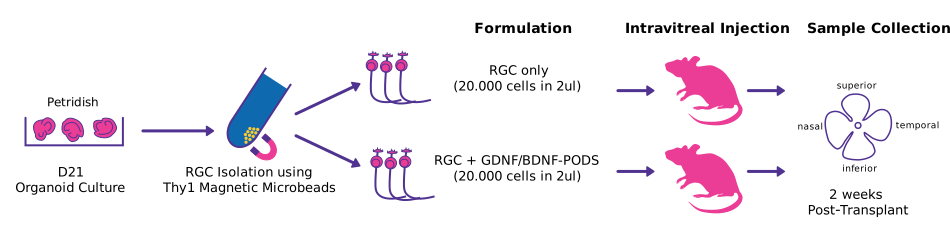
Figure 2.Experimental workflow for intravitreal transplantation of retinal ganglion cells (RGCs) with or without PODS®protein delivery. RGCs were isolated from day 21 retinal organoid cultures using Thy1 magnetic microbeads, then divided into two groups: one with RGCs only (20,000 cells in 2 μL) and another with RGCs combined with GDNF/BDNF-loaded PODS®crystals (20,000 cells in 2 μL). Each formulation was injected intravitreally into the eyes of recipient mice. Retinal tissues were collected two weeks post-transplant for analysis of regional distribution (superior, temporal, inferior, nasal).
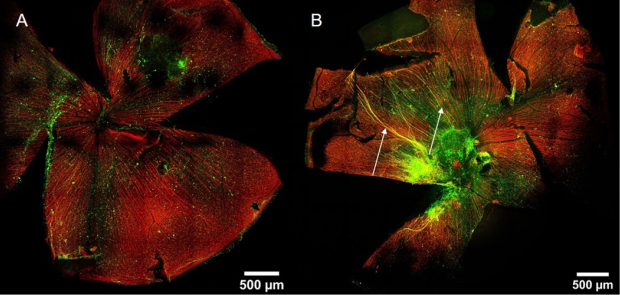
Figure 3.Dissected eyes, two weeks post-RGC transplantation. Thy1 was used to detect RGCs and β3-tubulin (TUJ-1) used as general neuronal marker (A) without PODS® protein delivery (B) with PODS®protein delivery. Significantly improved maturation with increased levels of axon growth (arrows) was achieved in the PODS®-treated eye. Data courtesy of Julia Oswald and Petr Baranov, Schepens Institute, Harvard Medical School, Boston, MA.
Bioactive protein delivery in tissue engineering and regenerative medicine
In the realm of therapeutic applications, PODS® technology has shown great promise, especially in regenerative medicine. A compelling example comes from a study on bone regeneration using a rat calvarial defect model. PODS® BMP-2 demonstrated superior bone regeneration compared to standard recombinant BMP-2, with imaging analysis showing significantly more bone formation over an extended period. Remarkably, a single application of PODS® BMP-2 was effective for several weeks and proved more efficacious at lower doses compared to standard treatments. This localized delivery approach, where PODS® crystals were combined with absorbable scaffolds for implantation, could potentially be adapted for other tissues requiring sustained growth factor delivery.
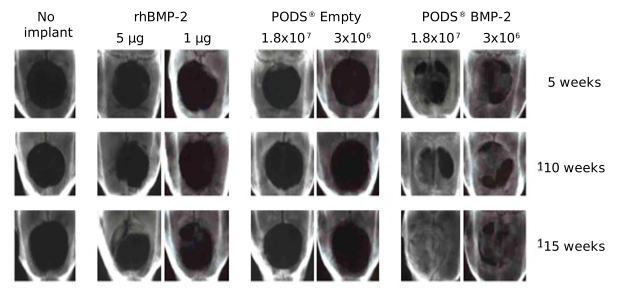
Figure 4.X-ray micrographs and μ-CT analysis of calvarial bone defects over 15 weeks showed PODS® BMP-2 (low and high doses) significantly outperformed standard rhBMP-2, empty PODS® crystals, and untreated defects in bone regeneration.
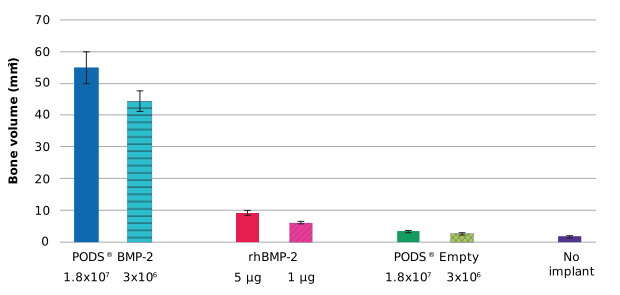
Figure 5.PODS®crystals persisted for 10 weeks, fully degrading by 15 weeks, with no observed inflammation. Both PODS® BMP-2 doses stimulated more bone growth than other treatments, demonstrating superior efficacy in bone regeneration. Adapted from Matsumoto, G. et al. Sci Rep. 2, 935; DOI10.1038/srep00935 (2012). Data courtesy of Hajime Mori, Kyoto Institute of Technology, Kyoto, Japan.
Protein delivery systems and immune cell reprogramming
A particularly exciting application of PODS® technology is in the reprogramming of immune cells, specifically monocytes, macrophages, and other phagocytic cells. This approach offers a new avenue for autologous immune cell therapy, potentially addressing limitations of current methods like CAR-T cell therapy. The process involves phagocytosis of PODS® protein crystals by immune cells, which efficiently reprograms them within 24 hours. About 70% of harvested cells can be engineered using this method, creating a novel class of modified immune cells for therapy.
PODS®-modified monocytes and macrophages have been shown to secrete protein cargos in a dose-dependent manner for several days or weeks. The secreted proteins can modulate the behavior of adjacent cells and have demonstrated potential in reducing tumor growth in mouse models of cancer. For instance, FGF-2 secreted from PODS®-engineered macrophages enhanced the proliferation of fibroblasts, while PODS® crystals containing IL-2 significantly slowed cancer growth in mice after tail vein injection.
This approach to immune cell reprogramming offers several advantages over traditional methods. It's faster and potentially more cost-effective than CAR-T cell therapy, with the possibility of completing the entire process of harvesting, engineering, and returning cells to the patient within 48 hours. Moreover, this technique could be applicable to a wider range of cancers, including solid tumors, which have been challenging to treat with current CAR-T cell therapies.
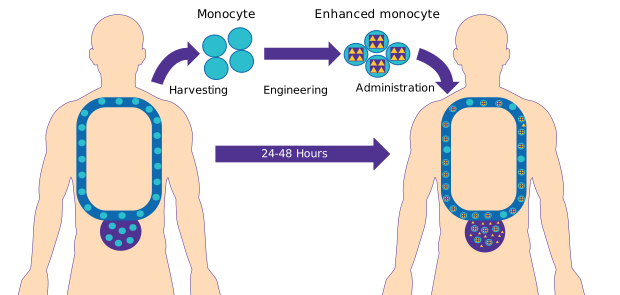
Figure 6.Schematic of monocyte therapy with sustained release protein PODS®. Patient-derived monocytes are engineered by phagocytosis of PODS® protein crystals and reintroduced within 48 hours to actively infiltrate the cancer.
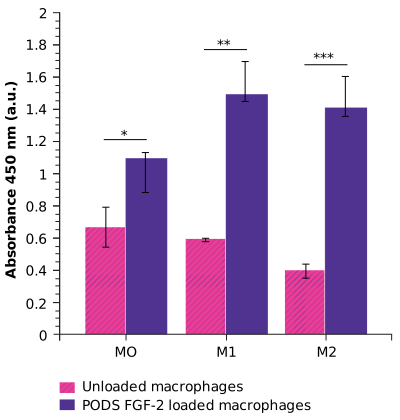
Figure 7.PODS® modified monocytes and macrophages secrete protein cargos in a dose dependent manner (data not shown). FGF-2 secreted from engineered M0, M1, and M2 macrophages engineered enhance the proliferation of fibroblasts.
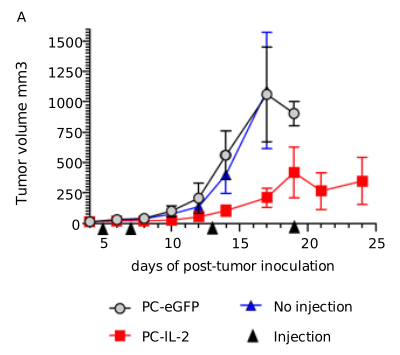
Figure 8.In a mouse cancer model, IL-2 PODS® protein crystals significantly slowed tumor growth and reduced tumor size.
Stem cell culture and differentiation
Lastly, PODS® protein crystals have shown significant advantages in stem cell culture, both for maintaining pluripotency and directing differentiation. Studies have demonstrated that PODS® crystals containing specific factors can effectively support the proliferation of various types of stem cells. The sustained release of these factors helps maintain a more stable environment for sensitive cell populations, potentially improving the consistency and reliability of stem cell cultures. This application of PODS® technology could have far-reaching implications in stem cell research and regenerative medicine, offering a more robust and simplified approach to maintaining and differentiating stem cells in vitro.
Conclusion
PODS® technology represents a significant advancement in protein delivery for both research and potential therapeutic applications. By providing a sustained, localized release of bioactive proteins, PODS® crystals overcome many of the limitations associated with conventional recombinant proteins. This technology has the potential to revolutionize fields such as tissue engineering, regenerative medicine, and developmental biology by allowing for more precise control over the cellular microenvironment. As research continues, we can expect to see further applications and refinements of PODS® technology, potentially leading to new therapeutic strategies and more sophisticated in vitro models that better recapitulate in vivo conditions.
Viewing the full product offerings here: PODS® Protein Delivery Systems.
Related Products
References
To continue reading please sign in or create an account.
Don't Have An Account?