
294845

Bromomethane solution
2.0 M in diethyl ether
Synonym(s):
Methyl bromide
Sign In to View Organizational & Contract Pricing.
Select a Size
Change View
About This Item
Empirical Formula (Hill Notation):
CH3Br
CAS Number:
Molecular Weight:
94.94
UNSPSC Code:
12352100
PubChem Substance ID:
MDL number:
Quality Level
vapor pressure
1420 mmHg ( 20 °C), 3945 mmHg ( 55 °C)
concentration
2.0 M in diethyl ether
impurities
<0.005% water
density
0.83 g/mL at 25 °C
application(s)
agriculture
storage temp.
2-8°C
SMILES string
CBr
InChI
1S/CH3Br/c1-2/h1H3
InChI key
GZUXJHMPEANEGY-UHFFFAOYSA-N
General description
Bromomethane solution (methyl bromide) is the most effective soil fumigant for killing plant pests, its use is being phased out because its emissions from soil can lead to stratospheric ozone depletion. The bimolecular nucleophilic substitution (SN2) reaction of methyl bromide and OH- in aqueous solution has been investigated using a multilayered-representation quantum mechanical and molecular mechanics methodology.
Packaging
Supplied in a Sure/Pac™ cylinder and has a 1/4-turn bronze ball valve with a female 1/4" NPT outlet thread (Z122661) installed. Before using the cylinder, ensure that the valve is closed, then remove carbon steel plug that seals the outlet valve.
Compatible with the following:
Compatible with the following:
- Aldrich® Sure/Pac™ station for liquefied gases Z566446
- PTFE Sealing tape Z104388 or Z221880
- Straight septum-inlet adapter Z118141 with septa Z565687 or Z565695
Legal Information
Aldrich is a registered trademark of Sigma-Aldrich Co. LLC
Sure/Pac is a trademark of Sigma-Aldrich Co. LLC
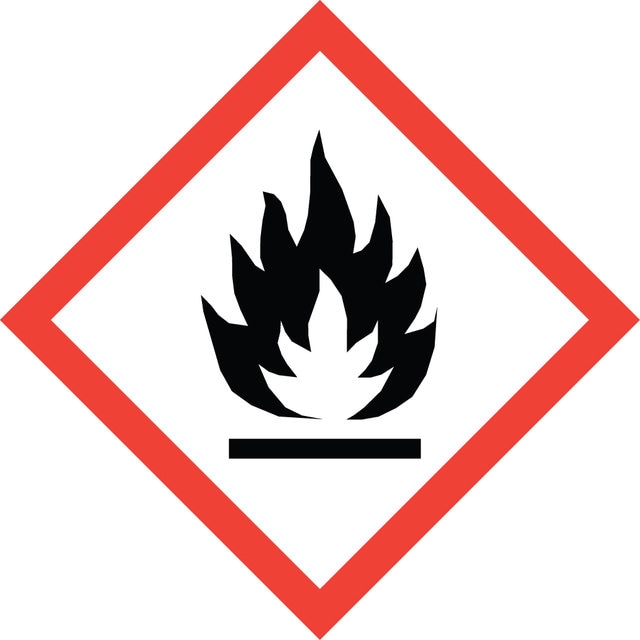



signalword
Danger
Hazard Classifications
Acute Tox. 3 Dermal - Acute Tox. 4 Inhalation - Acute Tox. 4 Oral - Aquatic Chronic 2 - Eye Irrit. 2 - Flam. Liq. 2 - Muta. 2 - Ozone 1 - Skin Irrit. 2 - STOT RE 2 - STOT SE 3
target_organs
Central nervous system, Respiratory system
supp_hazards
Storage Class
3 - Flammable liquids
wgk
WGK 3
flash_point_f
-40.0 °F - closed cup
flash_point_c
-40 °C - closed cup
ppe
Eyeshields, Faceshields, Gloves, type ABEK (EN14387) respirator filter
Regulatory Information
新产品
This item has
Choose from one of the most recent versions:
Already Own This Product?
Find documentation for the products that you have recently purchased in the Document Library.
Richeng Xuan et al.
Environmental science & technology, 44(23), 9080-9085 (2010-11-10)
Despite generally being considered the most effective soil fumigant, methyl bromide (MeBr) use is being phased out because its emissions from soil can lead to stratospheric ozone depletion. However, a large amount is still currently used due to Critical Use
Lygia T Budnik et al.
Environmental health : a global access science source, 11, 5-5 (2012-01-31)
Although ozone-depleting methyl bromide was destined for phase-out by 2005, it is still widely applied as a consequence of various critical-use-exemptions and mandatory international regulations aiming to restrict the spread of pests and alien species (e.g. in globalized transport and
Alan V Barak et al.
Journal of economic entomology, 104(1), 69-74 (2011-03-17)
Ash (Fraxinus spp.) logs, infested with fully developed, cold-acclimated larval and prepupal emerald ash borer, Agrilus planipennis Fairmaire (Coleoptera: Buprestidae), were fumigated with methyl bromide (MeBr) at 4.4 and 10.0 degrees C for 24 h. Concentrations X time dosages of