
333948

Zirconium(IV) butoxide solution
80 wt. % in 1-butanol
Synonym(s):
Tetrabutyl zirconate solution
Sign In to View Organizational & Contract Pricing.
Select a Size
Change View
About This Item
Linear Formula:
Zr(OC4H9)4
CAS Number:
Molecular Weight:
383.68
UNSPSC Code:
12352103
NACRES:
NA.23
PubChem Substance ID:
MDL number:
Beilstein/REAXYS Number:
4132649
eCl@ss:
32150313
Quality Segment
product line
Sol-Gel Precursors
form
solution
reaction suitability
core: zirconium, reagent type: inorganic catalyst
concentration
80 wt. % in 1-butanol
refractive index
n
density
1.049 g/mL at 25 °C
SMILES string
CCCCO[Zr](OCCCC)(OCCCC)OCCCC
InChI
1S/4C4H9O.Zr/c4*1-2-3-4-5;/h4*2-4H2,1H3;/q4*-1;+4
InChI key
BSDOQSMQCZQLDV-UHFFFAOYSA-N
General description
Zirconium(IV) butoxide solution is a high-purity organometallic reagent, consisting of 80 wt.% zirconium butoxide dissolved in 1-butanol. It is primarily as a catalyst and precursor for the synthesis of advanced ceramic materials, thin films, and nanostructures. Its controlled decomposition and film-forming properties zirconium(IV) butoxide used in the fabrication of zirconia-based (ZrO₂) coatings, aerogels, and nanomaterials.
Application
Zirconium(IV) butoxide can be used as:
- A precursor in the sol-gel synthesis of zirconium carbide (ZrC) for applications in energy storage devices, including supercapacitors.
- A precursor for synthesizing zirconia (ZrO₂) nanolayers. These nanolayers are in situ grown on polyimide (PI) nanofibers to fabricate hybrid separators for lithium-ion batteries (LIBs).
- A precursor to synthesize zirconia (ZrO₂) nanocrystals via Solvothermal method.
- A precursor to synthesize zirconium carbide (ZrC) via sol-gel method.
Used in an unconventional method to prepare a gel of CeO2-stabilized zirconia polycrystals that have promising applications as protective coatings of steel and ferrous alloys.
Features and Benefits
- High Thermal Stability: Enables formation of thermally stable ceramic coatings and films.
- Easy handling: Often provided as a stabilized solution (in alcohol) for ease of handling.
- Solubility: Soluble in organic solvents like alcohols and hydrocarbons, making it suitable for sol-gel processing.
Signal Word
Danger
Hazard Codes
Precautionary Statements
Hazard Classifications
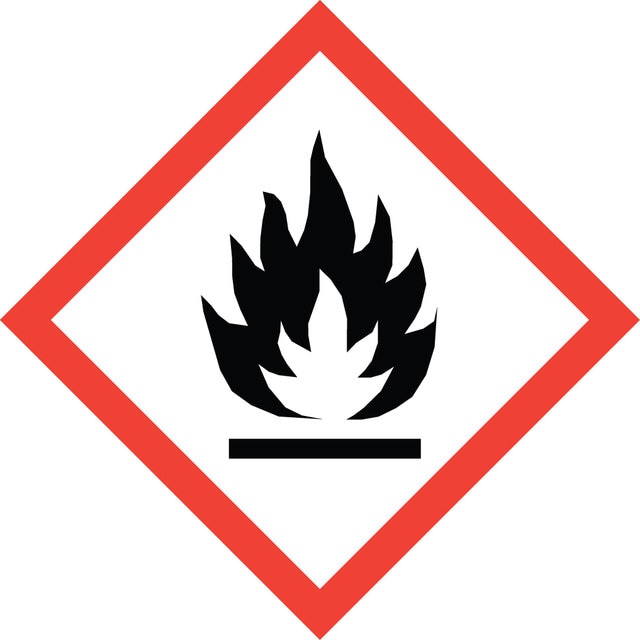
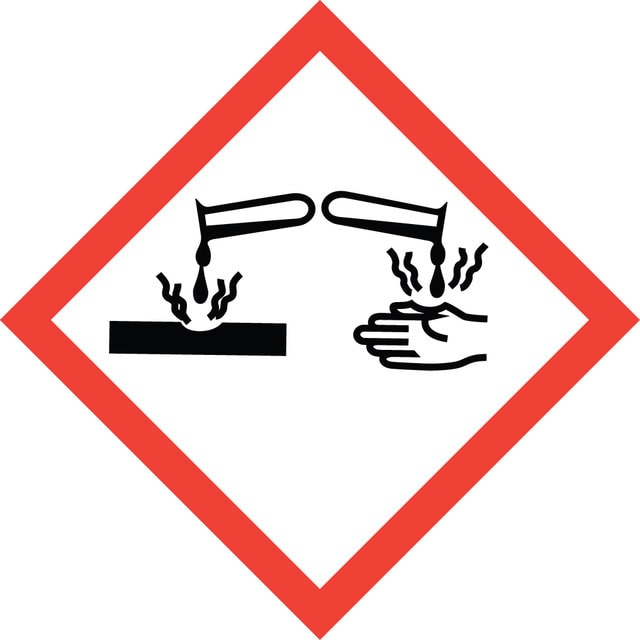
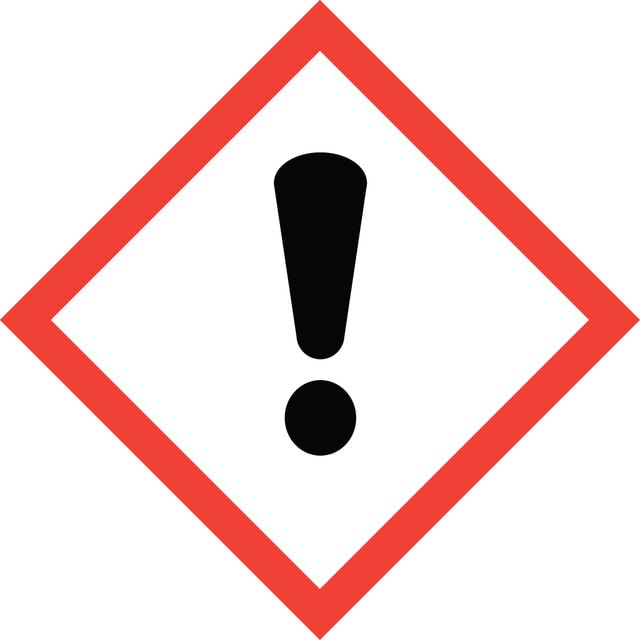
Eye Dam. 1 - Flam. Liq. 3 - Skin Irrit. 2 - STOT SE 3
Target Organs
Central nervous system, Respiratory system
Storage Class
3 - Flammable liquids
Flash Point (°F)
100.4 °F - closed cup
Flash Point (°C)
38 °C - closed cup
PPE (personal protective equipment)
Eyeshields, Faceshields, Gloves, type ABEK (EN14387) respirator filter
Choose from one of the most recent versions:
Already Own This Product?
Find documentation for the products that you have recently purchased in the Document Library.