Skip to Content
Merck
CN

522864

Methylstyrene

60% meta, 40% para and 1% ortho, 99%, contains ~50 ppm 4-tert-butylcatechol as inhibitor

Synonym(s):

Vinyltoluene

Sign In to View Organizational & Contract Pricing.

Select a Size


About This Item

Linear Formula:
CH3C6H4CH=CH2
CAS Number:
Molecular Weight:
118.18
UNSPSC Code:
12162002
NACRES:
NA.23
PubChem Substance ID:
EC Number:
246-562-2
Beilstein/REAXYS Number:
1209317
MDL number:
Technical Service
Need help? Our team of experienced scientists is here for you.
Let Us Assist
Technical Service
Need help? Our team of experienced scientists is here for you.
Let Us Assist

Product Name

Methylstyrene, 60% meta, 40% para and 1% ortho, 99%, contains ~50 ppm 4-tert-butylcatechol as inhibitor

InChI key

VAPKHDZBJXRVNG-UHFFFAOYSA-N

InChI

1S/2C9H10/c1-3-9-6-4-8(2)5-7-9;1-3-9-6-4-5-8(2)7-9/h2*3-7H,1H2,2H3

SMILES string

Cc1ccc(C=C)cc1.Cc2cccc(C=C)c2

assay

99%

contains

~50 ppm 4-tert-butylcatechol as inhibitor

refractive index

n20/D 1.5425 (lit.)

bp

168 °C (lit.)

density

0.893 g/mL at 25 °C (lit.)

storage temp.

2-8°C

Quality Level

Application


  • Applications in cancer therapy: Investigation into (−)-Epicatechin incorporated in phytopharmaceuticals for cancer treatment discusses its bioactive properties and synergistic effects when combined with other therapeutic agents, providing new avenues for integrative cancer therapies (Idoudi et al., 2024).


General description

Methylstyrene can be used as a monomer in the synthesis of block copolymers for resins and adhesives. It is widely used as a starting material to prepare latexes for paper coating applications.

signalword

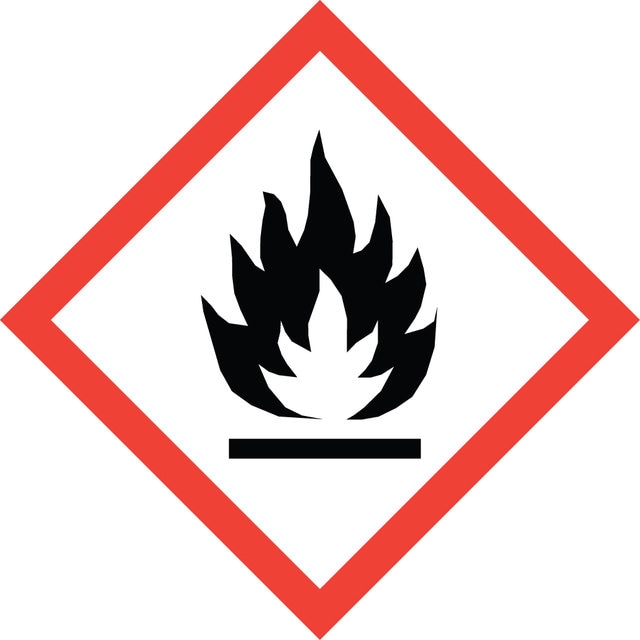
Danger

Hazard Classifications

Acute Tox. 4 Inhalation - Asp. Tox. 1 - Eye Irrit. 2 - Flam. Liq. 3 - Skin Irrit. 2 - STOT SE 3

target_organs

Respiratory system

Storage Class

3 - Flammable liquids

wgk

WGK 3

flash_point_f

125.6 °F - closed cup

flash_point_c

52 °C - closed cup

Regulatory Information

危险化学品
This item has

Choose from one of the most recent versions:

Certificates of Analysis (COA)

Lot/Batch Number

Don't see the Right Version?

If you require a particular version, you can look up a specific certificate by the Lot or Batch number.

Already Own This Product?

Find documentation for the products that you have recently purchased in the Document Library.

Visit the Document Library

Karla M Robotti et al.
Journal of separation science, 32(20), 3379-3387 (2009-09-25)
Polyimide HPLC-Chip devices containing poly(methylstyrene-bis-p-vinylphenyl)ethane (MS/BVPE) stationary phase within the device channels and with wall attachment were prepared by thermally initiated free radical polymerization. The microfluidic devices were coupled to both UV and MS detectors. The potential of the MS/BVPE
Alexandre F De Moraes Filho et al.
Sensors (Basel, Switzerland), 18(6) (2018-06-20)
This paper presents a gaseous oxygen detection system based on time-resolved phosphorimetry (time-domain), which is used to investigate O2 optical transducers. The primary sensing elements were formed by incorporating iridium(III) and palladium(II) meso-tetrakis(pentafluorophenyl)porphyrin complexes (IrTFPP-CO-Cl and PdTFPP) in polystyrene (PS)
Sandra C Greer
Annual review of physical chemistry, 53, 173-200 (2002-04-25)
The aggregation of monomers into polymers, whether by covalent or noncovalent interactions, is often reversible and frequently occurs with the entropy and enthalpy of the aggregation sharing the same sign. In such a case, the aggregation goes forward or reverses
Daniel A Singleton et al.
Journal of the American Chemical Society, 127(18), 6679-6685 (2005-05-05)
The epoxidation of beta-methylstyrene catalyzed by the Shi fructose-derived ketone is studied using experimental kinetic isotope effects and DFT calculations. The observation of a large beta olefinic (13)C isotope effect and small alpha carbon isotope effect is indicative of an
Christopher P Burke et al.
The Journal of organic chemistry, 72(16), 6320-6323 (2007-07-12)
Asymmetric epoxidation of various olefins with an N-aryl-substituted oxazolidinone-containing ketone as catalyst and hydrogen peroxide as the primary oxidant has been investigated, and up to 96% ee was obtained.

Our team of scientists has experience in all areas of research including Life Science, Material Science, Chemical Synthesis, Chromatography, Analytical and many others.

Contact Technical Service