Skip to Content
Merck
CN

674583

Silver perchlorate

97%

Synonym(s):

Perchloric acid silver(1+) salt, Silver(1+) perchlorate

Sign In to View Organizational & Contract Pricing.

Select a Size


About This Item

Linear Formula:
AgClO4
CAS Number:
Molecular Weight:
207.32
NACRES:
NA.23
PubChem Substance ID:
UNSPSC Code:
12352302
EC Number:
232-035-4
MDL number:
Assay:
97%
Grade:
anhydrous
Form:
solid
Solubility:
benzene: slightly soluble(lit.)
pyridine: slightly soluble(lit.)
Technical Service
Need help? Our team of experienced scientists is here for you.
Let Us Assist
Technical Service
Need help? Our team of experienced scientists is here for you.
Let Us Assist

Product Name

Silver perchlorate, 97%

InChI key

YDHABVNRCBNRNZ-UHFFFAOYSA-M

InChI

1S/Ag.ClHO4/c;2-1(3,4)5/h;(H,2,3,4,5)/q+1;/p-1

SMILES string

[Ag+].[O-]Cl(=O)(=O)=O

grade

anhydrous

assay

97%

form

solid

reaction suitability

core: silver
reagent type: catalyst

impurities

≤0.1% Insoluble matter

mp

486 °C (lit.)

solubility

benzene: slightly soluble(lit.)
pyridine: slightly soluble(lit.)

density

2.8 g/mL at 25 °C (lit.)

Quality Level

Looking for similar products? Visit Product Comparison Guide

Application

  • Anion exchange dynamics in the capture of perchlorate by a cationic Ag-based MOF: Investigates the anion exchange dynamics and structural transformations of a silver-based metal-organic framework capturing perchlorate (Colinas et al., 2017).

pictograms

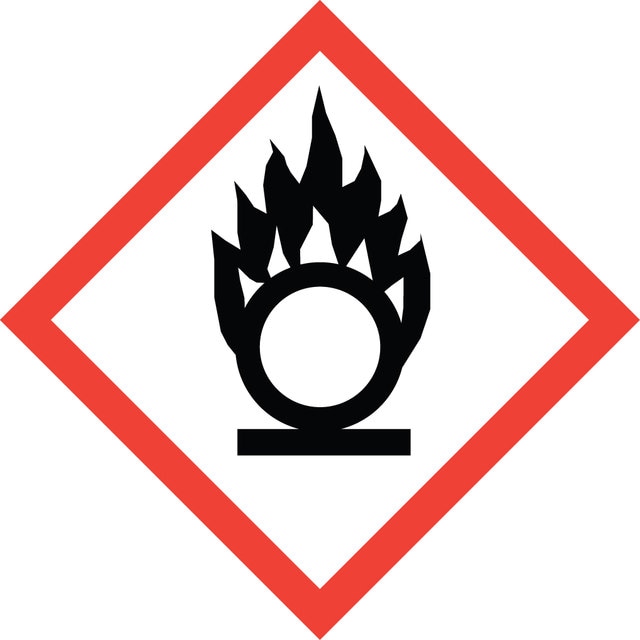
Flame over circleCorrosion

signalword

Danger

hcodes

Hazard Classifications

Ox. Sol. 2 - Skin Corr. 1B

Storage Class

5.1A - Strongly oxidizing hazardous materials

wgk

WGK 3

flash_point_f

Not applicable

flash_point_c

Not applicable

ppe

Eyeshields, Faceshields, Gloves, type P3 (EN 143) respirator cartridges

Regulatory Information

危险化学品
This item has

Choose from one of the most recent versions:

Certificates of Analysis (COA)

Lot/Batch Number

Don't see the Right Version?

If you require a particular version, you can look up a specific certificate by the Lot or Batch number.

Already Own This Product?

Find documentation for the products that you have recently purchased in the Document Library.

Visit the Document Library

Glycosylation via Cp2ZrCl2/AgClO4-mediated activation of anomeric sulfoxides.
P Wipf et al.
The Journal of organic chemistry, 66(23), 7910-7914 (2001-11-10)
Ken Sakai et al.
Acta crystallographica. Section B, Structural science, 60(Pt 3), 255-262 (2004-05-19)
The third crystal structure containing the hydroxo-bridged cis-diammineplatinum(II) dimer has been determined for a perchlorate salt of the complex, [Pt(2)(NH(3))(4)(micro-OH)(2)](ClO(4))(2). However, the dinuclear cations in the nitrate and the carbonate salts, [Pt(2)(NH(3))(4)(micro-OH)(2)](NO(3))(2) [Faggiani, Lippert, Lock & Rosenberg (1977). J. Am.
E Petráková et al.
Carbohydrate research, 233, 101-112 (1992-09-02)
Specifically deoxygenated methyl alpha-isomaltotriosides were synthesized by the silver perchlorate-mediated condensation of a protected alpha-isomaltosyl chloride with suitably blocked derivatives of methyl alpha-D-glucopyranoside deoxygenated respectively at positions 2, 3, and 4, followed by deprotection.
Masafumi Harada et al.
Journal of colloid and interface science, 339(2), 373-381 (2009-09-08)
Metal particles of silver (Ag) were synthesized by the photoreduction of silver perchlorate (AgClO(4)) in water-in-ionic liquid (ILs) microemulsions consisting of Tween 20, water and ionic liquids. The ILs were tetrafluoroborate anions associated with the cations 1-butyl-3-methylimidazolium tetrafluoroborate ([BMIm][BF(4)]) and
Naoki Toshima et al.
The journal of physical chemistry. B, 109(34), 16326-16331 (2006-07-21)
We showed recently that low entropy core/shell structured nanoparticles form spontaneously from the physical mixture of a dispersion of Ag nanoparticles and that of another noble metal (Rh, Pd, or Pt) at room temperature. Here we use isothermal titration calorimetry

Articles

Access gold precatalysts, silver salts, and unsaturated building blocks to accelerate research success in catalysis applications.

Plasmonic nanoparticles have unique optical properties that can be tailored to suit a variety of applications in the biotechnology1–8 and electronics9–16 industries.

Our team of scientists has experience in all areas of research including Life Science, Material Science, Chemical Synthesis, Chromatography, Analytical and many others.

Contact Technical Service