
S4007

Sodium iodate
≥99%
Sign In to View Organizational & Contract Pricing.
Select a Size
Change View
About This Item
Linear Formula:
NaIO3
CAS Number:
Molecular Weight:
197.89
NACRES:
NA.22
PubChem Substance ID:
UNSPSC Code:
12352302
EC Number:
231-672-5
MDL number:
Assay:
≥99%
Quality Segment
assay
≥99%
density
4.28 g/mL at 25 °C (lit.)
SMILES string
[Na+].[O-]I(=O)=O
InChI
1S/HIO3.Na/c2-1(3)4;/h(H,2,3,4);/q;+1/p-1
InChI key
WTCBONOLBHEDIL-UHFFFAOYSA-M
Application
Sodium iodate (NaIO3) can be used as an oxidant in the following processes:
- NaIO3/neutral Al2O3 catalytic system is used to synthesize a variety of aromatic, aliphatic, and alicyclic disulfides via oxidation of the corresponding thiols.
- NaIO3/Na2SO3/HCl is used in the preparation of 2-amino-1-iodonaphthalene by iodination of 2-naphthylamine.
- NaIO3/acetic anhydride or glacial acetic acid is used in aromatic oxidative iodination reactions.
Still not finding the right product?
Explore all of our products under Sodium iodate
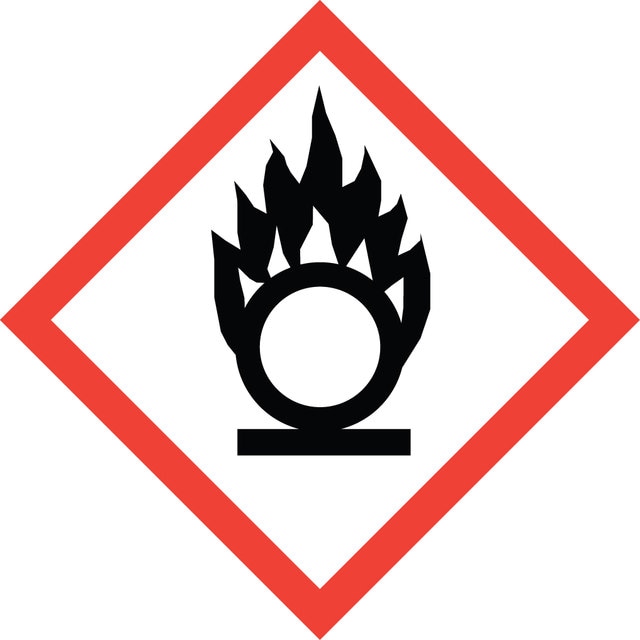

Signal Word
Danger
Hazard Codes
Precautionary Statements
Hazard Classifications
Acute Tox. 4 Oral - Ox. Sol. 2 - Skin Sens. 1
Storage Class
5.1B - Oxidizing hazardous materials
WGK
WGK 1
Flash Point (°F)
Not applicable
Flash Point (°C)
Not applicable
PPE (personal protective equipment)
Eyeshields, Faceshields, Gloves, type P3 (EN 143) respirator cartridges
Choose from one of the most recent versions:
Already Own This Product?
Find documentation for the products that you have recently purchased in the Document Library.