
ST1049

Anti-20S Proteasome α1, 2, 3, 5, 6, & 7-Subunits Mouse mAb (MCP231)
liquid, clone MCP231, Calbiochem®
Sign In to View Organizational & Contract Pricing.
Select a Size
Change View
About This Item
UNSPSC Code:
12352203
Clone:
MCP231, monoclonal
Species reactivity:
human, yeast, rat, rabbit, mouse
Application:
—
Citations:
3
biological source
mouse
Quality Segment
antibody form
purified antibody
antibody product type
primary antibodies
clone
MCP231, monoclonal
form
liquid
contains
≤0.1% sodium azide as preservative
species reactivity
human, yeast, rat, rabbit, mouse
manufacturer/tradename
Calbiochem®
storage condition
OK to freeze, avoid repeated freeze/thaw cycles
isotype
IgG1
shipped in
wet ice
storage temp.
−20°C
target post-translational modification
unmodified
Gene Information
human ... PSMA1(5682)
General description
Purified mouse monoclonal antibody generated by immunizing BALB/c mice with the specified immunogen and fusing splenocytes with mouse myleloma cells. Recognizes the ~29-32 kDa α1, 2, 3, 5, 6 and 7 subunits of the 20S proteasome.
Recognizes α1, 2, 3, 5, 6 and 7 subunits of 20S proteasome in human placental proteasome preparations.
This Anti-20S Proteasome alpha-1, 2, 3, 5, 6, & 7 Subunits Antibody is validated for use in WB, IP, ELISA, IF, ICC and IHC for the detection of 20S Proteasome alpha-1, 2, 3, 5, 6, & 7 Subunits.
Immunogen
Epitope: within the prosbox I motif common to α subunits (TVWSPQGRLHQVEYAMEA)
dinitrophenylated proteasomes
Application
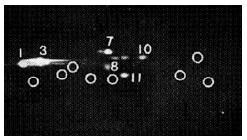
Immunoblotting (1:1000, chemiluminescence)
Immunoprecipitation (not recommended)
ELISA (see comments)
Immunofluorescence (see application references)
Immunocytochemistry (see application references)
Immunohistochemistry (see application references)
Frozen Sections (see application references)
Analysis Note
Positive Control
Human placental tissue
Human placental tissue
Other Notes
Immunoblotting using a human placental proteasome preparation yields two bands at ~29 kDa and ~32 kDa. In ELISA the antibody reacts with the peptide sequence TVWSPQGRLHQVEYAMEA encompassing the prosbox I motif common to α-type subunits. Antibody should be titrated for optimal results in individual systems.
Kopp, F., et al. 1997. Proc. Natl. Acad. Sci. USA94, 2939.
Legal Information
CALBIOCHEM is a registered trademark of Merck KGaA, Darmstadt, Germany
Disclaimer
Toxicity: Highly Toxic (H)
Still not finding the right product?
Try our Product Selector Tool to narrow your options
Storage Class
12 - Non Combustible Liquids
wgk
nwg
flash_point_f
Not applicable
flash_point_c
Not applicable
Certificates of Analysis (COA)
Search for Certificates of Analysis (COA) by entering the products Lot/Batch Number. Lot and Batch Numbers can be found on a product’s label following the words ‘Lot’ or ‘Batch’.
Already Own This Product?
Find documentation for the products that you have recently purchased in the Document Library.
Related Content
Global Trade Item Number
| SKU | GTIN |
|---|---|
| ST1049-100UL | 04055977224375 |