
Skip to Content
Merck
CN

05-4610

Chromium(VI) oxide

SAJ first grade, ≥95.0%

Synonym(s):

Chromic anhydride

Sign In to View Organizational & Contract Pricing.

Select a Size

Change View

About This Item

Empirical Formula (Hill Notation):
CrO3
CAS Number:
Molecular Weight:
99.99
UNSPSC Code:
12352300
PubChem Substance ID:
EC Number:
215-607-8
MDL number:
Technical Service
Need help? Our team of experienced scientists is here for you.
Let Us Assist


grade

SAJ first grade

assay

≥95.0%

availability

available only in Japan

mp

196 °C (dec.) (lit.)

SMILES string

O=[Cr](=O)=O

InChI

1S/Cr.3O

InChI key

WGLPBDUCMAPZCE-UHFFFAOYSA-N


Still not finding the right product?

Explore all of our products under Chromium(VI) oxide
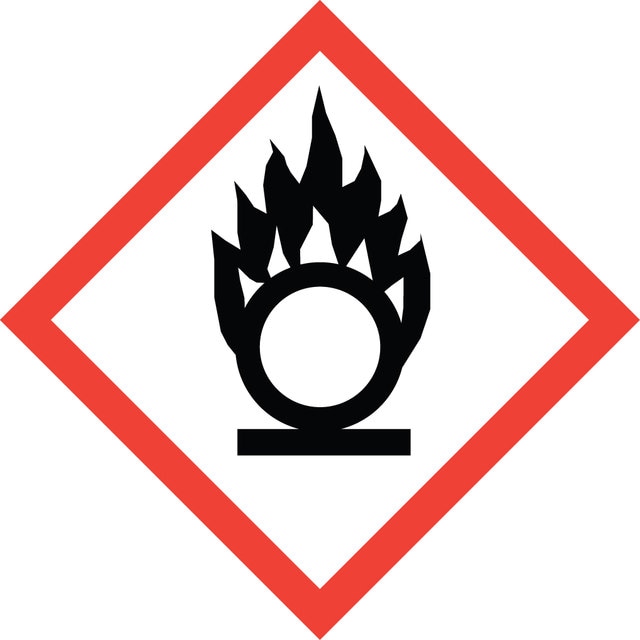

signalword

Danger

Hazard Classifications

Acute Tox. 2 Inhalation - Acute Tox. 3 Dermal - Acute Tox. 3 Oral - Aquatic Acute 1 - Aquatic Chronic 1 - Carc. 1A - Eye Dam. 1 - Muta. 1B - Ox. Sol. 1 - Repr. 2 - Resp. Sens. 1 - Skin Corr. 1A - Skin Sens. 1 - STOT RE 1 Inhalation - STOT SE 3

target_organs

Respiratory system

Storage Class

5.1A - Strongly oxidizing hazardous materials

wgk

WGK 3

ppe

dust mask type N95 (US), Eyeshields, Faceshields, Gloves, type P2 (EN 143) respirator cartridges, type P3 (EN 143) respirator cartridges

Regulatory Information

新产品

This item has


Choose from one of the most recent versions:

Certificates of Analysis (COA)

Lot/Batch Number

Don't see the Right Version?

If you require a particular version, you can look up a specific certificate by the Lot or Batch number.

Already Own This Product?

Find documentation for the products that you have recently purchased in the Document Library.

Visit the Document Library


Sara L Holland et al.
Toxicology in vitro : an international journal published in association with BIBRA, 24(6), 1764-1767 (2010-07-20)
Toxicity of the environmental carcinogen chromate is known to involve sulfur starvation and also error-prone mRNA translation. Here we reconcile those facts using the yeast model. We demonstrate that: (i) cysteine and methionine starvation mimic Cr-induced translation errors, (ii) genetic
Sethsiri S Samaratunga et al.
Environmental science and pollution research international, 15(1), 27-30 (2008-03-01)
Chromium enters into the aquatic environment as a result of effluent discharge from steel works, electroplating, leather tanning industries and chemical industries. As the Cr(VI) is very harmful to living organisms, it should be quickly removed from the environment when
Kyung-Hwa Son et al.
Journal of toxicology and environmental health. Part A, 67(13), 1027-1049 (2004-06-19)
CrO3 is cytotoxic for human epithelial 293 kidney cells over a narrow concentration range of approximately 2-8 microM (D50 approximately 3.0 microM); significantly greater toxicity is observed in clonogenic assays (D50 approximately 0.1-1.0 microM). Survival of a small fraction of



