
28-1320

Silver nitrate
SAJ first grade, ≥99.8%
Synonym(s):
Nitric acid silver(I) salt
Sign In to View Organizational & Contract Pricing.
Select a Size
Change View
About This Item
Linear Formula:
AgNO3
CAS Number:
Molecular Weight:
169.87
UNSPSC Code:
12352302
PubChem Substance ID:
MDL number:
Assay:
≥99.8%
Grade:
SAJ first grade
Form:
solid
grade
SAJ first grade
vapor density
5.8 (vs air)
assay
≥99.8%
form
solid
availability
available only in Japan
mp
212 °C (dec.) (lit.)
storage temp.
15-25°C
SMILES string
[O-][N+]([O-])=O.[Ag+]
InChI
1S/Ag.NO3/c;2-1(3)4/q+1;-1
InChI key
SQGYOTSLMSWVJD-UHFFFAOYSA-N
Application
- In Situ Fabrication of Silver Nanoparticle-Decorated Polymeric Vesicles for Antibacterial Applications.: This article discusses the use of silver nitrate in the synthesis of polymeric vesicles decorated with silver nanoparticles, aimed at enhancing antibacterial properties. This approach represents a significant advancement in the development of targeted antibacterial therapies, showcasing the role of silver nitrate in the field of medical materials science (Zhang et al., 2024).
- Impact of Metal Salt Oxidants and Preparation Technology on Efficacy of Bacterial Cellulose/Polypyrrole Flexible Conductive Fiber Membranes.: This study leverages the oxidizing properties of silver nitrate to enhance the conductivity and flexibility of polymeric fiber membranes. The findings contribute to advancements in wearable electronics and sensors, demonstrating the versatility of silver nitrate in engineering applications (Tao et al., 2024).
- Control of the Hydroquinone/Benzoquinone Redox State in High-Mobility Semiconducting Conjugated Coordination Polymers.: This paper presents the use of silver nitrate in controlling redox states in semiconducting polymers, highlighting its crucial role in the development of high-performance electronic materials. The research underscores the application of silver nitrate in enhancing the electrical properties of novel polymeric materials (Huang et al., 2024).
Still not finding the right product?
Explore all of our products under Silver nitrate
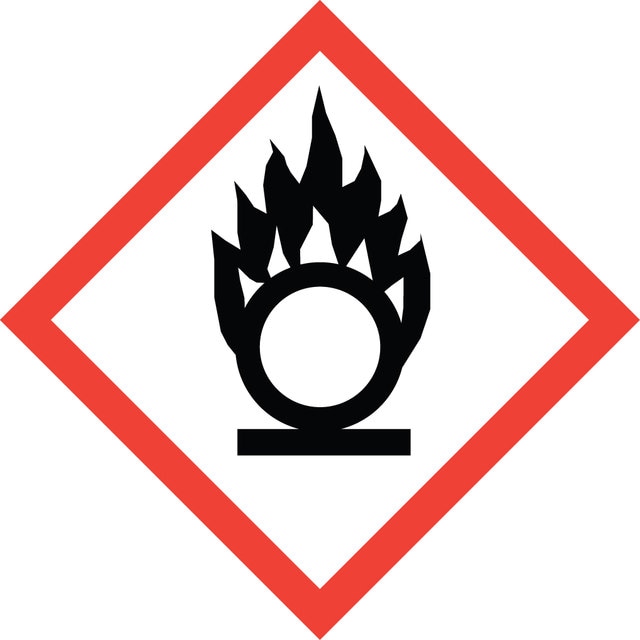



signalword
Danger
Hazard Classifications
Aquatic Acute 1 - Aquatic Chronic 1 - Eye Dam. 1 - Met. Corr. 1 - Ox. Sol. 2 - Repr. 1B - Skin Corr. 1A
Storage Class
5.1B - Oxidizing hazardous materials
wgk
WGK 3
flash_point_f
Not applicable
flash_point_c
Not applicable
Regulatory Information
新产品
This item has
Choose from one of the most recent versions:
Already Own This Product?
Find documentation for the products that you have recently purchased in the Document Library.
Patrycja Bober et al.
Biomacromolecules, 15(10), 3655-3663 (2014-08-28)
In this work, flexible and free-standing composite films of nanofibrillated cellulose/polypyrrole (NFC/PPy) and NFC/PPy-silver nanoparticles (NFC/PPy-Ag) have been synthesized for the first time via in situ one-step chemical polymerization and applied in potential biomedical applications. Incorporation of NFC into PPy
Gownolla Malegowd Raghavendra et al.
Carbohydrate polymers, 93(2), 553-560 (2013-03-19)
Natural carbohydrates (polysaccharides): gum acacia (GA) and gaur gum (GG) were employed in dilute solutions: 0.3%, 0.5% and 0.7% (w/v), as effective reductants for the green synthesis of silver nanoparticles (AgNPs) from AgNO3. The formed AgNPs were impregnated into cellulose
Ali Hebeish et al.
Carbohydrate polymers, 92(1), 407-413 (2012-12-12)
Innovative CMC-based hydrogels with great potentials for usage in medical area were principally synthesized as per two strategies .The first involved reaction of epichlorohydrin in alkaline medium containing silver nitrate to yield silver nano-particles (AgNPs)-loaded CMC hydrogel. While CMC acted
Global Trade Item Number
| SKU | GTIN |
|---|---|
| 28-1320-2-25G-J | 04061832563589 |
| 28-1320-5-500G-J | 04061832563596 |