Skip to Content
Merck
CN

28-2250

Sodium chlorate

SAJ first grade, ≥98.0%

Sign In to View Organizational & Contract Pricing.

Select a Size

Change View

About This Item

Linear Formula:
NaClO3
CAS Number:
Molecular Weight:
106.44
UNSPSC Code:
12352300
PubChem Substance ID:
MDL number:
Assay:
≥98.0%
Grade:
SAJ first grade
Form:
solid
Technical Service
Need help? Our team of experienced scientists is here for you.
Let Us Assist


grade

SAJ first grade

assay

≥98.0%

form

solid

availability

available only in Japan

mp

248-261 °C (lit.)

storage temp.

15-25°C

SMILES string

[Na+].[O-]Cl(=O)=O

InChI

1S/ClHO3.Na/c2-1(3)4;/h(H,2,3,4);/q;+1/p-1

InChI key

YZHUMGUJCQRKBT-UHFFFAOYSA-M

Biochem/physiol Actions

sulfation biosynthesis inhibitor


Still not finding the right product?

Explore all of our products under Sodium chlorate


signalword

Danger

Storage Class

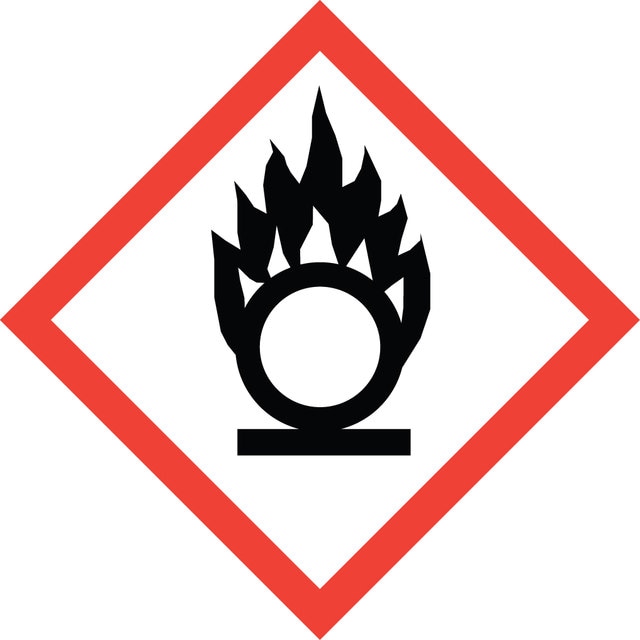
5.1A - Strongly oxidizing hazardous materials

flash_point_f

Not applicable

flash_point_c

Not applicable

Hazard Classifications

Acute Tox. 3 Oral - Aquatic Chronic 2 - Ox. Sol. 1

Regulatory Information

新产品

This item has


Choose from one of the most recent versions:

Certificates of Analysis (COA)

Lot/Batch Number

Don't see the Right Version?

If you require a particular version, you can look up a specific certificate by the Lot or Batch number.

Already Own This Product?

Find documentation for the products that you have recently purchased in the Document Library.

Visit the Document Library


Ha Bich Trinh et al.
Journal of hazardous materials, 379, 120772-120772 (2019-06-30)
Total recycling of all valuable metals such as PGMs, Ce, Al and Mg from the spent automobile catalysts has been explored. The alkali roasting was performed under NaOH, 0.5-3.0 g; temperature, 300-800 °C; and time, 10-60 min. The phase transformation from cordierite to
Cristóbal Viedma et al.
Chemical communications (Cambridge, England), 47(48), 12786-12788 (2011-11-05)
A single-chirality solid phase can be obtained in boiling solutions containing a racemic mixture of left- and right-handed enantiomorphous crystals due to dissolution-crystallization cycles induced by a temperature gradient. This phenomenon provides further insights into asymmetric amplification mechanisms under presumably
Fredrik Lanner et al.
Stem cells (Dayton, Ohio), 28(2), 191-200 (2009-11-26)
Embryonic stem (ES) cells continuously decide whether to maintain pluripotency or differentiate. While exogenous leukemia inhibitory factor and BMP4 perpetuate a pluripotent state, less is known about the factors initiating differentiation. We show that heparan sulfate (HS) proteoglycans are critical