Sign In to View Organizational & Contract Pricing.
Select a Size
About This Item
Empirical Formula (Hill Notation):
Cl2
CAS Number:
Molecular Weight:
70.91
UNSPSC Code:
12142100
NACRES:
NA.22
PubChem Substance ID:
EC Number:
231-959-5
Beilstein/REAXYS Number:
3902968
MDL number:
Product Name
Chlorine, puriss., ≥99.8%
InChI key
KZBUYRJDOAKODT-UHFFFAOYSA-N
InChI
1S/Cl2/c1-2
SMILES string
ClCl
vapor density
2.48 (vs air)
vapor pressure
4800 mmHg ( 20 °C)
grade
puriss.
assay
≥99.8%
resistivity
1E9 μΩ-cm, 20°C
evapn. residue
≤40 ppm
bp
−34 °C (lit.)
mp
−101 °C (lit.)
Quality Level
Looking for similar products? Visit Product Comparison Guide
Analysis Note
corresponds to DIN EN 937 tab.1 and tab.2: type 1 ′chemicals used for treatment of water intended for human consumption-chlorine ′
Disclaimer
Sales restrictions may apply
Packaging
Cylinder with net ~2 kg
DIN 477 nr.8
signalword
Danger
Hazard Classifications
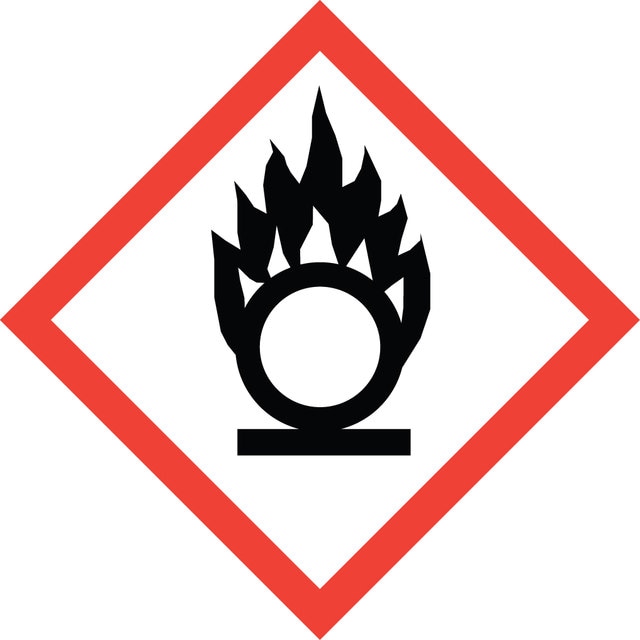
Acute Tox. 2 Inhalation - Aquatic Acute 1 - Eye Irrit. 2 - Ox. Gas 1 - Press. Gas Compr. Gas - Skin Irrit. 2 - STOT SE 3
target_organs
Respiratory system
Storage Class
2A - Gases
wgk
WGK 2
flash_point_f
Not applicable
flash_point_c
Not applicable
ppe
Eyeshields, Faceshields, Gloves
Regulatory Information
新产品
This item has
Choose from one of the most recent versions:
Already Own This Product?
Find documentation for the products that you have recently purchased in the Document Library.
Suhail Ahmad et al.
Environmental research, 133, 20-26 (2014-06-07)
Invasive aspergillosis due to triazole-resistant Aspergillus fumigatus, a common airborne fungal pathogen, has emerged in some European and Asian countries, likely due to exposure to azole fungicides in the environment. This study determined the occurrence of triazole-resistant A. fumigatus in
Marie Deborde et al.
Water research, 42(1-2), 13-51 (2007-10-05)
Numerous inorganic and organic micropollutants can undergo reactions with chlorine. However, for certain compounds, the expected chlorine reactivity is low and only small modifications in the parent compound's structure are expected under typical water treatment conditions. To better understand/predict chlorine
Per Bengtson et al.
Environmental microbiology, 11(6), 1330-1339 (2009-05-21)
Several studies have demonstrated that extensive formation of organically bound chlorine occurs both in soil and in decaying plant material. Previous studies suggest that enzymatic formation of reactive chlorine outside cells is a major source. However, the ecological role of
G Rossi-Fedele et al.
International endodontic journal, 44(9), 792-799 (2011-06-11)
Chlorine-containing solutions are used for broad disinfection purposes. Water disinfection literature suggests that their disinfectant action depends on pH values as this will influence the available free chlorine forms. Hypochlorous acid (HOCl) has been suggested to have an antimicrobial effect
Melissa A Gessner et al.
American journal of physiology. Lung cellular and molecular physiology, 304(11), L765-L773 (2013-04-09)
Chlorine (Cl₂) is a highly irritating and reactive gas with potential occupational and environmental hazards. Acute exposure to Cl₂ induces severe epithelial damage, airway hyperreactivity, impaired alveolar fluid clearance, and pulmonary edema in the presence of heightened inflammation and significant
Our team of scientists has experience in all areas of research including Life Science, Material Science, Chemical Synthesis, Chromatography, Analytical and many others.
Contact Technical Service