
Skip to Content
Merck
CN

239291

Sodium dichromate dihydrate

ReagentPlus®, 99%

Synonym(s):

Sodium bichromate

Sign In to View Organizational & Contract Pricing.

Select a Size

Change View

About This Item

Linear Formula:
Na2Cr2O7 · 2H2O
CAS Number:
Molecular Weight:
298.00
EC Number:
234-190-3
UNSPSC Code:
12352300
MDL number:
Technical Service
Need help? Our team of experienced scientists is here for you.
Let Us Assist


product line

ReagentPlus®

assay

99%

reaction suitability

reagent type: oxidant

mp

91 °C (lit.)

SMILES string

O.O.[Na+].[Na+].[O-][Cr](=O)(=O)O[Cr]([O-])(=O)=O

InChI

1S/2Cr.2Na.2H2O.7O/h;;;;2*1H2;;;;;;;/q;;2*+1;;;;;;;;2*-1

InChI key

JYDRNIYTFCBIFC-UHFFFAOYSA-N

Legal Information

ReagentPlus is a registered trademark of Merck KGaA, Darmstadt, Germany


Still not finding the right product?

Explore all of our products under Sodium dichromate dihydrate
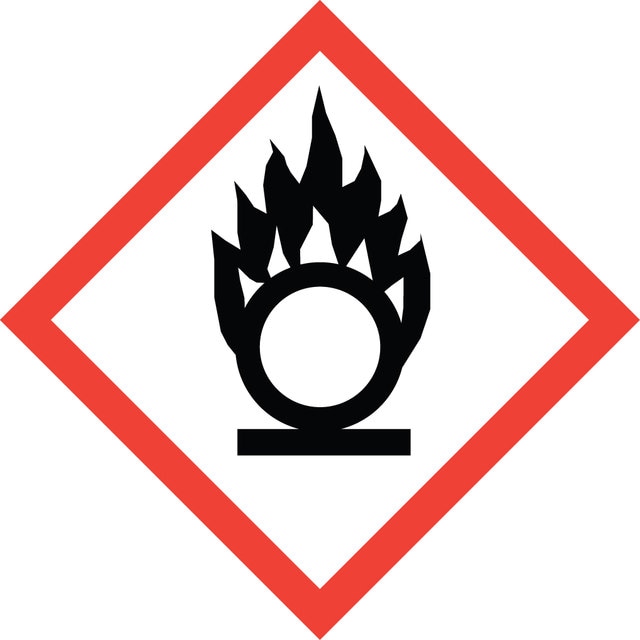

signalword

Danger

Hazard Classifications

Acute Tox. 2 Inhalation - Acute Tox. 3 Oral - Acute Tox. 4 Dermal - Aquatic Acute 1 - Aquatic Chronic 1 - Carc. 1B - Eye Dam. 1 - Muta. 1B - Ox. Sol. 2 - Repr. 1B - Resp. Sens. 1 - Skin Corr. 1B - Skin Sens. 1 - STOT RE 1 Inhalation

Storage Class

5.1B - Oxidizing hazardous materials

wgk

WGK 3

flash_point_f

Not applicable

flash_point_c

Not applicable

ppe

Eyeshields, Faceshields, Gloves, type P3 (EN 143) respirator cartridges

Regulatory Information

新产品

This item has


Choose from one of the most recent versions:

Certificates of Analysis (COA)

Lot/Batch Number

Don't see the Right Version?

If you require a particular version, you can look up a specific certificate by the Lot or Batch number.

Already Own This Product?

Find documentation for the products that you have recently purchased in the Document Library.

Visit the Document Library


Amanda J Lee et al.
Biomarkers : biochemical indicators of exposure, response, and susceptibility to chemicals, 9(2), 103-115 (2004-09-17)
Hexavalent chromium (Cr[VI]) is a genotoxic carcinogen that has been associated with an increased risk of nasal and respiratory tract cancers following occupational exposure. Although the precise mechanism(s) remain to be elucidated, there is evidence for a role of oxidative
Silvio De Flora et al.
Mutation research, 610(1-2), 38-47 (2006-07-29)
Chromium(VI) compounds are genotoxic in a variety of cellular systems. Their potential carcinogenicity is affected by toxicokinetic patterns restricting bioavailability to certain targets, and by metabolic pathways affecting interaction of chromate-derived reactive species with DNA. Epidemiological data indicate that chromium(VI)
Isabelle Hininger et al.
Free radical biology & medicine, 42(12), 1759-1765 (2007-05-22)
Several studies have demonstrated beneficial effects of supplemental trivalent Cr in subjects with reduced insulin sensitivity with no documented signs of toxicity. However, recent studies have questioned the safety of supplemental trivalent Cr complexes. The objective of this study was



