
73426

Nitrate Reduction Test
suitable for microbiology
Sign In to View Organizational & Contract Pricing.
Select a Size
Change View
About This Item
NACRES:
NA.85
UNSPSC Code:
41171621
Suitability:
Enterobacter spp., Neisseria spp., anaerobic bacteria, bacteria
Application(s):
agriculture
clinical testing
environmental
food and beverages
pharmaceutical, microbiology
clinical testing
environmental
food and beverages
pharmaceutical, microbiology
Technique(s):
microbe id | metabolite detection: suitable
Storage temp.:
2-8°C
product line
BioChemika
Quality Segment
shelf life
limited shelf life, expiry date on the label
technique(s)
microbe id | metabolite detection: suitable
application(s)
agriculture
clinical testing
environmental
food and beverages
pharmaceutical, microbiology
storage temp.
2-8°C
suitability
Enterobacter spp., Neisseria spp., anaerobic bacteria, bacteria
General description
Bacterial species may be differentiated on the basis of their ability to reduce nitrate to nitrite or nitrogenous gases. The reduction of nitrate may be coupled to anaerobic respiration in some species.
Other Notes
Nitrate broth (Cat. No. 72548) 100 g
Sulfanilic acid (Cat. No. 86090) = Reagent A 100 g,
N,N-Dimethyl-1-naphthylamine (Sial D4011) = Reagent B 10 mL
Zinc (Cat. No. 93027) 1 g.
Sulfanilic acid (Cat. No. 86090) = Reagent A 100 g,
N,N-Dimethyl-1-naphthylamine (Sial D4011) = Reagent B 10 mL
Zinc (Cat. No. 93027) 1 g.
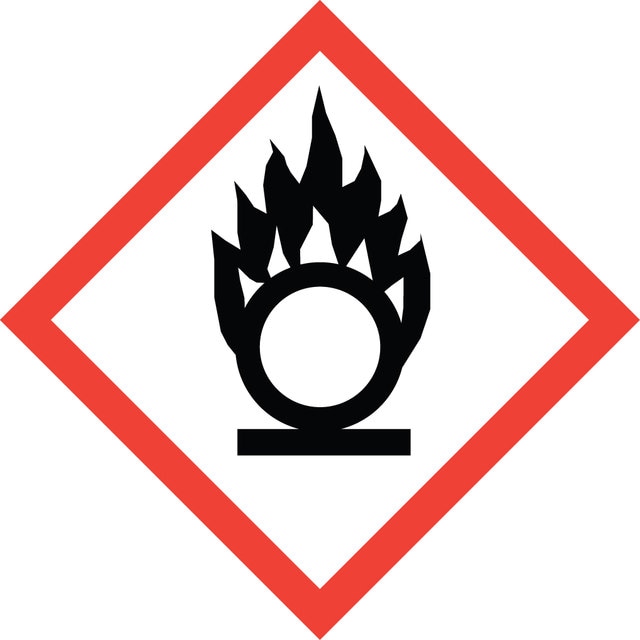


signalword
Warning
Storage Class
5.1B - Oxidizing hazardous materials
ppe
Eyeshields, Faceshields, Gloves, type ABEK (EN14387) respirator filter
Hazard Classifications
Acute Tox. 4 Oral - Aquatic Acute 1 - Aquatic Chronic 1 - Eye Irrit. 2 - Ox. Liq. 3 - Skin Irrit. 2 - Skin Sens. 1
Choose from one of the most recent versions:
Already Own This Product?
Find documentation for the products that you have recently purchased in the Document Library.