Skip to Content
Merck
CN

239259

Chromium(III) nitrate nonahydrate

99%

Sign In to View Organizational & Contract Pricing.

Select a Size


About This Item

Linear Formula:
Cr(NO3)3 · 9H2O
CAS Number:
Molecular Weight:
400.15
NACRES:
NA.55
PubChem Substance ID:
UNSPSC Code:
12352302
EC Number:
236-921-1
MDL number:
Assay:
99%
Form:
crystals or chunks
Technical Service
Need help? Our team of experienced scientists is here for you.
Let Us Assist
Technical Service
Need help? Our team of experienced scientists is here for you.
Let Us Assist

InChI key

GVHCUJZTWMCYJM-UHFFFAOYSA-N

InChI

1S/Cr.3NO3.9H2O/c;3*2-1(3)4;;;;;;;;;/h;;;;9*1H2/q+3;3*-1;;;;;;;;;

SMILES string

[Cr+3].[H]O[H].[H]O[H].[H]O[H].[H]O[H].[H]O[H].[H]O[H].[H]O[H].[H]O[H].[H]O[H].[O-][N+]([O-])=O.[O-][N+]([O-])=O.[O-][N+]([O-])=O

assay

99%

form

crystals or chunks

reaction suitability

reagent type: catalyst
core: chromium

pH

2-3 (20 °C, 50 g/L)

mp

60 °C (lit.)

Quality Level

Looking for similar products? Visit Product Comparison Guide

General description

Chromium (III) nitrate nonahydrate is a hydrated chromium salt. It is commonly used as a chromium source in the organic synthesis.

Application

Chromium (III) nitrate nonahydrate (Cr (NO3)3.9H2O) may be used in the:
  • Synthesis of nanosized chromium (Cr2O3) oxide by thermal decomposition method.
  • Preparation of chromium (III) based Ziegler-Natta catalysts for the polymerization of ethylene.
  • Synthesis of highly porous coordination polymer MIL-101.

pictograms

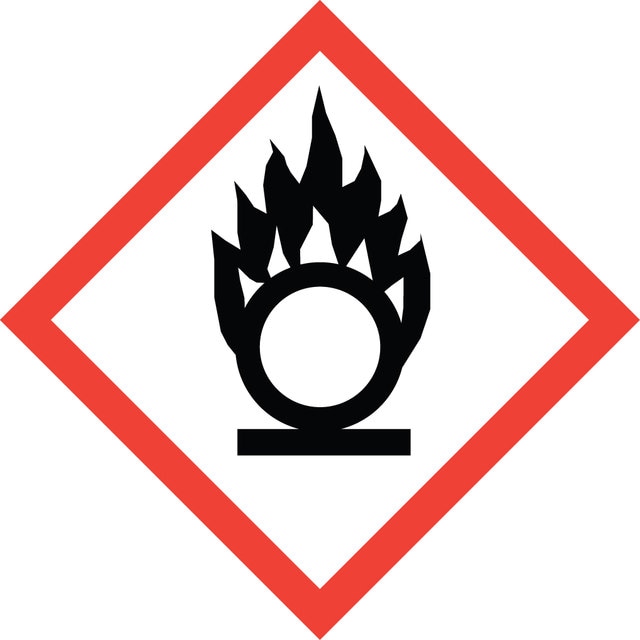
Flame over circleExclamation mark

signalword

Warning

Hazard Classifications

Aquatic Chronic 3 - Eye Irrit. 2 - Ox. Sol. 3 - Skin Irrit. 2 - Skin Sens. 1B

Storage Class

5.1B - Oxidizing hazardous materials

wgk

WGK 3

flash_point_f

Not applicable

flash_point_c

Not applicable

Regulatory Information

危险化学品
This item has

Choose from one of the most recent versions:

Certificates of Analysis (COA)

Lot/Batch Number

Don't see the Right Version?

If you require a particular version, you can look up a specific certificate by the Lot or Batch number.

Already Own This Product?

Find documentation for the products that you have recently purchased in the Document Library.

Visit the Document Library

Interconversion of CrO2 formed by decomposition of chromium (III) nitrate nonahydrate.
Maciejewski M, et al.
Journal of Solid State Chemistry, 119(1), 13-23 (1995)
Milka O Montes-Holguin et al.
Environmental toxicology and chemistry, 25(1), 220-226 (2006-02-24)
The objective of the present study was to determine the oxidative stress caused by hexavalent chromium (Cr[VI]), the chromium (Cr) uptake, and the Cr speciation in Convolvulus arvensis L. plants grown in hydroponics media containing either Cr(VI) or Cr(III). The
B Gammelgaard et al.
Journal of trace elements in medicine and biology : organ of the Society for Minerals and Trace Elements (GMS), 13(1-2), 82-88 (1999-08-13)
The purpose of these studies was to compare the in vitro absorption of two inorganic chromium(III) compounds: chromium chloride and chromium nitrate, with organic chromium(III)-picolinate; and to investigate if any in vitro metabolism of chromium(VI) takes place. The in vitro
A Johansson et al.
Environmental research, 58(1), 80-96 (1992-06-01)
Eight rabbits were exposed to 0.7 +/- 0.4 mg/m3 Co2+ as CoCl2 and 1.2 +/- 0.7 mg/m3 Cr3+ as Cr(NO3)3 (group Co + Cr), eight to 0.6 +/- 0.5 mg/m3 Co2+ (group Co), and eight to filtered air (control group)
Metallic and bimetallic nanocatalysts incorporated into highly porous coordination polymer MIL-101.
El-Shall M, et al.
Journal of Materials Chemistry, 19(41), 7625-7631 (2009)

Our team of scientists has experience in all areas of research including Life Science, Material Science, Chemical Synthesis, Chromatography, Analytical and many others.

Contact Technical Service