Skip to Content
Merck
CN

77240

Peracetic acid solution

purum, ~39% in acetic acid (RT)

Synonym(s):

Peroxyacetic acid

Sign In to View Organizational & Contract Pricing.

Select a Size


About This Item

Linear Formula:
CH3CO3H
CAS Number:
Molecular Weight:
76.05
UNSPSC Code:
12352106
NACRES:
NA.21
PubChem Substance ID:
MDL number:
Beilstein/REAXYS Number:
1098464
Technical Service
Need help? Our team of experienced scientists is here for you.
Let Us Assist
Technical Service
Need help? Our team of experienced scientists is here for you.
Let Us Assist

InChI key

KFSLWBXXFJQRDL-UHFFFAOYSA-N

SMILES string

CC(=O)OO

InChI

1S/C2H4O3/c1-2(3)5-4/h4H,1H3

grade

purum

form

liquid

shelf life

limited shelf life, expiry date on the label

reaction suitability

reagent type: oxidant

concentration

38.5-41.5% (iodometric, redox titration), ~39% in acetic acid (RT)

impurities

≤6% H2O2, ~45% acetic acid

refractive index

n20/D 1.391

density

1.15 g/mL at 20 °C

storage temp.

2-8°C

Quality Level

Looking for similar products? Visit Product Comparison Guide

General description

The product is a 39% solution of peracetic acid in acetic acid.

Application

Peracetic acid may be used in the synthesis of oxiranes (epoxides) via Prilezhaev reaction.

Disclaimer

The product is not intended for use as a biocide under global biocide regulations, including but not limited to US EPA′s Federal Insecticide Fungicide and Rodenticide Act, European Biocidal Products Regulation, Canada’s Pest Management Regulatory Agency, Turkey’s Biocidal Products Regulation, Korea’s Consumer Chemical Products and Biocide Safety Management Act (K-BPR) and others.

signalword

Danger

Hazard Classifications

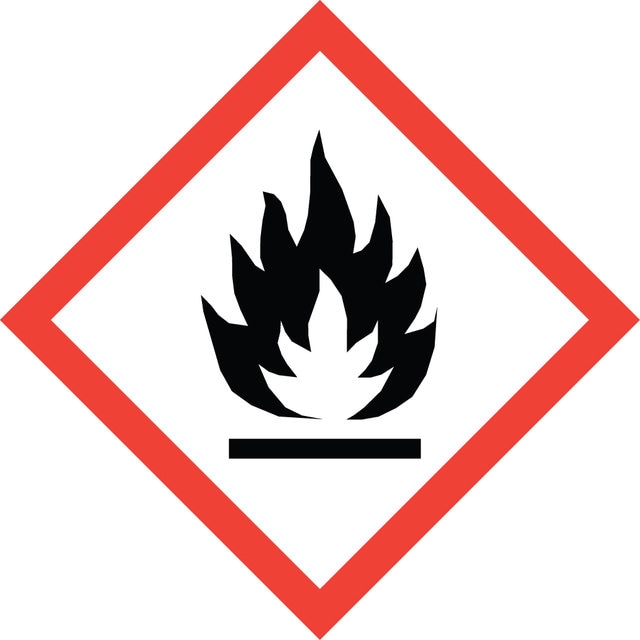
Acute Tox. 4 Oral - Aquatic Acute 1 - Aquatic Chronic 1 - Eye Dam. 1 - Flam. Liq. 3 - Org. Perox. D - Skin Corr. 1A - STOT SE 3

target_organs

Respiratory system

Storage Class

5.2 - Organic peroxides and self-reacting hazardous materials

wgk

WGK 2

flash_point_f

132.8 °F - closed cup

flash_point_c

56 °C - closed cup

Regulatory Information

新产品
This item has

Choose from one of the most recent versions:

Certificates of Analysis (COA)

Lot/Batch Number

Don't see the Right Version?

If you require a particular version, you can look up a specific certificate by the Lot or Batch number.

Already Own This Product?

Find documentation for the products that you have recently purchased in the Document Library.

Visit the Document Library

Eagleson M.
Concise Encyclopedia Chemistry, 743-743 (1994)
Mehmet Kitis
Environment international, 30(1), 47-55 (2003-12-11)
Peracetic acid is a strong disinfectant with a wide spectrum of antimicrobial activity. Due to its bactericidal, virucidal, fungicidal, and sporicidal effectiveness as demonstrated in various industries, the use of peracetic acid as a disinfectant for wastewater effluents has been
Gen Zhang et al.
Journal of chromatography. A, 1266, 110-115 (2012-10-31)
Gas chromatography equipped with electron capture detector (GC-ECD) has been widely used for detecting atmospheric peroxyacetyl nitrate (PAN) and peroxypropionyl nitrate (PPN). However, to the best of our knowledge, only a few capillary columns have been adopted for separation to
Alberto Baggioli et al.
Physical chemistry chemical physics : PCCP, 15(4), 1130-1140 (2012-12-12)
We examine several computational strategies for the prediction of the (17)O-NMR shielding constants for a selection of organic acids and peracids in aqueous solution. In particular, we consider water (the solvent and reference for the chemical shifts), hydrogen peroxide, acetic
Abelardo González et al.
Water environment research : a research publication of the Water Environment Federation, 84(3), 247-253 (2012-07-05)
Disinfection of an advanced primary effluent using a continuous-flow combined peracetic acid/ultraviolet (PAA/UV) radiation system was evaluated. The purpose was to determine whether the maximum microbial content, established under Mexican standards for treated wastewaters meant for reuse--less than 240 most

Our team of scientists has experience in all areas of research including Life Science, Material Science, Chemical Synthesis, Chromatography, Analytical and many others.

Contact Technical Service