
A9651

Aflatoxicol II unnatural isomer
Synonym(s):
[1R]-Aflatoxicol
Sign In to View Organizational & Contract Pricing.
Select a Size
Change View
About This Item
Empirical Formula (Hill Notation):
C17H14O6
CAS Number:
Molecular Weight:
314.29
UNSPSC Code:
12352200
storage temp.
2-8°C
Disclaimer
Carcinogenic
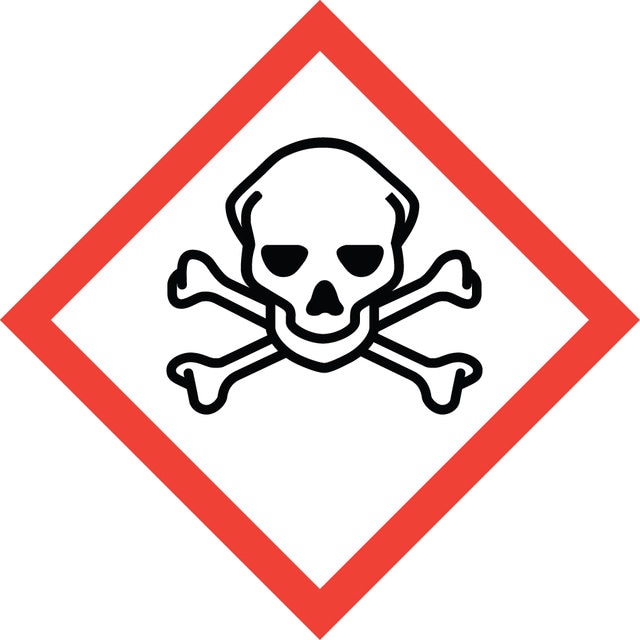

signalword
Danger
Hazard Classifications
Acute Tox. 2 Dermal - Acute Tox. 2 Inhalation - Acute Tox. 2 Oral - Carc. 1B - Repr. 1B
Storage Class
3 - Flammable liquids
wgk
WGK 3
flash_point_f
Not applicable
flash_point_c
Not applicable
ppe
Eyeshields, Faceshields, Gloves, type P2 (EN 143) respirator cartridges
Regulatory Information
新产品
This item has
Choose from one of the most recent versions:
Already Own This Product?
Find documentation for the products that you have recently purchased in the Document Library.
Kenneth C Ehrlich et al.
FEMS microbiology letters, 305(1), 65-70 (2010-02-18)
Biosynthesis of the highly toxic and carcinogenic aflatoxins in select Aspergillus species from the common intermediate O-methylsterigmatocystin has been postulated to require only the cytochrome P450 monooxygenase, OrdA (AflQ). We now provide evidence that the aryl alcohol dehydrogenase NorA (AflE)
P M Loveland et al.
Carcinogenesis, 9(3), 441-446 (1988-03-01)
DNA binding and metabolism patterns of 3H-labeled aflatoxin B1 (AFB1) and its phase I metabolites, aflatoxicol (AFL), aflatoxin M1 (AFM1), and aflatoxicol-M1 (AFL-M1), were compared in freshly prepared rainbow trout (Salmo gairdneri) hepatocytes. Aflatoxins were incubated with hepatocytes for periods
A W Howes et al.
Mycopathologia, 113(1), 25-29 (1991-01-01)
On administration of aflatoxin B1 to whole parsley (Petroselinum crispum) plants, a derivative was formed, which was shown to be aflatoxicol by its chromatographic properties and mass spectrometry. Optimum conditions for the production of the derivative was on the second