
SE120001

Rapid Aflatoxin B1 ELISA Kit
technique(s)
ELISA: suitable, competitive inhibition ELISA: suitable
assay range
inter-assay cv: <15%
intra-assay cv: <10%
sensitivity: 0-4 ng/mL
standard curve range: 0.2-4 ng/mL
shipped in
wet ice
storage temp.
2-8°C
General description
The Sigma-Aldrich Aflatoxin B1 ELISA (Enzyme-Linked Immunosorbent Assay) kit is a solid phase direct competitive enzyme immunoassay. An aflatoxin specific antibody optimized to cross react with B1 is coated to a polystyrene microwell. Toxins are extracted from a ground sample with 70% methanol. The extracted sample and HRP-conjugated aflatoxin B1 are mixed and added to the antibody-coated microwell. Aflatoxin from the extracted sample and HRP-conjugated aflatoxin B1 compete to bind with the antibody coated to the microwell. Microwell contents are decanted and non-specific reactants are removed by washing. An enzyme substrate (TMB) is added and colour (blue) develops. The intensity of the colour is directly proportional to the amount of bound conjugate and inversely proportional to the concentration of aflatoxin in the sample or standard. Therefore, as the concentration of aflatoxin in the sample or standard increases, the intensity of the blue colour will decrease. An acidic stop solution is added which changes the chromagen color from blue to yellow. The microwells are measured optically by a microplate reader with an absorbance filter of 450nm (OD450). The optical densities of the samples are compared to the OD′s of the kit standards and an interpretative result is determined.
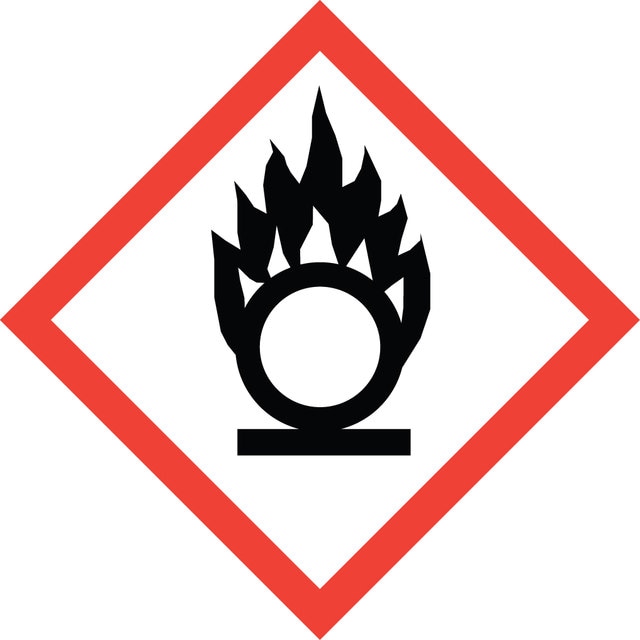



signalword
Danger
Hazard Classifications
Acute Tox. 4 Oral - Aquatic Chronic 4 - Carc. 2 - Eye Dam. 1 - Ox. Sol. 3 - Skin Irrit. 2
Storage Class
5.1B - Oxidizing hazardous materials
wgk
WGK 3
flash_point_f
Not applicable
flash_point_c
Not applicable
Regulatory Information
新产品
This item has
Choose from one of the most recent versions:
Already Own This Product?
Find documentation for the products that you have recently purchased in the Document Library.
Özlem Ertekin et al.
Toxins, 8(5) (2016-05-18)
Antibody based techniques are widely used for the detection of aflatoxins which are potent toxins with a high rate of occurrence in many crops. We developed a murine monoclonal antibody of immunoglobulin A (IgA) isotype with a strong binding affinity
Related Content
Instructions
Our team of scientists has experience in all areas of research including Life Science, Material Science, Chemical Synthesis, Chromatography, Analytical and many others.
Contact Technical Service