
U8879

Hydrogen peroxide–Urea adduct
tablet
Synonym(s):
Carbamide Per hydrate, Carbamide peroxide, Percarbamide, Urea hydrogen peroxide
Sign In to View Organizational & Contract Pricing.
Select a Size
Change View
About This Item
Linear Formula:
CO(NH2)2 · H2O2
CAS Number:
Molecular Weight:
94.07
EC Number:
204-701-4
UNSPSC Code:
12352204
PubChem Substance ID:
Beilstein/REAXYS Number:
3680414
MDL number:
vapor pressure
23.3 mmHg ( 30 °C)
form
tablet
reaction suitability
reagent type: oxidant
mp
90-93 °C (lit.)
solubility
water: 1 tablets/4 mL, clear, colorless
storage temp.
2-8°C
SMILES string
OO.NC(N)=O
InChI
1S/CH4N2O.H2O2/c2-1(3)4;1-2/h(H4,2,3,4);1-2H
InChI key
AQLJVWUFPCUVLO-UHFFFAOYSA-N
Biochem/physiol Actions
Urea Hydrogen Peroxide Tablets provide a safe and convenient source of H2O2 for use in enzyme immunoassay and other procedures.
Preparation Note
One tablet will provide the equivalent of 1.75 mg of H2O2.
When dissolved in 12.5 mL deionized water, one tablet yields a solution containing 0.014% H2O2.
Still not finding the right product?
Explore all of our products under Hydrogen peroxide–Urea adduct
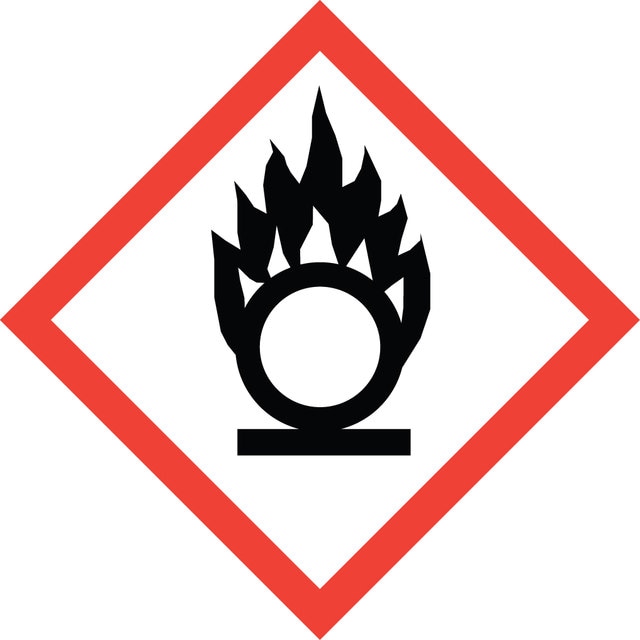

signalword
Danger
hcodes
Hazard Classifications
Eye Dam. 1 - Ox. Sol. 3 - Skin Irrit. 2
Storage Class
5.1B - Oxidizing hazardous materials
wgk
WGK 2
flash_point_f
Not applicable
flash_point_c
Not applicable
Regulatory Information
新产品
This item has
Choose from one of the most recent versions:
Already Own This Product?
Find documentation for the products that you have recently purchased in the Document Library.
Lidia Yileng Tay et al.
American journal of dentistry, 25(4), 199-204 (2012-10-23)
This parallel, double-blind randomized clinical trial evaluated the 2-year bleaching efficacy and sensitivity produced by at-home (AH) and in-office (IO) bleaching therapies. 60 participants with tooth color darker than C2, without restorations in the anterior dentition and older than 18
Vanessa Cavalli et al.
Brazilian oral research, 26(6), 536-542 (2012-11-28)
This study evaluated the influence of fluoride-containing carbamide peroxide (CP) bleaching agents and adhesive systems on bonded enamel interfaces that are part of the dynamic pH cycling and thermal cycling models. The buccal surfaces of 60 bovine incisors were restored
L E Tam et al.
Operative dentistry, 38(2), 142-150 (2012-09-01)
Although damage to the structural integrity of the tooth is not usually considered a significant problem associated with tooth bleaching, there have been some reported negative effects of bleaching on dental hard tissues in vitro. More studies are needed to