Skip to Content
Merck
CN

48078

1,3-Dichloro-2-propanol solution

certified reference material, 2000 μg/mL in methanol

Sign In to View Organizational & Contract Pricing.

Select a Size


About This Item

Empirical Formula (Hill Notation):
C3H6Cl2O
CAS Number:
Molecular Weight:
128.99
UNSPSC Code:
12352200
Technical Service
Need help? Our team of experienced scientists is here for you.
Let Us Assist
Technical Service
Need help? Our team of experienced scientists is here for you.
Let Us Assist

Product Name

1,3-Dichloro-2-propanol solution, certified reference material, 2000 μg/mL in methanol

InChI key

DEWLEGDTCGBNGU-UHFFFAOYSA-N

InChI

1S/C3H6Cl2O/c4-1-3(6)2-5/h3,6H,1-2H2

grade

certified reference material
TraceCERT®

product line

TraceCERT®

CofA

current certificate can be downloaded

packaging

ampule of 1 mL

concentration

2000 μg/mL in methanol

technique(s)

HPLC: suitable
gas chromatography (GC): suitable

application(s)

environmental

format

single component solution

storage temp.

2-8°C

Application

1,3-Dichloro-2-propanol may be used as a certified reference standard for the quantification of the analyte in papers treated with polyamidoamine-epichlorohydrin wet-strength resins using gas chromatography coupled to mass spectrometry.
Refer to the product′s Certificate of Analysis for more information on a suitable instrument technique. Contact Technical Service for further support.

Other Notes

This Certified Reference Material (CRM) is produced and certified in accordance with ISO 17034 and ISO/IEC 17025. All information regarding the use of this CRM can be found on the certificate of analysis.

Legal Information

TraceCERT is a registered trademark of Merck KGaA, Darmstadt, Germany

signalword

Danger

Hazard Classifications

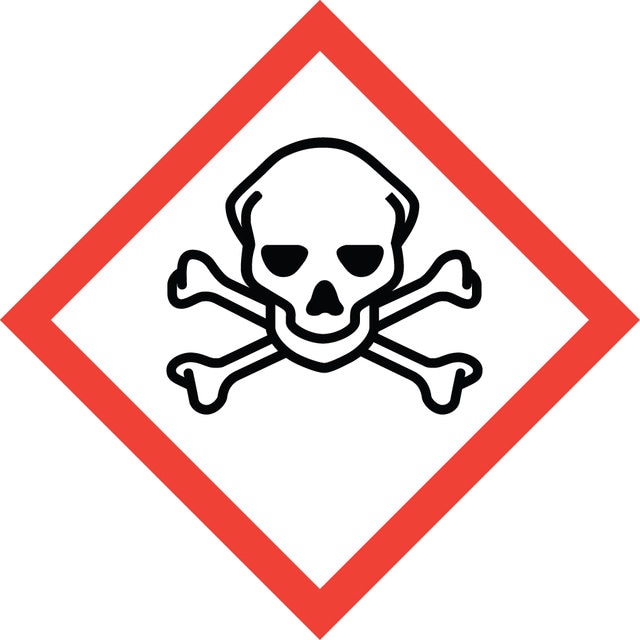
Acute Tox. 3 Dermal - Acute Tox. 3 Inhalation - Acute Tox. 3 Oral - Carc. 1B - Flam. Liq. 2 - STOT SE 1

target_organs

Eyes

Storage Class

3 - Flammable liquids

wgk

WGK 3

flash_point_f

49.5 °F - closed cup

flash_point_c

9.7 °C - closed cup

Regulatory Information

危险化学品
This item has

Certificates of Analysis (COA)

Search for Certificates of Analysis (COA) by entering the products Lot/Batch Number. Lot and Batch Numbers can be found on a product’s label following the words ‘Lot’ or ‘Batch’.

Already Own This Product?

Find documentation for the products that you have recently purchased in the Document Library.

Visit the Document Library

Determination of 1, 3-dichloro-2-propanol and 3-chloro-1, 2-propanediol in papers treated with polyamidoamine-epichlorohydrin wet-strength resins by gas chromatography-mass spectrometry using selective ion monitoring
Boden L, et al.
Journal of Chromatography A, 788(1-2), 195-203 (1997)
Weiyi Zhou et al.
Se pu = Chinese journal of chromatography, 22(6), 650-651 (2005-04-06)
A method for the determination of the residual epichlorohydrin and sym-dichloroisopropyl alcohol in cationic etherified reagent by gas chromatography has been established. Methyl benzoate, which has high extraction efficiency for the two components, was used as extractant. With an HP-5
M D Nikolaki et al.
Journal of hazardous materials, 146(3), 674-679 (2007-05-26)
The photochemical oxidation of 1,3-dichloro-2-propanol (1,3-DCP) was studied by following the target compound degradation, the total carbon removal rate by a total organic carbon (TOC) analyzer and by identifying the oxidation products by gas chromatography-mass spectrometry (GC-MS). The reaction was
Maw-Rong Lee et al.
Analytica chimica acta, 591(2), 167-172 (2007-05-08)
This study proposes a method for identifying 1,3-dichloro-2-propanol and 3-chloro-1,2-propandiol in aqueous matrices by using headspace on-fiber derivatization following solid-phase microextraction combined with gas chromatography-mass spectrometry. The optimized SPME experimental procedures for extracting 1,3-dichloro-2-propanol and 3-chloro-1,2-propandiol in aqueous solutions involved
M D Nikolaki et al.
Journal of hazardous materials, 137(2), 1189-1196 (2006-05-19)
The photocatalytic oxidation of 1,3-dichloro-2-propanol (1,3-DCP) was studied by following the target compound degradation, the total organic carbon removal rate and by identifying the oxidation products. The reaction was performed in a batch recycle reactor, at room temperature, using UV

Our team of scientists has experience in all areas of research including Life Science, Material Science, Chemical Synthesis, Chromatography, Analytical and many others.

Contact Technical Service