
Skip to Content
Merck
CN

V001217

Potassium dichromate

puriss., 99%

Synonym(s):

Potassium bichromate

Sign In to View Organizational & Contract Pricing.

Select a Size


About This Item

Linear Formula:
K2Cr2O7
CAS Number:
Molecular Weight:
294.18
EC Number:
231-906-6
PubChem Substance ID:
MDL number:
Technical Service
Need help? Our team of experienced scientists is here for you.
Let Us Assist
Technical Service
Need help? Our team of experienced scientists is here for you.
Let Us Assist

InChI key

KMUONIBRACKNSN-UHFFFAOYSA-N

InChI

1S/2Cr.2K.7O/q;;2*+1;;;;;;2*-1

SMILES string

[K+].[K+].[O-][Cr](=O)(=O)O[Cr]([O-])(=O)=O

grade

puriss.

assay

99%

mp

398 °C (lit.)

Looking for similar products? Visit Product Comparison Guide
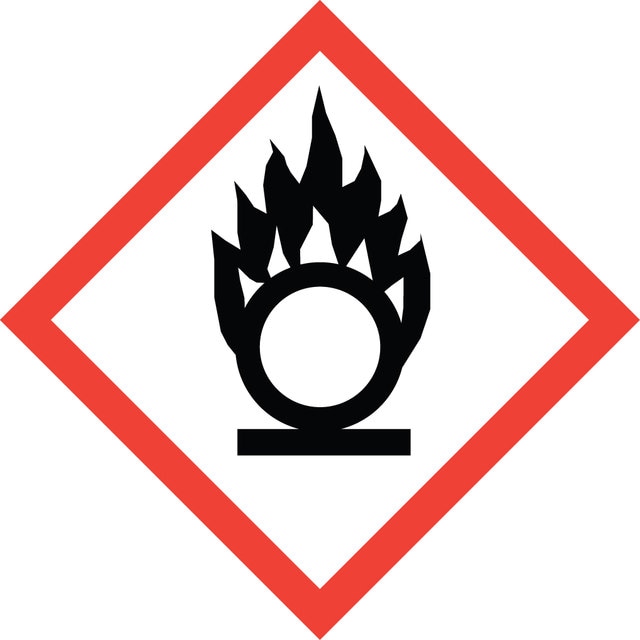
signalword

Danger

Hazard Classifications

Acute Tox. 2 Inhalation - Acute Tox. 3 Oral - Acute Tox. 4 Dermal - Aquatic Acute 1 - Aquatic Chronic 1 - Carc. 1B - Eye Dam. 1 - Muta. 1B - Ox. Sol. 2 - Repr. 1B - Resp. Sens. 1 - Skin Corr. 1B - Skin Sens. 1 - STOT RE 1 Inhalation - STOT SE 3

target_organs

Cardio-vascular system, Respiratory system

Storage Class

5.1B - Oxidizing hazardous materials

wgk

WGK 3

flash_point_f

Not applicable

flash_point_c

Not applicable

Regulatory Information

新产品
This item has

Choose from one of the most recent versions:

Certificates of Analysis (COA)

Lot/Batch Number

It looks like we've run into a problem, but you can still download Certificates of Analysis from our Documents section.

If you need assistance, please contact Customer Support

Already Own This Product?

Find documentation for the products that you have recently purchased in the Document Library.

Visit the Document Library

Peter A Siver et al.
American journal of botany, 102(6), 921-941 (2015-06-24)
Heterokont algae of the class Synurophyceae, characterized by distinctive siliceous scales that cover the surface of the cell, are ecologically important in inland waters, yet their evolutionary history remains enigmatic. We explore phylogenetic relationships within this group of algae relative
Ernst Jonscher et al.
Parasites & vectors, 8, 395-395 (2015-07-26)
The family of cysteine rich proteins of the oocyst wall (COWPs) originally described in Cryptosporidium can also be found in Toxoplasma gondii (TgOWPs) localised to the oocyst wall as well. Genome sequence analysis of Eimeria suggests that these proteins may
Anne-Sophie Hanak et al.
Toxicological sciences : an official journal of the Society of Toxicology, 143(1), 185-195 (2014-10-31)
Lithium-induced neurotoxicity may be life threatening. Three patterns have been described, including acute, acute-on-chronic, and chronic poisoning, with unexplained discrepancies in the relationship between clinical features and plasma lithium concentrations. Our objective was to investigate differences in plasma, erythrocyte, cerebrospinal
Érica Boarato David et al.
Parasites & vectors, 8, 103-103 (2015-04-19)
Several species of protozoa cause acute or chronic gastroenteritis in humans, worldwide. The burden of disease is particularly high among children living in developing areas of the world, where transmission is favored by lower hygienic standards and scarce availability of
Jone A Stanley et al.
Toxicology and applied pharmacology, 289(1), 58-69 (2015-09-09)
Prenatal exposure to endocrine disrupting chemicals (EDCs), including bisphenol A, dioxin, pesticides, and cigarette smoke, has been linked to several ovarian diseases such as premature ovarian failure (POF) and early menopause in women. Hexavalent chromium (CrVI), one of the more

Our team of scientists has experience in all areas of research including Life Science, Material Science, Chemical Synthesis, Chromatography, Analytical and many others.

Contact Technical Service



