
V800106

Calcium hypochlorite
LR, available chlorine ≥30 %
Sign In to View Organizational & Contract Pricing.
Select a Size
Change View
About This Item
Linear Formula:
Ca(OCl)2
CAS Number:
Molecular Weight:
142.98
UNSPSC Code:
12352300
PubChem Substance ID:
EC Number:
231-908-7
MDL number:
Grade:
LR
Form:
powder
grade
LR
product line
Vetec™
form
powder
composition
available chlorine, ≥30%
mp
100 °C (lit.)
density
2.35 g/mL at 25 °C (lit.)
SMILES string
ClO[Ca]OCl
InChI
1S/Ca.2ClO/c;2*1-2/q+2;2*-1
InChI key
ZKQDCIXGCQPQNV-UHFFFAOYSA-N
Legal Information
Vetec is a trademark of Merck KGaA, Darmstadt, Germany
Still not finding the right product?
Explore all of our products under Calcium hypochlorite
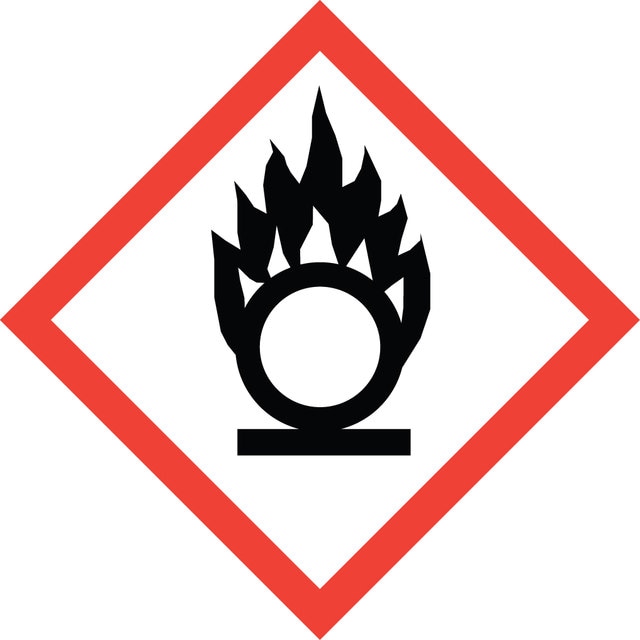



signalword
Danger
hcodes
Hazard Classifications
Acute Tox. 4 Oral - Aquatic Acute 1 - Eye Dam. 1 - Ox. Sol. 2 - Skin Corr. 1B
supp_hazards
Storage Class
5.1A - Strongly oxidizing hazardous materials
wgk
WGK 2
Regulatory Information
新产品
This item has
Choose from one of the most recent versions:
Already Own This Product?
Find documentation for the products that you have recently purchased in the Document Library.
F Boukhoubza et al.
Journal of environmental management, 91(1), 124-132 (2009-09-02)
The application of hypochlorite for the removal of soluble COD, phenolic and polyphenolic like compounds, and other organic compounds responsible for the olive mill wastewater (OOWW) colour has been experimentally studied. After the OOWW filtration on a sand column, the
Gursharan Singh et al.
The Journal of general and applied microbiology, 55(4), 283-289 (2009-08-25)
An alkalophilic and halotolerant laccase from gamma-proteobacterium JB catalyzed in high concentrations of organic solvents and various salts. The enzyme retained 80-100% activity in 10% concentration of dimethylsulfoxide (DMSO), ethanol, acetone or methanol; 100, 85 and 50% activity in 20
Hudaa Neetoo et al.
International journal of food microbiology, 131(2-3), 218-223 (2009-04-03)
The application of high hydrostatic pressure technology as a seed decontamination technology was evaluated. Alfalfa seeds inoculated with approximately 10(5) CFU/g of Escherichia coli O157:H7 were subjected to oscillatory pressure treatments at 600 MPa and 20 degrees C for up
Global Trade Item Number
| SKU | GTIN |
|---|---|
| V800106-500G | 04061832760940 |