
Olefin Metathesis
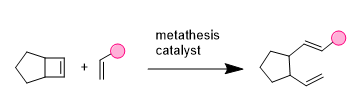

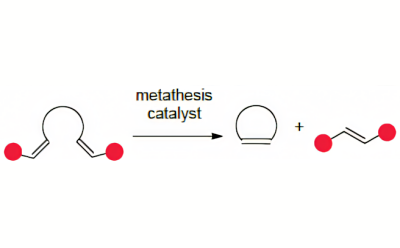
Olefin metathesis has emerged as a key method for synthesizing long and complex alkenes through highly efficient and selective catalytic reactions. We are dedicated to helping you explore new frontiers with an innovative and expanding portfolio of olefin metathesis products. To achieve this goal, we have partnered with Umicore PMC to offer a wide range of olefin metathesis catalysts for chemical synthesis. Developed by Nobel Laureate Prof. Robert H. Grubbs and his team, these catalysts are known for their outstanding performance, enabling robust alkene conversions. Our exclusive collaboration provides you with direct access to Umicore’s Grubbs Catalyst® technology with Umicore license rights included in the listed product price. Explore our offerings and discover how we can support you in achieving your metathesis goals.
Products
Overview of Grubbs Catalyst® Series:
- Grubbs Catalyst® M100 Series: First generation catalyst, recognized as the original with selectivity for terminal olefins.
- Grubbs Catalyst® M200 Series: Second generation, known for its high activity and versatility.
- Grubbs Catalyst® M300 Series: Features fast-initiating, labile ligands and is designed to be bench-stable.
- Grubbs Catalyst® M700 Series: Hoveyda-type catalyst, characterized by exceptional stability and effectiveness at low temperatures.
- Grubbs Catalyst® M800 Series: Latent bis-NHC coordinated catalyst, stable at high temperatures and activated thermally.
- Grubbs Catalyst® M2000 Series: Z-selective catalyst, offering terminal olefin selectivity with a high turnover number.
Selected Best Metathesis Practices
- Consider Concentration: Run cross-metathesis reactions concentrated and macrocyclization reactions diluted.
- Oust Oxygen: Degassing reactions with an inert gas prior to adding a Grubbs catalyst can improve catalyst lifetime and efficiency. Degassing during the reaction has the added benefit of efficiently removing ethylene from metathesis reactions where it is generated.
- Solvent Selection: Consider solubility and use non-coordinating solvents, when possible, such as cyclohexane, toluene, or dichloromethane.
For more suggestions on metathesis reaction planning and troubleshooting, view our updated Metathesis Application Guide.
Related Resources
- Brochure: Metathesis Application Guide
Download this recently updated practical guide to help you apply olefin metathesis in your own synthetic routes. It covers general reaction parameters, practical considerations, challenging metathesis reactions with detailed examples, and a quick-reference guide to selecting the appropriate catalyst for your specific synthesis.
- Article: Evolution and Applications of Second-Generation Ruthenium Olefin Metathesis Catalysts
Explore second-gen Grubbs catalysts: superior activity, broad tolerance for RCM, CM & more. Trace their evolution & key apps in this review article.
- Article: ROM Polymerization in Facilitated Synthesis
ROMP-derived polymers boost high-throughput synthesis: high loads, tunable properties, solution kinetics sans chromatography. Learn more in this review article.
- Article: Cross Metathesis of Nitrogen-Containing Systems
Learn catalyst selection strategies and practical applications for cross metathesis of biologically significant nitrogen-containing alkenes and alkynes in organic synthesis.