
Determination of Paraffin Oil Contamination in Milk by HPTLC Using the TLC Explorer
Abstract
The detection of paraffin oil in milk was investigated using high-performance thin-layer chromatography (HPTLC). The TLC Explorer system was employed to enable efficient chromatographic analysis and documentation for the detection and quantification of paraffin oil in milk. Linearity and reproducibility were evaluated within a usable quantification range of 5-50 µg/mL.
Section Overview
Introduction
Paraffin oil is primarily used in food processing as a release agent and lubricant. Despite its functional benefits, its consumption has been associated with adverse health effects, such as nausea, vomiting, and diarrhea. In addition, paraffin oil can impair the absorption of essential nutrients, thereby posing risks to overall health. Consequently, regulatory authorities emphasize that paraffin oil should not be used in products intended for direct contact with food due to these potential hazards.1,2
Thin layer chromatography (TLC) is widely applied as a separation technique for both quantitative and qualitative analysis. HPTLC, an advanced high-performance form of TLC frequently used with automation, is regarded as a robust, reliable, rapid, and cost-effective technique for the qualitative and quantitative analysis of pharmaceutical compounds. Chromatographic fingerprints are generated that can be visualized and stored as electronic images.3,4
In the present study, the paraffin oil content in milk was determined using HPTLC. The method involved preconditioning of the HPTLC plate with a primulin solution, after which the developed chromatogram was analyzed and documented using the TLC Explorer documentation system (Figure 1).
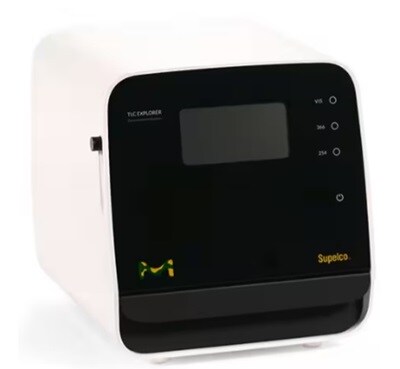
Figure 1.TLC Explorer.
The TLC Explorer documentation system enables digital and automated evaluation of TLC plates, thereby enhancing the efficiency and accuracy of thin layer chromatography analysis. The device is equipped with three illumination modes using LED light sources—white light (VIS), UV-A (366 nm), and UV-C (254 nm) – for detection and fast measurement of the compounds of interest. The software offers features like automated track recognition, simultaneous measurement of multiple plates, and background signal correction. Overall, the TLC Explorer offers accurate TLC imaging for reliable video densitometric measurements, enabling quantitative analysis and reliable data interpretation (read more about the TLC Explorer).
Experimental
Reagent Preparation
Derivatization reagent (primulin solution): A precise amount of primulin was weighed and dissolved in methanol to obtain a 75 mg/L solution. The mixture was sonicated for 5 minutes to obtain the primulin solution.
Standard Preparation
- Sample: Milk containing 3.9% fat was purchased from a local supermarket.
- Standard stock solution (10 mg/mL): Technical grade paraffin oil was diluted with toluene to a concentration of 10.0 mg/mL
- Reference samples for the matrix-matched calibration: To avoid contamination from leaching processes, only glass laboratory equipment was used for the preparation of standards and samples. For matrix matched calibration, 2.0 mL of milk containing 3.9% fat was pipetted into each of seven centrifuge tubes, followed by separate addition of 1 μL, 2 μL, 4 μL, 10 μL and 14 μL of the 10.0 mg/mL standard stock solution. The samples were acidified with 0.4 mL formic acid (≥ 98%), after which 3.0 mL tert-butyl methyl ether was added and the mix was vortexed for 30 seconds, followed by centrifugation at 70,000 rpm for 5 minutes. The organic layer of the supernatant was transferred into glass vials to obtain standards solutions at concentrations of 5 μg/mL, 10 μL/mL, 20 μg/mL, 50 μg/mL, and 70 μg/mL relative to the spike in the milk sample.
Sample Preparation
Preparation of the milk sample was performed as described for the matrix-matched standard solutions.
Reproducibility samples: Three milk samples were spiked at 10 μL/mL with paraffin oil and prepared as described above.
TLC & Instrument Parameters
Results
Paraffin oil was determined in spiked milk samples by HPTLC using the TLC Explorer analysis and documentation system. Unspiked and spiked samples were applied on the same HPTLC plate. The paraffin oil fraction (RF 0.63) was clearly separated from the other extracted fluorescent components (Figure 2).
Separation and Calibration
Matrix matched calibration was performed at different concentrations using milk as the matrix. This included a non-spiked sample and samples spiked at concentrations of 5 μg/mL, 10 μg/mL, 20 μg/mL, 50 μg/mL, and 70 μg/mL. The chromatogram of the reference samples obtained for the matrix matched calibration using the TLC Explorer system for detection is shown in Figure 2. A summary of the video densitometric assessment results for the non-spiked and spiked milk samples is presented in Table 2. A chromatogram overlay of the standard solutions acquired by video densitometry is shown in Figure 3.
The peaks obtained for 50 and 70 µg/mL spiked samples were similar in size, with minimal difference in area, indicating that a reliable quantification in this range was not achievable. However, for calibration curve generation using non-linear Michaelis Merten 2 curve fit, the data point at 70 µg/mL was retained (see Figure 4), and within the concentration range of 5 μg/mL to 70 μg/mL, a correlation coefficient r of ≥ 0.99 was obtained. In view of the flattening of the curve between 50 and 70 µg/mL, the quantification range for this application should be considered between 5 and 50 µg/mL in the applied solution.
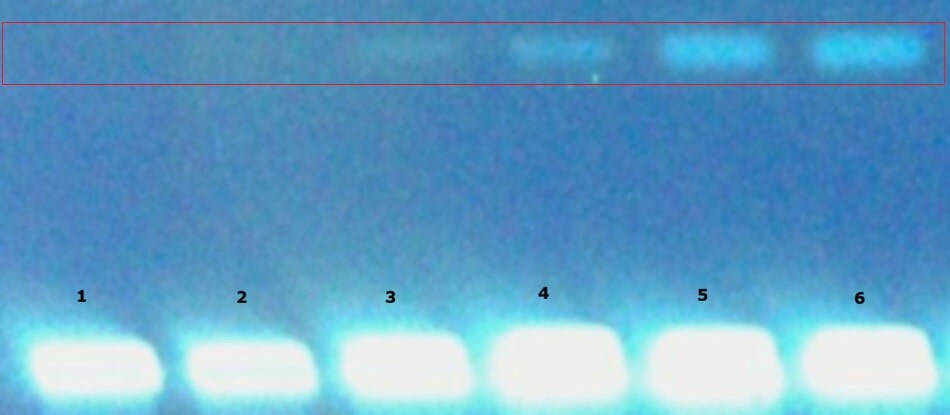
Figure 2.TLC chromatogram of paraffin oil in milk recorded at UV 366 nm using the TLC Explorer, showing non-spiked milk sample (track 1) and calibration solutions (spiked milk samples at concentrations of 5 μg/mL, 10 μg/mL, 20 μg/mL,50 μg/mL and 70 μg/mL, tracks 2-6).
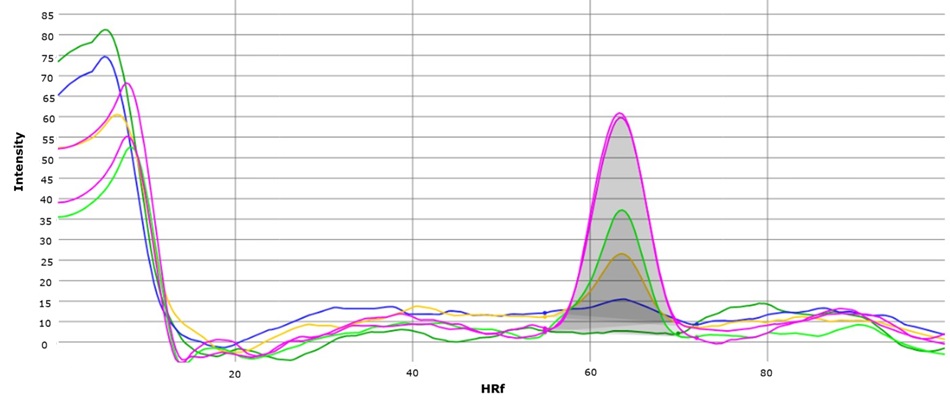
Figure 3.Overlay of chromatograms of standard solutions at concentrations of 0 μg/mL, 5μg/mL,10 μg/mL, 20 μg/mL, 50 μg/mL, and 70 μg/mL.
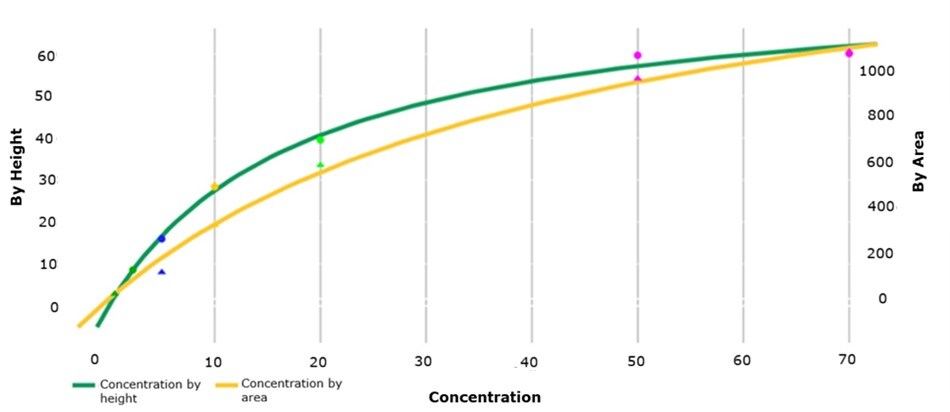
Figure 4.Calibration curve (5.0 μg/mL to 70.0 μg/mL) obtained from peak area (yellow graph and triangle data point markers) and peak hight (green graph, round data point markers).
Reproducibility and Recovery
Reproducibility and recovery were evaluated using three milk samples spiked at a concentration of 10 µg/mL. The spiked samples were detected using the TLC Explorer (Figure 5), and the results are summarized in Table 4. The relative standard deviation (RSD%) of the peak areas obtained from these measurements was calculated as 2.1%, indicating good reproducibility of the method. The recovery rates were determined to be between 103.9% and 107.8% (average 106.5%), demonstrating that the method has good and sufficient recovery.
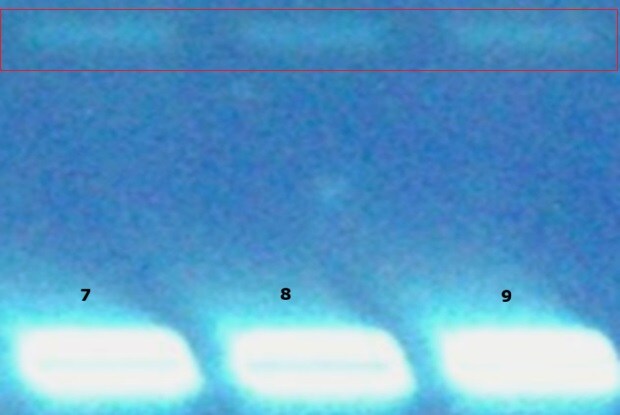
Figure 5.TLC chromatogram of paraffin oil in milk recorded at UV 366 nm using the TLC Explorer (three samples spiked at 10 µg/mL).
Conclusion
A rapid and simple method for the detection of paraffin oil in milk using high-performance thin layer chromatography (HPTLC) with primulin derivatization was demonstrated. Evaluation and documentation of the chromatographic results were performed using the TLC Explorer analysis and documentation system, which enabled video densitometry and data processing. The usable quantification range for the method was determined to be 5-50 µg/mL using a Mime 2 curve fit, and for a 10 µg/mL solution the recovery and reproducibility (RSD) were found to be 106.5% and 2.1%, respectively.
Solvents and Reagents
References
To continue reading please sign in or create an account.
Don't Have An Account?