
ADC payload and linker chemistry
The synthesis of cytotoxic payloads and linker systems demands chemically precise reagents capable of supporting reactive functional group chemistry under controlled conditions. From reductive amination and thiol alkylation to click chemistry conjugation, each step requires materials that perform consistently and meet the purity standards expected in ADC development.
Find reagents for the ADC payload and linker chemistry workflow stage.
Amino acids for conjugation chemistry
Cysteine and lysine residues are the primary conjugation sites in ADC development. High-purity amino acids support site-directed modification chemistry, enabling selective attachment of linker-payload constructs and contributing to a homogeneous drug-to-antibody ratio (DAR).
Biological buffers for linker and payload activation
Controlled pH during linker activation and payload functionalization prevents premature hydrolysis of reactive groups and ensures reaction selectivity. Biological buffers with defined buffering capacity maintain consistent conditions throughout, protecting reactive intermediates and supporting reproducible outcomes.
Crosslinking reagents for linker-payload coupling
Crosslinking reagents bearing NHS esters, azides, or maleimide groups enable covalent attachment between linker and payload moieties. Selecting reagents with appropriate spacer length, solubility, and reactivity supports efficient coupling and minimizes non-specific interactions in the final conjugate.
Dendrimers for drug delivery
Dendrimers serve as versatile scaffolds for multi-payload delivery in ADC research, offering defined molecular architecture, tunable surface chemistry, and improved aqueous solubility. Their branched structure enables precise drug loading and reduced non-specific binding, making them relevant for exploring alternative conjugation platforms and linker design strategies.
Discover our entire selection of dendrimers.
PEGs for linker-payload constructs
PEG spacers are a standard component of ADC linker design, improving the aqueous solubility of hydrophobic payloads and increasing the distance between antibody and cytotoxin to preserve antigen-binding affinity. PEG incorporation also reduces aggregation propensity and can extend systemic circulation half-life.
Related product categories
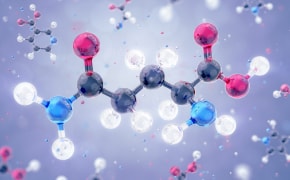
Explore a comprehensive range of high-purity amino acids and derivatives for metabolomics and protein research.
Our portfolio of high-purity biological buffers in various formulation and packaging formats provide superior solution stability and pH control.
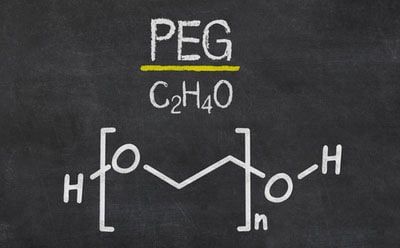
We offer poly(ethylene glycol) (PEG) and PEG solutions of different grades and molecular weights in different pack sizes.

Explore linkers and crosslinkers designed to support structural stability in protein-protein and protein-peptide conjugation workflows.
Related articles
- Simplifying antibody-drug conjugate payload synthesis using payload intermediates
ADC payload intermediates such as, DOLCore ™, MAYCore ™, and PBDCore ™, simplify payload synthesis for the most commonly used payloads: maytansine, dolastatin, and PBD dimers.