
HPLC Analysis of Native and Oxidized Filgrastim on BIOshell™ A400 Protein C4 Column
CONDITIONS
column
BIOshell A400 Protein C4, 10 cm x 2.1 mm I.D., 3.4 μm particles (66825-U)
mobile phase
[A] Water (0.1% trifluoroacetic acid); [B] Acetonitrile (0.1% trifluoroacetic acid)
gradient
55 to 70% B in 5 min.
flow rate
0.2 mL/min
pressure
590 psi (41 bar)
column temp.
60 °C
detector
UV, 215 nm
injection
1 μL
sample
Native Filgrastim, 98 μg/mL, Water
Oxidized Filgrastim, 98 μg/mL, 0.1% Hydrogen peroxide
Description
Analysis Note
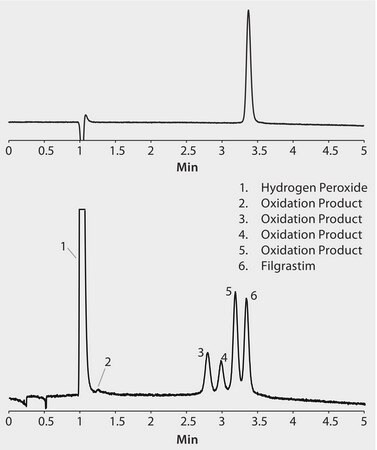
Filgrastim is a 175 amino acid polypeptide produced by recombinant DNA technology in genetically engineered Escherichia coli cells. This protein is used as a biosimilar to granulocyte colony-stimulating factor (GCSF) to treat neutropenia, a disease characterized by a low concentration of neutrophils in a person′s blood due to chemotherapy, bone marrow transplantation, or genetic predisposition. Common impurities found in this biosimilar are oxidized filgrastim variants which are produced by the oxidation of methionine side chains (sulfhydryl oxidation to the sulfoxide). In a sample of filgrastim that had been stressed with dilute (0.1%) hydrogen peroxide, four oxidized variants can be resolved from native (i.e. unoxidized) filgrastim on a BIOshell A400 Protein C4 column. The top chromatogram shows native filgrastim and the bottom chromatogram shows filgrastim after oxidative stressing.
Other Notes
Oxidized filgrastim sample was prepared by mixing 50 μL of a 980 μg/mL filgrastim standard solution with 450 μL of 0.1% hydrogen peroxide and allowing the sample to equilibrate at room temperature for five hours prior to assay.
Legal Information
BIOshell is a trademark of Sigma-Aldrich Co. LLC