
SPPS-Based Synthesis of GLP-1 Analogs using Novabiochem® Solutions
Introduction
Glucagon-like peptide-1 (GLP-1) and its receptor agonists, such as semaglutide and liraglutide, play a key role in the management of type 2 diabetes and obesity by regulating glucose homeostasis and glycogen metabolism. With therapeutic indications and expanding research opportunities, GLP‑1 analogs continue to gain significant attention, accompanied by a growing demand for GLP-1 based drugs. Recent innovations, emerging leads, and increasing patent activity in this space underscore the need for synthesis of next-generation GLP-1 receptor agonists (GLP-1RAs) with enhanced quality, safety, and efficacy.1
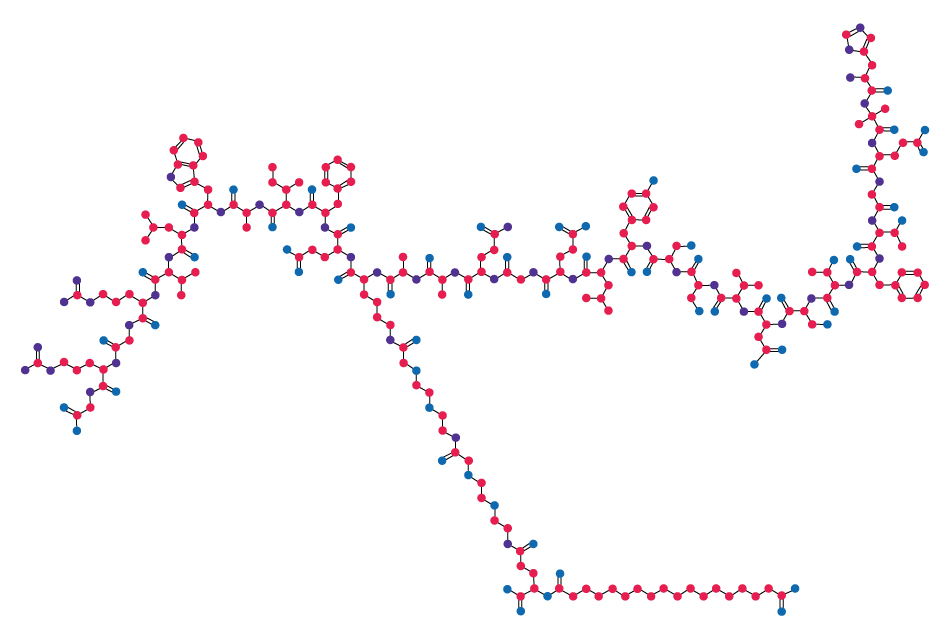
Molecular structure of semaglutide.
Researchers are increasingly focused on addressing key challenges and optimizing early‑stage peptide synthesis, particularly in the context of structure–activity relationship (SAR) studies of GLP‑1. Consequently, the need for high-quality materials and stringent standards becomes increasingly critical to ensure reliable and reproducible outcomes in GLP-1 research.
In this context, the Novabiochem® portfolio, offers high‑quality, high‑purity, and cost‑effective resins, amide coupling agents, and protected amino acids for synthesis of GLP-1 analogs. These products support efficient, and reliable synthesis of GLP‑1 peptides using solid phase peptide synthesis (SPPS), enabling consistently high success rates.
Challenges in GLP-1 synthesis and analog development
Exenatide is recognized as the first GLP‑1 analog synthesized using SPPS and the first to be approved for clinical use.2 SPPS is a widely used method in GLP-1 research which the peptide is assembled stepwise on an insoluble support. The process begins by anchoring the first amino acid to a solid resin, followed by alternating cycles of deprotection and coupling, where additional amino acids are sequentially added until the target peptide is formed. The completed peptide is then cleaved from the support. This approach enables efficient, and rapid synthesis of high molecular weight and complex peptide sequences, including GLP‑1 analogs.3
The use of orthogonal-protecting strategies, such as traditional Boc with benzyl-based side chain protection and advanced Fmoc with tBu protection, plays a pivotal role in successful SPPS. Fmoc with tBu provides greater flexibility for peptide chain modifications, thereby broadening the scope of SPPS. As a result, SPPS has evolved into a powerful, and versatile methodology that supports rapid, and efficient peptide synthesis, making it the method of choice for GLP‑1 research.4
Despite these advancements, GLP-1 analog synthesis remains associated with several inherent challenges during drug discovery and development, largely due to the complexity of the synthetic process. Some of the typical challenges, underlying issues, and possible solution strategies are presented in Table 1.
Achieving high-purity peptide products is a key objective for peptide synthesis, as purity directly influences performance, reliability. The quality of starting materials plays a decisive role in determining the purity of final peptide product. High-grade resins, protected amino acids, and reagents form the foundation for robust, and reproducible peptide synthesis by minimizing synthesis related challenges.
Role of Novabiochem® products in GLP-1 analog synthesis
The success of modern peptide therapeutics, particularly GLP‑1RAs, has been strongly supported by advancements in SPPS. The use of high-purity peptide building blocks empowers SPPS workflows to achieve complex and previously inaccessible peptide targets, thereby ensuring reliability, yield, and overall synthesis success.5
The Novabiochem® portfolio encompasses a comprehensive range of innovative products and solutions for peptide synthesis, high‑throughput organic chemistry, peptide labelling, and customized manufacturing. These products are designed to meet stringent quality and purity requirements, supporting consistent performance and high yields in SPPS across both standard and premium‑grade peptide synthesis applications. This level of performance is ensured through rigorous specifications, defined by our expert R&D team and supported by advanced QC technologies, enabling high consistency, purity, and performance.
The key synthesis requirements of GLP‑1 analogs and the corresponding significance of Novabiochem® products are summarized in Table 2.
Building on these capabilities, products are manufactured to meet the MQ200-400 quality segments, ensuring consistent performance and reliability of final peptide products. A broad range of supply options, from R&D to semi‑bulk and full‑scale production, supports synthesis across all development stages from a single source. Flexible solutions enable customization in both product specifications and volumes to address diverse application needs.
Recent innovations in synthesis of GLP-1 analogs
Small‑molecule GLP‑1RAs, such as danuglipron and lotiglipron, have emerged as “next-in-class” candidates and have driven significant recent innovation, contributing to the development of next‑generation GLP‑1RAs. Notably, between 2021 to 2024, approximately 70 patents were published focusing on the design, synthesis, and functional activity of GLP-1RAs. This trend highlights the continued relevance and accelerating progress in the synthesis of novel GLP-1RAs, as illustrated in Figure 1.6
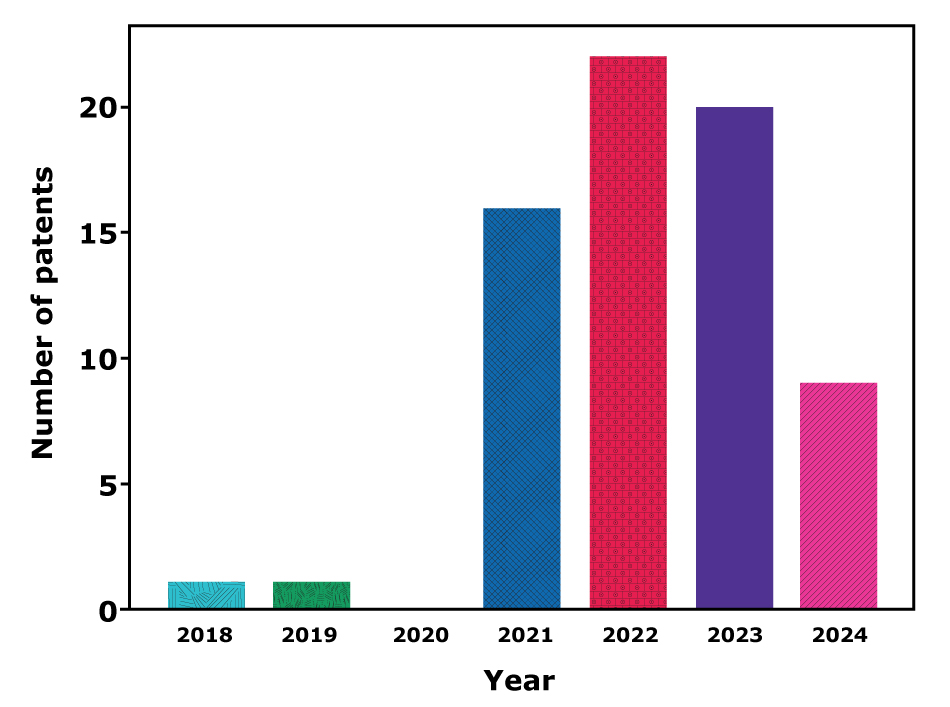
Figure 1.Graphical distribution of published patents dedicated to GLP-1RAs during 2018–2024.6
Image credit: DOI
Building on this growing body of work, the methodologies used to develop GLP-1RAs show that subtle structural modifications can improve half-maximal effective concentration (EC₅₀) and pharmacokinetic profiles, whereas more extensive redesigns are often required to deliver broader improvements in efficacy and ADME (Absorption, Distribution, Metabolism, Excretion) properties. These insights highlight the scientific complexity and the inherently non-trivial nature of designing clinically viable GLP-1RAs.6
These innovations have reinforced the importance of structure–activity relationship (SAR) for the GLP-1 receptor. Accordingly, pharmaceutical companies and research institutions are increasingly prioritizing optimized peptide synthesis approaches, with a strong emphasis on structural modifications that influence SAR. Even minor chemical modifications and transformations to lead scaffolds can result in improved binding capacity, therapeutic activity and overall yield.
Conclusion
The rapid evolution of GLP‑1 research continues to reshape the therapeutic innovation in metabolic diseases, driven largely by advances in SPPS. However, the development of GLP‑1 analogs remains challenging due to structural complexity, sequence dependent constraints, which demand high-purity materials, high-quality reagents, optimized workflows, and reliable synthesis strategies. More than 160 drug candidates are currently in development, including multi‑agonist and once‑weekly therapies targeting multiple pathways to improve efficacy.7 In summary, the GLP-1 drug landscape is poised for significant growth, driven by their strong clinical efficacy, expanding indications, and a robust pipeline of innovative therapies.
Against this backdrop, the Novabiochem® portfolio serves as a trusted partner for peptide synthesis, by delivering premium-grade resins, amino acids, and reagents designed for superior purity, consistency, and efficiency. Backed by proven innovation in peptide chemistry, these solutions enable the acceleration of GLP-1 research and confidently support the development of next-generation therapeutics.
Click here to explore the comprehensive range of Novabiohem® products for GLP-1 analog synthesis.