
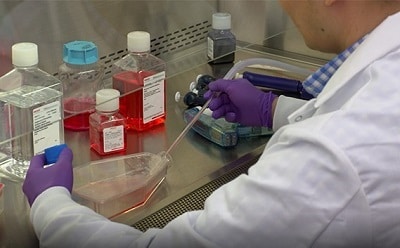
Cell culture is fundamental to life science research in universities, biotechnology, pharmaceuticals, and industry. Cells isolated from animal and human tissues in both 2D and 3D environments are used by researchers to study cell biology, treat diseases, and produce antibodies, proteins, and vaccines.
We have everything you need to keep your tissue culture room thriving so you can accomplish your goals, establish relevant cell models, and answer your research questions. Our complete portfolio of cell lines, cultureware, media, supplements, and assay kits offer a variety of choices for every application.
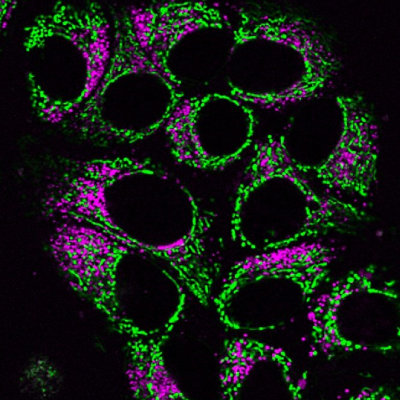
When studying biologically processes researchers want to be confident that they are using reliable, scalable, and verified cell models that withstand review scrutiny. Preparing for your cell culture application requires the right culture models to help you obtain reliable and reproducible data.
We offer a carefully curated, diverse selection of:
- Mammalian Cells
- PromoCell® Primary Cells and BioIVT PBMCs and Immune Cells
- Stem Cells
- iPSC- and Patient-derived Organoid Biobanks
Our models give you the confidence that you have selected the ideal model and reducing the risk in your pipeline. The next step is to determine whether the model is growing and behaving the way biology expects.
Your choice of cell model leads to more choices – like how to build out an experiment that is biologically-relevant that allows the models to grow and thrive while providing publishable data. An important step in the cell culture workflow, engineering fit-for-purpose models helps researchers find the ideal experimental setup to answer their questions. Our portfolio of consumables provide you with the tools to build your models for your application, giving you the confidence in your data so you don’t have to question your data reproducibility and model validity, and includes:
- Corning® Matrigel® and ELPLASIA® Plates
- TrueGel3D® Hydrogel Kits
- Attachment Factors
- Millicell® Plates and Inserts
- Mirus Bio Transfection Reagents
Our products help researchers provide the appropriate environment for healthy propagation of any cell phenotype or application. Choose the ideal culture supplement to create a unique and reliable environment for your cultures.
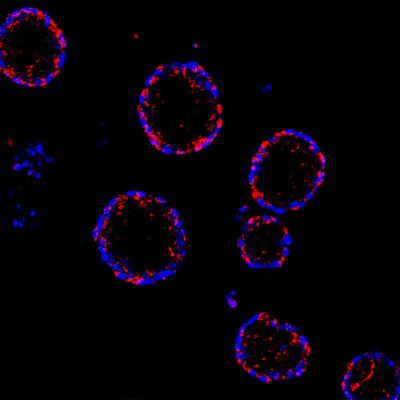
Cell model performance is important for fast, translatable data. With cellular analysis and cell-based assays researchers can understand and quantify cell health and function, but for reliable analysis you need state-of-the-art assays and a wide variety of reagents that will stand up to reviewer scrutiny. Our vast portfolio of tools and assays for cell culture includes:
- Live Cell Probes
- Cell Viability and Functional Assays
- Corning® 3D Platforms
- Millicell® ERS 3.0 and Millicell® DCI
Discover the ideal cellular assay and instrument for your application!
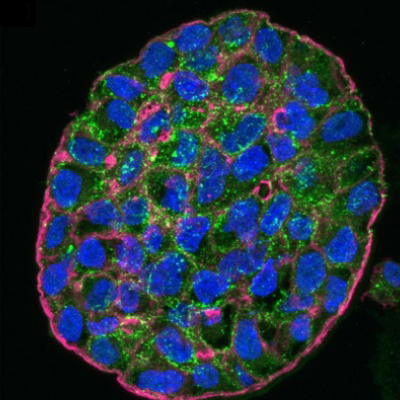
How well do your results translate to in vivo biology and physiology? Publishable cell biology research often hinges on your data and the decisions you can make from your experimental models. With our collection of PDO biobanks, including gastrointestinal, lung cancer, pancreatic ductal adenocarcinoma, liver, esophageal, ovarian, and breast organoid biobanks, and HUB Organoids Services to outsource compound development for further physiological understanding, you can be confident that your results translate to important biological insights or development pipelines.
Which Bottles are Compatible with the Stericup® E and Stericup® E Filtration Systems?
Here we demonstrate how to use Stericup® E sterile filtration device for filtering and storing tissue culture media. Learn which media bottles are compatible with the Stericup® E filtration unit to use in your cell culture application.
Live Cell Imaging of Apoptosis in Immune Cells
Time lapse imaging of Jurkat cells using the CellASIC® ONIX2 System and M04T Pad Trap Plate. Imaging was taken at 10 minute intervals under 400x magnification using a FITC and Texas-Red filter to visualize Caspase 3 activation and Annexin binding.
Increase Lab Productivity with the Millicell® DCI Digital Cell Imager
Assess common cell culture parameters confluency, cell count, and morphology with the Millicell® DCI Digital Cell Imager. Learn how to simplify culture analysis, reduce user bias, and store your accurate results with the web-based cloud service for data storage.
How to Thaw Cells with High Efficiency
Learn about the first step in the cell culture workflow – thawing out your cell lines. Here we demonstrate sterile technique during the cell thawing and seeding process.
Scepter™ 3.0 Instrument Overview
Discover how the Scepter™ 3.0 handheld cell counter uses the Coulter principle within 30 seconds for an efficient and precise way to count cells. The Scepter™ 3.0 handheld cell counter works for a range of cell types and sizes, including A549, CHO, and HeLa cells.
Related Products
Related Resources
- Article: PromoCell® Primary Cell Pellets
Primary cells from PromoCell are available in pelleted form for research applications like gene expression analysis, and cell/protein characterization experiments.
- Article: BioIVT Immune Cells FAQs
FAQs about BioIVT cell lines and culture, including cryopreserved PBMCs, BMMCs, and immune cell lines.
- Article: Functional Tri-Culture of iPSC-Derived Human Neurons, Astrocytes, and Microglia
Discover an expert protocol for seeding and tri-culturing iPSC-derived neurons, astrocytes, and microglia in monoculture. Explore high purity cells and culture reagents.
- Article: Corning® Matrigel® Basement Membrane Matrix for 3D Culture In Vitro
Learn how the Corning® Matrigel® Basement Membrane Matrix can be used to boost your 3D Cell Culture activities.
- Article: ECM Coating Protocols for Millicell®
This page covers the ECM coating protocols developed for four types of ECMs on Millicell®-CM inserts, Collagen Type 1, Fibronectin, Laminin, and Matrigel.
- Article: Lyo ECM Gel: A Novel Lyophilized Basement Membrane Extract for 2D and 3D Cell Culture
Lyo ECM Gel is a room temperature storage lyophilized basement membrane extract (BME) used for organoids cultures, angiogenesis, cell migration/invasion and neurite outgrowth assays.
- Article: TrueGel3D™ Hydrogel Prep
TrueGel3D™ hydrogel enables cell encapsulation for 3D culture, mimicking native tissue environment with chemically defined properties.
- Article: Culturing Colon Organoid Monolayers using Millicell® Hanging Inserts
Monitor barrier formation using colon PDOs, iPSC-derived colon organoids, Millicell® cell culture inserts, and the Millicell® ERS. 3.0.
- Article: Attachment Factors for Three-dimensional Cell Culture
The extracellular matrix (ECM) and its attachment factor components are discussed in this article in relation to their function in structural biology and their availability for in vitro applications.
- Article: Millicell® ERS 3.0 Digital Voltohmmeter FAQs
Find answers to frequently asked questions about the Millicell® ERS 3.0, from probe depth adjustment to instrument maintenance and troubleshooting.
- Article: 3D Cell Culture with Corning Microplates
Take a deep dive into the world of 3D cell culture courtesy of Corning and understand why the Corning® spheroid microplate can be an asset in the evolution of 3D cell culture.
- Article: PKH and CellVue® Claret Fluorescent Cell Linker Dyes
PKH and CellVue® Fluorescent Cell Linker Kits provide fluorescent labeling of live cells over an extended period of time, with no apparent toxic effects.
- Article: Cell Viability and Proliferation Assays
Cell based assays for cell proliferation (BrdU, MTT, WST1), cell viability and cytotoxicity experiments for applications in cancer, neuroscience and stem cell research.
- Article: Patient-Derived Organoid Biobanks for Drug Discovery
Explore HUB patient-derived organoid biobanks and screening platforms for personalized medicine and drug discovery.