
930946

硝酸锂

≥99.9% trace metals basis
别名:
Lithium salt of nitric acid
登录 查看组织和合同定价。
选择规格
变更视图
关于此项目
Assay:
≥99.9% trace metals basis
Grade:
anhydrous, battery grade
Form:
powder
Solubility:
H2O: soluble (highly soluble(lit.)), acetone: soluble ((lit.)), alcohols: soluble ((lit.))
Quality Segment
grade
anhydrous, battery grade
assay
≥99.9% trace metals basis
form
powder
reaction suitability
core: lithium
greener alternative product characteristics
Design for Energy Efficiency
Learn more about the Principles of Green Chemistry.
sustainability
Greener Alternative Product
impurities
≤0.5 wt. % H2O, ≤1000 ppm (trace metals analysis)
mp
264 °C (lit.)
solubility
H2O: soluble (highly soluble(lit.)), acetone: soluble ((lit.)), alcohols: soluble ((lit.))
anion traces
chloride (Cl-): ≤500 ppm, sulfate (SO42-): ≤200 ppm
application(s)
battery precursors
catalysts
material synthesis precursor
greener alternative category
SMILES string
[Li+].[O-][N+]([O-])=O
InChI
1S/Li.NO3/c;2-1(3)4/q+1;-1
InChI key
IIPYXGDZVMZOAP-UHFFFAOYSA-N
General description
Anhydrous lithium nitrate is a white, crystalline salt. The anhydrous form is hygroscopic and deliquescent. The salt is soluble in water, ethanol, methanol, pyridine, ammonia, and acetone. Like some other metal nitrates, lithium nitrate has a low melting point of only 264 °C, and decomposes above 600 °C. Because of its low melting point, it is used to produce low-melting fused-salt mixtures in ceramics and heat-exchange media.
Lithium nitrate is produced by the acid-base reaction between nitric acid and lithium carbonate, which evolves carbon dioxide and water. The resulting material is dried, purified, and heated to form the anhydrous product.
Lithium nitrate is produced by the acid-base reaction between nitric acid and lithium carbonate, which evolves carbon dioxide and water. The resulting material is dried, purified, and heated to form the anhydrous product.
We are committed to bringing you Greener Alternative Products, which adhere to one or more of The 12 Principles of Greener Chemistry. This product has been enhanced for energy efficiency. Click here for more information.
Application
Researchers and manufacturers use lithium nitrate in the preparation of many lithium compounds, most notably lithium nickel oxide (LiNiO2) and lithium manganese oxide (LiMn2O4). One common strategy for synthesizing these lithium metal oxides involves a high-temperature reaction of lithium nitrate with a metal carbonate, like nickel carbonate, or with a metal oxide, like manganese oxide. At temperatures above 650 °C, lithium nitrate evolves oxygen gas and nitrogen dioxide gas and decomposes through a complex process into lithium oxide, which reacts with the metal precursors to form the tertiary or quaternary lithium metal oxides. Researchers have used this technique to prepare exciting new materials, like LiAl0.25Ni0.75O2 as a cathode material in lithium-ion batteries and LiGa5O8 as a phosphor for optical information storage.
Because lithium nitrate is soluble in water, researchers also use lithium nitrate in the synthesis of lithium compounds using a host of solution-based chemistries. For example, microwave-induced combustion using solutions of lithium nitrate has yielded olivine-type lithium iron phosphate (LiFePO4), lithium cobalt oxide (LiCoO2), and lithium titanium oxides (ex. Li4Ti5O12 and Li2TiO3). Hydrothermal processing, sol-gel processing, spray pyrolysis, co-precipitation pre-processing, and Li emulsion-drying methods have all used lithium nitrate as a reactant to form lithium metal oxides. These techniques can yield controlled particle size, grain size, crystallinity, or facilitate the introduction of dopants for engineering the properties of the products, often explored for next-generation lithium-ion batteries.
Our battery grade lithium nitrate with ≥99.9% trace metals purity and low chloride and sulfate impurities, is designed as a precursor for cathode materials for lithium-ion batteries.
Because lithium nitrate is soluble in water, researchers also use lithium nitrate in the synthesis of lithium compounds using a host of solution-based chemistries. For example, microwave-induced combustion using solutions of lithium nitrate has yielded olivine-type lithium iron phosphate (LiFePO4), lithium cobalt oxide (LiCoO2), and lithium titanium oxides (ex. Li4Ti5O12 and Li2TiO3). Hydrothermal processing, sol-gel processing, spray pyrolysis, co-precipitation pre-processing, and Li emulsion-drying methods have all used lithium nitrate as a reactant to form lithium metal oxides. These techniques can yield controlled particle size, grain size, crystallinity, or facilitate the introduction of dopants for engineering the properties of the products, often explored for next-generation lithium-ion batteries.
Our battery grade lithium nitrate with ≥99.9% trace metals purity and low chloride and sulfate impurities, is designed as a precursor for cathode materials for lithium-ion batteries.
Still not finding the right product?
Explore all of our products under 硝酸锂

signalword
Warning
hcodes
Hazard Classifications
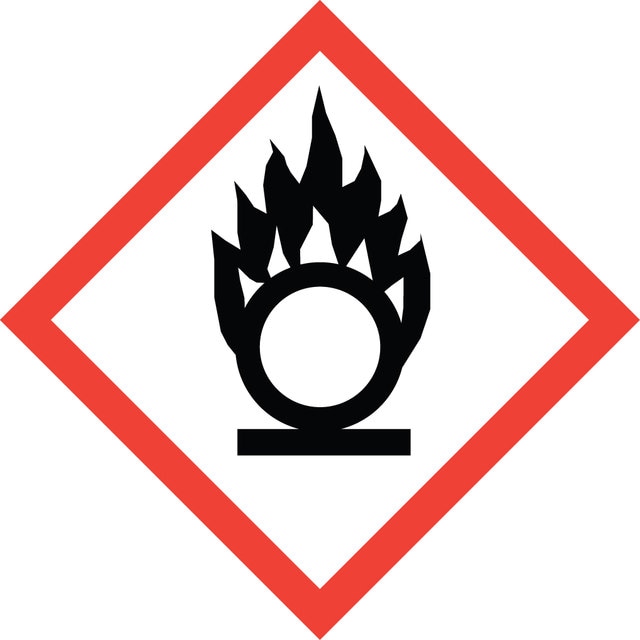
Acute Tox. 4 Oral - Eye Irrit. 2 - Ox. Sol. 3
存储类别
5.1B - Oxidizing hazardous materials
flash_point_f
Not applicable
flash_point_c
Not applicable