

biological source
rabbit
Quality Segment
antibody product type
primary antibodies
form
liquid
does not contain
preservative
species reactivity
human
manufacturer/tradename
Calbiochem®
storage condition
OK to freeze, avoid repeated freeze/thaw cycles
isotype
IgG
shipped in
wet ice
storage temp.
−20°C
General description
Rabbit polyclonal antibody supplied as undiluted serum. Recognizes the ~53 kDa p53 phoshorylated at Ser15.
This PhosphoDetect
This product has been discontinued.
Recognizes the ~53 kDa p53 protein phosphorylated at Ser15. Does not recognizes unphosphorylated p53.
Recognizes the ~53 kDa p53 protein phosphorylated at Ser15. Does not recognizes unphosphorylated p53.
Immunogen
Human
a synthetic phosphopeptide [VEPPLpSQETFS(C)] corresponding to amino acids 10-20 surrounding the Ser¹⁵ phosphorylation site of human p53
Application
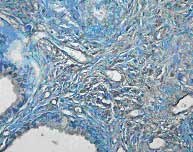
Immunoblotting (1:5000-1:10,000)
Paraffin Sections (1:1000-1:3000, heat pre-treatment required)
Physical form
Undiluted serum.
Preparation Note
Following initial thaw, aliquot and freeze (-20°C).
Analysis Note
Positive Control
MCF7 cells or prostate carcinoma tissue
MCF7 cells or prostate carcinoma tissue
Other Notes
Does not recognizes unphosphorylated p53. Antibody should be titrated for optimal results in individual systems.
Levine, A.J. 1997. Cell88, 323.
Meek, D.W. 1997. Pathol. Biol. Paris45, 804.
Miller, S.D., et al. 1997. Mol. Cell. Biol.17, 2194.
Pellegata, N.S., et al. 1996. Proc. Natl. Acad. Sci. USA93, 15209.
Sturzbecher, H.-W., et al. 1996. EMBO J.15, 1992.
Argarwal, M.L., et al. 1995. Proc. Natl. Acad. Sci. USA92, 8493.
Götz, C. and Montenarh, M. 1995. Int. J. Oncology6, 1129.
Reed, M. et al. 1995. Proc. Natl. Acad. Sci. USA92, 9455.
Waldman, T., et al. 1995. Cancer Res.55, 5187.
Cho, Y., et al. 1994. Science265, 346.
Clarke, A.R., et al. 1994. Oncogene9, 1767.
El-Deiry, W.S., et al. 1994. Cancer Res.54, 1169.
Greenblatt, M.S., et al. 1994. Cancer Res.54, 4855.
Lane, D.P. 1992. Nature358, 15.
Meek, D.W. 1997. Pathol. Biol. Paris45, 804.
Miller, S.D., et al. 1997. Mol. Cell. Biol.17, 2194.
Pellegata, N.S., et al. 1996. Proc. Natl. Acad. Sci. USA93, 15209.
Sturzbecher, H.-W., et al. 1996. EMBO J.15, 1992.
Argarwal, M.L., et al. 1995. Proc. Natl. Acad. Sci. USA92, 8493.
Götz, C. and Montenarh, M. 1995. Int. J. Oncology6, 1129.
Reed, M. et al. 1995. Proc. Natl. Acad. Sci. USA92, 9455.
Waldman, T., et al. 1995. Cancer Res.55, 5187.
Cho, Y., et al. 1994. Science265, 346.
Clarke, A.R., et al. 1994. Oncogene9, 1767.
El-Deiry, W.S., et al. 1994. Cancer Res.54, 1169.
Greenblatt, M.S., et al. 1994. Cancer Res.54, 4855.
Lane, D.P. 1992. Nature358, 15.
Legal Information
CALBIOCHEM is a registered trademark of Merck KGaA, Darmstadt, Germany
Disclaimer
Toxicity: Standard Handling (A)
Still not finding the right product?
试用我们的 产品选型工具 工具缩小选择范围
存储类别
10-13 - German Storage Class 10 to 13