

form
liquid
biological source
mouse
antibody form
purified antibody
antibody product type
primary antibodies
clone
4E1, monoclonal
does not contain
preservative
species reactivity
human
manufacturer/tradename
Calbiochem®
storage condition
OK to freeze, avoid repeated freeze/thaw cycles
isotype
IgG2a
shipped in
wet ice
storage temp.
−20°C
target post-translational modification
unmodified
Quality Level
Gene Information
human ... SMAD7(4092)
General description
Purified mouse monoclonal antibody. Recognizes the ~40-45 kDa SMAD7 protein.
Recognizes the ~40-45 kDa SMAD7 protein in HeLa and U-2 OS cells and human placenta tissue.
This Anti-SMAD7 Mouse mAb (4E1) is validated for use in Immunoblotting for the detection of SMAD7.
Immunogen
A recombinant polypeptide corresponding to amino acids of 160-261 human SMAD7, expressed as a GST fusion protein
Application
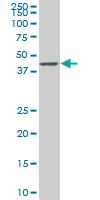
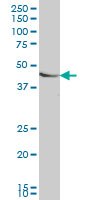
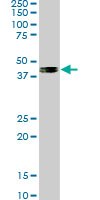
Immunoblotting (1-5 g/ml)
Physical form
In PBS, pH 7.2.
Preparation Note
Following initial thaw, aliquot and freeze (-20°C).
Analysis Note
Positive Control
Human placenta tissue, HeLa cells, U-2 OS cells
Human placenta tissue, HeLa cells, U-2 OS cells
Other Notes
Variables associated with assay conditions will dictate the proper working dilution.
Legal Information
CALBIOCHEM is a registered trademark of Merck KGaA, Darmstadt, Germany
Disclaimer
Toxicity: Regulatory Review (Z)
未找到合适的产品?
试试我们的产品选型工具.
存储类别
12 - Non Combustible Liquids
wgk
nwg
flash_point_f
Not applicable
flash_point_c
Not applicable
Chih-Hau Chang et al.
International journal of molecular sciences, 18(9) (2017-09-08)
Restoring sufficient vascularity of the ischemia/hypoxia flap is always the critical issue in flap surgeries. In a previous studies microRNA-21 (miR-21) expression was upregulated after rat skin flap surgery. MiR-21 has been reported to be induced by hypoxia and the
Genaro Rodríguez-Uribe et al.
BioMed research international, 2018, 2847873-2847873 (2018-06-12)
This work aimed to determine if cataractous changes associated with EMT occurring in the K14E6 mice lenses are associated with TGF-β and Wnt/β-catenin signaling activation. Cataracts of K14E6 mice were analysed histologically; and components of TGF-β and Wnt/β-catenin signaling were
Chi-Ting Su et al.
Human molecular genetics, 24(14), 4024-4036 (2015-04-18)
Mutations in the gene for the latent transforming growth factor beta binding protein 4 (LTBP4) cause autosomal recessive cutis laxa type 1C. To understand the molecular disease mechanisms of this disease, we investigated the impact of LTBP4 loss on transforming
我们的科学家团队拥有各种研究领域经验,包括生命科学、材料科学、化学合成、色谱、分析及许多其他领域.
联系客户支持