

biological source
mouse
Quality Level
antibody form
purified antibody
antibody product type
primary antibodies
clone
Mobu-1, monoclonal
form
liquid
contains
≤0.1% sodium azide as preservative
species reactivity (predicted by homology)
all
manufacturer/tradename
Calbiochem®
storage condition
do not freeze
dilution
(Frozen Sections (2 µg/mL)
Immunocytochemistry (1 µg/mL)
Paraffin Sections (2.5 µg/mL, trysin pre-treatment required)
Immunoblotting (not recommended))
isotype
IgG1
shipped in
wet ice
storage temp.
2-8°C
target post-translational modification
unmodified
General description
Anti-BrdU (Ab-3), mouse monoclonal, clone Mobu-1, recognizes BrdU. Requires biosynthetic labeling of the target cells with BrdU. It is validated for ICC and use with frozen and paraffin sections.
Purified mouse monoclonal antibody generated by immunizing mice with the specified immunogen and fusing splenocytes with P3-X63-Ag8-653 mouse myeloma cells (see application references). Recognizes BrdU (bromodeoxyuridine).
Recognizes BrdU (bromodeoxyuridine). Use of this antibody first requires biosynthetic labeling of the target cells with bromodeoxyuridine. This is the preferred BrdU antibody for staining.
Immunogen
BrdU-labeled DNA
Application
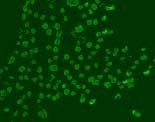
Frozen Sections (2 g/ml)
Immunocytochemistry (1 g/ml)
Paraffin Sections (2.5 g/ml, trysin pre-treatment required)
Immunoblotting (not recommended)
Packaging
Please refer to vial label for lot-specific concentration.
Physical form
In 50 mM sodium phosphate buffer, 0.2% gelatin, pH 7.5.
Analysis Note
Negative Control
Unlabeled cells
Unlabeled cells
Positive Control
BrdU labeled DNA
BrdU labeled DNA
Other Notes
Gratzner, H.G. 1982. Science218, 474.
Gratzner, H.G. and Leif, R.C. 1981. Cytometry1, 385.
Gratzner, H.G. et al. 1975. Exp. Cell Res.95, 88.
Gratzner, H.G. and Leif, R.C. 1981. Cytometry1, 385.
Gratzner, H.G. et al. 1975. Exp. Cell Res.95, 88.
To enable antibody binding to the incorporated BrdU, cells must be fixed, permeabilized, and the DNA denatured. This is done in one step by treatment with Fixative/Denaturing Solution (70% EtOH, 0.1 N NaOH). Use of this antibody first requires biosynthetic labeling of the target cells with bromodeoxyuridine (Cat. No. 203806). Cultured cells can be pulse labeled with 10 µM bromodeoxyuridine for 30 minutes. For whole tissues, animals can be injected with 50 mg BrdU/kg body weight, sacrificed 1 h later, and the target organ(s) removed. Antibody should be titrated for optimal results in individual system.
Legal Information
CALBIOCHEM is a registered trademark of Merck KGaA, Darmstadt, Germany
Disclaimer
Toxicity: Standard Handling (A)
Still not finding the right product?
试用我们的 产品选型工具 工具缩小选择范围
存储类别
11 - Combustible Solids
wgk
WGK 1
flash_point_f
Not applicable
flash_point_c
Not applicable
Sathish Kumar Mungamuri et al.
Cancer research, 66(9), 4715-4724 (2006-05-03)
Notch signaling is believed to promote cell survival in general. However, the mechanism is not clearly understood. Here, we show that cells expressing intracellular domain of human Notch1 (NIC-1) are chemoresistant in a wild-type p53-dependent manner. NIC-1 inhibited p53 by
Shali Chen et al.
Molecular medicine reports, 22(1), 353-361 (2020-04-23)
20(S)‑Protopanaxadiol (PPD) is an active ginseng metabolite and is the final form of protopanaxadiol saponins metabolized by human intestinal microflora. The neuroprotective effects and mechanisms underlying PPD on neural stem cells (NSCs) are not completely understood. The aim of the
Ian B DeMeritt et al.
Virology, 346(1), 15-31 (2005-11-24)
Infection of fibroblasts by human cytomegalovirus (HCMV) rapidly activates the NF-kappaB signaling pathway, which we documented promotes efficient transactivation of the major immediate-early promoter (DeMeritt, I.B., Milford, L.E., Yurochko, A.D. (2004). Activation of the NF-kappaB pathway in human cytomegalovirus-infected cells
全球贸易项目编号
| 货号 | GTIN |
|---|---|
| NA61-100UG | 04055977227604 |