

assay
≥99.99% trace metals basis
autoignition temp.
914 °F
impurities
≤0.01% insolubles, <100 ppm total metallic impurities
mp
271 °C (lit.)
anion traces
sulfate (SO42-): ≤0.01%
cation traces
Ca: ≤0.01%, Fe: ≤0.001%, K: ≤0.005%, heavy metals: ≤0.001%
SMILES string
[Na+].[O-]N=O
InChI
1S/HNO2.Na/c2-1-3;/h(H,2,3);/q;+1/p-1
InChI key
LPXPTNMVRIOKMN-UHFFFAOYSA-M
Features and Benefits
符合 A.C.S. 试剂规范。
Still not finding the right product?
Explore all of our products under 亚硝酸钠
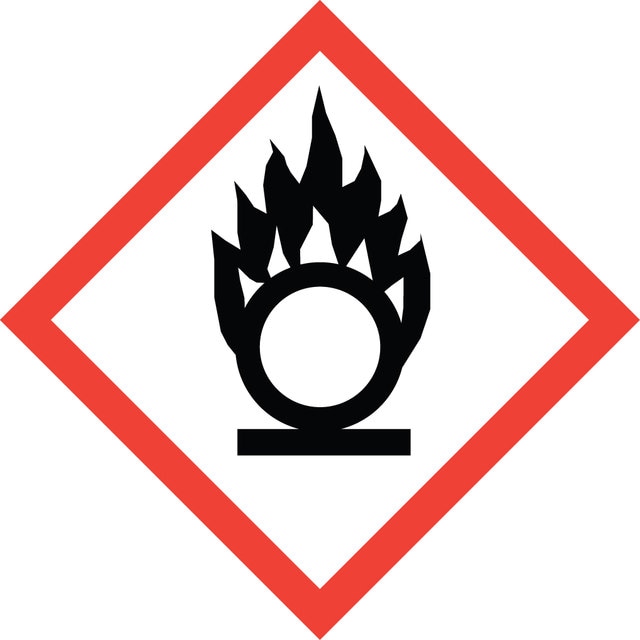


signalword
Danger
hcodes
Hazard Classifications
Acute Tox. 3 Oral - Aquatic Acute 1 - Eye Irrit. 2 - Ox. Sol. 3
存储类别
5.1B - Oxidizing hazardous materials
wgk
WGK 3
flash_point_f
Not applicable
flash_point_c
Not applicable
ppe
Eyeshields, Faceshields, Gloves, type P3 (EN 143) respirator cartridges
法规信息
新产品
此项目有
Paul J Shami et al.
Journal of medicinal chemistry, 49(14), 4356-4366 (2006-07-11)
The literature provides evidence that metabolic nitric oxide (NO) release mediates the cytotoxic activities (against human leukemia and prostate cancer xenografts in mice) of JS-K, a compound of structure R(2)N-N(O)=NO-Ar for which R(2)N is 4-(ethoxycarbonyl)piperazin-1-yl and Ar is 2,4-dinitrophenyl. Here
Rustem F Dautov et al.
Nitric oxide : biology and chemistry, 40, 36-44 (2014-05-27)
Previous studies in non-human blood vessels and in platelets have demonstrated that under hypoxic conditions release of NO from nitrite (NO2(-)) is potentiated by deoxyhaemoglobin. In the current study, we characterized hypoxic potentiation of NO2(-) effects in human vasculature and
Lucas C Pinheiro et al.
Free radical biology & medicine, 53(4), 701-709 (2012-06-23)
The new pathway nitrate-nitrite-nitric oxide (NO) has emerged as a physiological alternative to the classical enzymatic pathway for NO formation from l-arginine. Nitrate is converted to nitrite by commensal bacteria in the oral cavity and the nitrite formed is then