
85844

二氧化氮
purum, ≥98.5%
别名:
四氧化二氮, 四氧化氮, 过氧化氮
登录 查看组织和合同定价。
选择尺寸
变更视图
关于此项目
经验公式(希尔记法):
NO2
化学文摘社编号:
分子量:
46.01
UNSPSC Code:
12142100
PubChem Substance ID:
EC Number:
234-126-4
MDL number:
vapor density
1.58 (21 °C, vs air)
vapor pressure
14.33 psi ( 20 °C)
grade
purum
assay
≥98.5%
impurities
≤0.3% water
bp
21 °C (lit.)
mp
−11 °C (lit.)
density
2.62 g/mL at 25 °C (lit.)
SMILES string
[O-][N+]=O
InChI
1S/NO2/c2-1-3
InChI key
JCXJVPUVTGWSNB-UHFFFAOYSA-N
Packaging
罐装,净重 ~6kg
Other Notes
可能实行销售限制
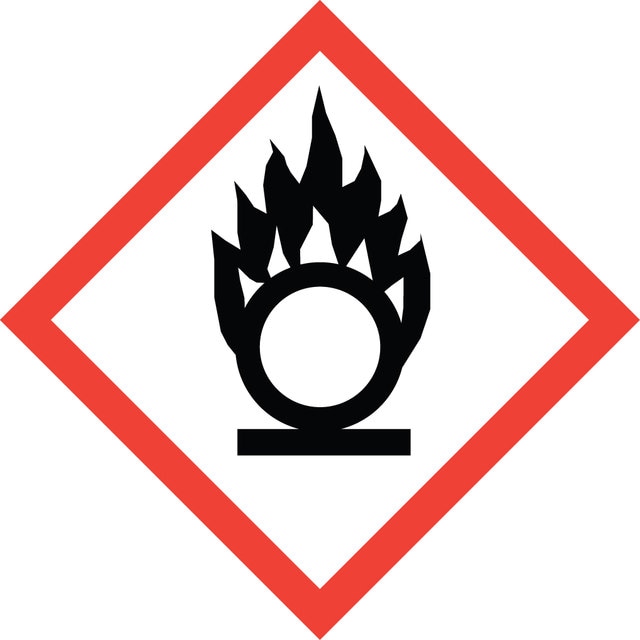



signalword
Danger
hcodes
Hazard Classifications
Acute Tox. 2 Inhalation - Eye Dam. 1 - Ox. Gas 1 - Press. Gas Compr. Gas - Skin Corr. 1B
存储类别
2A - Gases
wgk
WGK 1
flash_point_f
Not applicable
flash_point_c
Not applicable
ppe
Faceshields, Gloves, Goggles
法规信息
新产品
此项目有
Kim D Lu et al.
The Journal of allergy and clinical immunology, 131(4), 1017-1023 (2013-02-14)
Both being overweight and exposure to indoor pollutants, which have been associated with worse health of asthmatic patients, are common in urban minority populations. Whether being overweight is a risk factor for the effects of indoor pollutant exposure on asthma
K Ghannam et al.
Journal of the Air & Waste Management Association (1995), 63(2), 190-204 (2013-03-12)
This paper examines the relative source contribution to ground-level concentrations of carbon monoxide (CO), nitrogen dioxide (NO2), and PM10 (particulate matter with an aerodynamic diameter < 10 microm) in a coastal urban area due to emissions from an industrial complex
Elizabeth M Hendrick et al.
Journal of the Air & Waste Management Association (1995), 63(7), 844-854 (2013-08-10)
The U.S. Environmental Protection Agency (EPA) plume volume molar ratio method (PVMRM) and the ozone limiting method (OLM) are in the AERMOD model to predict the 1-hr average NO2/NO(x) concentration ratio. These ratios are multiplied by the AERMOD predicted NO(x)