
S6172

过硫酸钠
BioXtra, ≥99%
别名:
过二硫酸钠
登录并加购,请在购物车里查看协议价、货期和发货地。
选择规格
变更视图
关于此项目
线性分子式:
Na2S2O8
化学文摘社编号:
分子量:
238.10
NACRES:
NA.25
PubChem Substance ID:
UNSPSC Code:
12161700
EC Number:
231-892-1
MDL number:
Assay:
≥99%
Solubility:
H2O: 1 M at 20 °C, clear, colorless
product line
BioXtra
Quality Segment
assay
≥99%
reaction suitability
reagent type: oxidant
impurities
<0.0005% Phosphorus (P), <0.1% Insoluble matter
solubility
H2O: 1 M at 20 °C, clear, colorless
anion traces
chloride (Cl-): <0.05%
cation traces
Al: <0.0005%, Ca: <0.005%, Cu: <0.0005%, Fe: <0.0005%, K: <0.02%, Mg: <0.001%, Pb: <0.001%, Zn: <0.0005%
SMILES string
[Na+].[Na+].[O-]S(=O)(=O)OOS([O-])(=O)=O
InChI
1S/2Na.H2O8S2/c;;1-9(2,3)7-8-10(4,5)6/h;;(H,1,2,3)(H,4,5,6)/q2*+1;/p-2
InChI key
CHQMHPLRPQMAMX-UHFFFAOYSA-L
Application
<ul>
<li><strong>使用三维电极系统对垃圾渗滤液中的有机污染物进行电化学处理。</strong>本研究考察了使用三维电极系统对垃圾渗滤液进行电化学处理。过硫酸钠作为氧化剂可有效降解有机污染物,这为废物管理和环境保护提供了一种潜在方法(Yu et al., 2020)。</li>
<li><strong>Box-Benkhen实验设计法优化高浓度苯酚和有机物废水的电催化处理工艺。</strong>本文讨论了使用过硫酸钠对含有高浓度苯酚和有机物的废水进行电催化处理工艺优化。该研究为提高废水处理效率提供了宝贵意见(GilPavas et al., 2009)。</li>
<li><strong>果胶与甲基丙烯酸缩水甘油酯发生反应,并通过网状作用进一步形成游离膜。</strong>该研究使用甲基丙烯酸缩水甘油酯对果胶进行化学改性,然后使用过硫酸钠进行交联,从而形成自支撑薄膜。这些薄膜在药品和食品包装中具有潜在应用价值(Maior et al., 2008)。</li>
</ul>
<li><strong>使用三维电极系统对垃圾渗滤液中的有机污染物进行电化学处理。</strong>本研究考察了使用三维电极系统对垃圾渗滤液进行电化学处理。过硫酸钠作为氧化剂可有效降解有机污染物,这为废物管理和环境保护提供了一种潜在方法(Yu et al., 2020)。</li>
<li><strong>Box-Benkhen实验设计法优化高浓度苯酚和有机物废水的电催化处理工艺。</strong>本文讨论了使用过硫酸钠对含有高浓度苯酚和有机物的废水进行电催化处理工艺优化。该研究为提高废水处理效率提供了宝贵意见(GilPavas et al., 2009)。</li>
<li><strong>果胶与甲基丙烯酸缩水甘油酯发生反应,并通过网状作用进一步形成游离膜。</strong>该研究使用甲基丙烯酸缩水甘油酯对果胶进行化学改性,然后使用过硫酸钠进行交联,从而形成自支撑薄膜。这些薄膜在药品和食品包装中具有潜在应用价值(Maior et al., 2008)。</li>
</ul>
Still not finding the right product?
Explore all of our products under 过硫酸钠
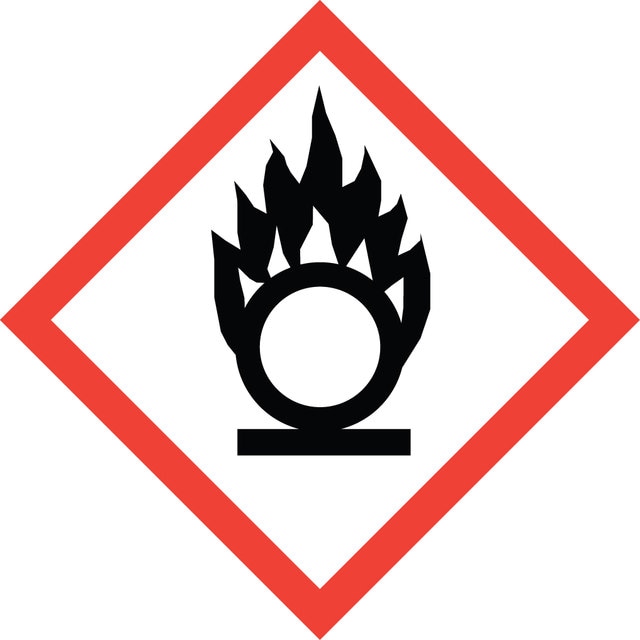


警示词
Danger
Hazard Classifications
Acute Tox. 4 Oral - Ox. Sol. 3 - Resp. Sens. 1 - Skin Irrit. 2 - Skin Sens. 1 - STOT SE 3
靶器官
Respiratory system
存储类别
5.1B - Oxidizing hazardous materials
怎么回事?
WGK 1
闪点 (F)
Not applicable
闪点 (°C)
Not applicable
PPE(个人防护设备)
Eyeshields, Faceshields, Gloves, type P3 (EN 143) respirator cartridges