Detection and Enumeration of Somatic Coliphages in Water Samples
The European Directive 2020:2184 added coliphages as a parameter for water quality measurement. ISO 10705-2 outlines the methods for detection and enumeration of somatic coliphages in water samples through cultivation techniques. Before detection, ISO 10705-3 provides general principles for evaluating the performance of methods used to concentrate bacteriophages and coliphage from water samples. This article presents a performance study of ready-to-use culture media based on ISO 10705-2 and the performance test of a bacteriophage and coliphage concentration kit according to ISO 10705-3. The study includes surface water samples and drinking water samples that were artificially spiked with bacteriophage phi X174 (E. coli 13706-B1).
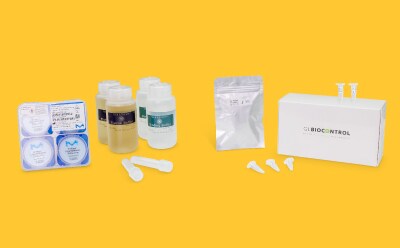
VIRAPREP® Kit for Viral Water Analyzes
Section Overview
- Coliphages and Their Role in Water Quality
- Coliphage Concentration Method in Water Samples
- Experimental Material for ISO 10705-2 Coliphage Assay
- ISO 10705-2 Plague Assay Method
- Ready to Use Media vs. In-House Media: Comparative Study
- Effective Coliphage Quantification with VIRAPREP® Kit
- ISO Compliant VIRAPREP® Kit for Water Analysis
- Product Ordering Information
Coliphages and Their Role in Water Quality
Coliphages are non-pathogenic viruses that infect coliform bacteria. Because their hosts propagate in the gastrointestinal tract of humans and warm-blooded animals, the presence of coliphages in drinking water indicates fecal contamination and, consequently, the possible presence of fecal pathogens (such as viruses and bacteria).1–4 Monitoring coliphages helps assess the microbiological quality of drinking water and treated wastewater.
Somatic coliphages can be detected using relatively simple plaque assays. One such assay is described in ISO 10705-2.5. As part of routine water testing, coliphage detection provides valuable insights into the effectiveness of water treatment processes and helps ensure compliance with health regulations. By using our VIRAPREP® kit, you can efficiently concentrate and quantify coliphages, helping timely and accurate evaluations of water safety.
Culture Media for Identifying Somatic Coliphages
In short, the water sample to be analyzed and a fresh culture of a suitable host for the virus (e.g., Escherichia coli ATCC 13706) are mixed with a liquified soft agar medium. This mixture is then poured onto an agar medium that has been pre-cast in Petri dishes. After overnight incubation, the host cells form a continuous lawn. The presence of coliphages results in cell lysis, which creates distinct plaques within the lawn of the host cells.
ISO 10705-2 specifies three culture media required for the plaque assay:
1. Modified Scholten’s broth (for propagation of the E. coli host)
2. Modified semisolid Scholten’s agar (soft agar used to mix sample and host)
3. Modified Scholten’s agar (agar pre-cast in Petri dishes)
We offer these culture media in a ready-to-use format. In this study, the performance of these media was evaluated by two accredited water laboratories, comparing them to freshly prepared in-house media.
Coliphage Concentration Methods in Water Samples
To minimize the sample volume and significantly reduce the number of Petri dishes required for testing by 95%, ISO 10705-3 outlines general principles for assessing the performance of methods used to concentrate bacteriophages from water. Annex A provides examples of methods that have been proven satisfactory along with their applicable fields.
One such method is the membrane filtration technique. It is based on the adsorption of coliphages to cellulose ester membranes in the presence of a specific binding buffer.6 The subsequent desorption is performed in a smaller volume of a specific elution buffer. Typically, a 100 mL sample is concentrated down to 5 mL. In this study, we assessed the performance of a commercial concentration kit (VIRAPREP® kit from GL Biocontrol)7,8 in comparison to the direct method without sample pre-concentration. In both cases, subsequent virus quantification was conducted according to ISO 10705-2.
Experimental Material for ISO 10705-2 Coliphage Assay
In-house preparation of Scholten’s media was performed as described in ISO 10705-2. Ready-to-use Scholten’s media are manufactured by Condalab acc. ISO 10705-2 on an industrial scale. All three media (broth, semisolid, and solid agar) are supplied in bottles (Table 1). Semisolid and solid agar media were liquified at 98-100 °C in a water bath, then cooled to 47.5 ±2.5 °C in a second water bath and subsequently supplemented with 0.6 mL (per 100 mL) of a CaCl2 x 2H2O solution containing 14.6 g/100 mL before use.
For the studies described here, Petri dishes with a diameter of 150 mm and 90 mm were used. Scholten’s agar was filled into the Petri dishes one day before use, with 50 mL for the 150 mm and 20 mL per 90 mm plate. The plates were pre-warmed to room temperature before use. Escherichia coli ATCC® 13706 or ATCC® 700078 were used as host strain, and pre-cultures were cultivated as described in ISO 10705-2. Water samples were spiked with coliphage phi X174 (E. coli 13706-B1) as indicated in Tables 2 and 3.
The VIRAPREP® kit is manufactured by GL Biocontrol7,8 (supplied as Cat. No. AR00206). The tests were conducted at BIOFAQ LABORATOIRES SAS in Mauguio, France and at TZW: DVGW-Technologiezentrum Wasser in Karlsruhe, Germany.
*ss-MSA and MSA require the addition of Calcium Chloride. One option is code: 223506-100 mL
ISO 10705-2 Plague Assay Method
Quantification of coliphages in water samples was carried out according to ISO 10705-2. From each test, 100 mL of water sample was analyzed.
- When using the phage concentration kit, the 100 mL sample was concentrated to 5 mL before analysis. In contrast, unconcentrated sample was processed directly.
- For each 150 mm agar plate, 5 mL of either the concentrated or unconcentrated sample was mixed with a suspension of the host cells and then combined with melted semisolid Scholten’s agar before being spread onto the plate.
- For each 90 mm plate, 1 mL of either the concentrated or unconcentrated sample was mixed with a suspension of host cells and subsequently with melted Scholten’s semisolid agar before being spread onto the plate.
- Phage concentration using the VIRAPREP® kit was conducted as outlined in the VIRAPREP® protocol (VIRAPREP® illustrated protocol).8
The phage quantification tests were performed by two independent laboratories. The samples selected include drinking water, surface water and, at BIOFAQ, wastewater (Table 2 and 3).
PFU (plaque forming units) per 100 mL sample
*provided by Condalab
*Provided by Condalab; PFU = plaque forming units
The same drinking water sample was used but spiked with different numbers of coliphage phi X174.
Ready-to-Use Media vs. In-House Media: Comparative Study
The results of the study conducted at TZW are summarized in Table 4. The recovery of coliphages from one spiked drinking water sample was identical for both the ready-to-use and the in-house media. For two spiked drinking water samples and two surface water samples, the PFU counts were higher on RTU (ready-to-use) media. Detection after sample concentration with the VIRAPREP® kit was performed only for the spiked drinking water samples in combination with RTU media, allowing for the evaluation of two samples. Compared to the direct method, the recovery rates after coliphage concentration were 47% and 72%, respectively.
n.a. = not analyzed. PFU (plaque forming unit) values per 100 mL sample.
The results of the study conducted at BIOFAQ are summarized in Table 5. The recovery of coliphages using BIOFAQ’s in-house media was comparable to that using RTU media, regardless of whether the direct method or the VIRAPREP® kit for sample concentration was employed. Detection following sample concentration with the VIRAPREP® kit was carried out on spiked drinking water and two surface water samples, using both in-house and RTU media. For the drinking water samples, recovery rates after concentration ranged from 75% and 92% of the counts obtained through direct analysis. In contrast, the values for the two surface water samples were too low for accurate quantification when analyzed directly, so only the concentrated samples were evaluated.
n.a. = not analyzed. PFU (plaque forming unit) values per 100 mL sample, if not otherwise indicated. *At detection limit
Effective Coliphage Quantification with VIRAPREP® Kit
The quantification of somatic coliphages in water samples, as outlines in ISO 10705-2, requires the use of three different culture media. We offer these media in a ready-to-use format (Table 1). In this study, test results from two independent laboratories suggest that our RTU media are highly effective for detecting somatic coliphages. In both labs, the performance of the RTU media was comparable to, or even slightly than that of freshly prepared in-house media.
For analyzing a 100 mL water sample according to ISO 10705-2, either 20 Petri dishes with a diameter of 15 cm or 100 Petri dishes with a diameter of 9 cm are required. To minimize the number of plates used, Annex A of ISO 10705-3 presents methods that have proven satisfactory for concentrating bacteriophages. The VIRAPREP® commercial concentration kit follows a method described in ISO 10705-3, allowing for the concentration of a 100 mL sample to 5 mL. This significantly reduces the number of plates required in the subsequent analysis according to ISO 10705-2 is reduced by 95% to one 15 cm plate or five 9 cm plates.
Analysis at BIOFAQ has shown that phage recovery after concentration is ≥75% of the corresponding counts from direct analysis. In the TZW study, two values were evaluated, with one being significantly below the 75% threshold, which may be considered an outlier.
The ready-to-use culture media MSB, MSA, and ssMSA are effective for detecting somatic coliphages, specified in ISO 17025-2. Additionally, The VIRAPREP® kit is designed for concentrating coliphages from diluted water samples, following ISO 17025-3, and provides high accuracy and yield. Explore Products.
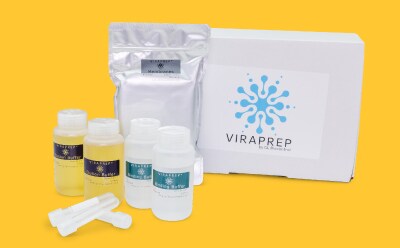
VIRAPREP® kit for efficiently concentrating coliphages from water samples.
VIRAPREP® is an efficient kit designed for the concentration and elution of somatic coliphages and F-specific RNA bacteriophages from drinking water and treated wastewater samples. VIRAPREP® kit operates by adsorbing coliphages onto cellulose-ester membranes using a binding buffer followed by an elution step and plating. VIRAPREP® complies with ISO 10705-2 for the detection of somatic coliphages and is compatible with ISO 10705-1, ensuring reliable results for viral water analyses in accordance with European regulations.
This innovative solution significantly streamlines the analysis process, allowing operators to work faster and reduce the volume of culture media used. By concentrating samples, VIRAPREP® enables users to read results from just two Petri dishes instead of twenty, saving both time and resources.
Download the data sheet for the VIRAPREP® kit and discover its benefits for viral water analysis.